
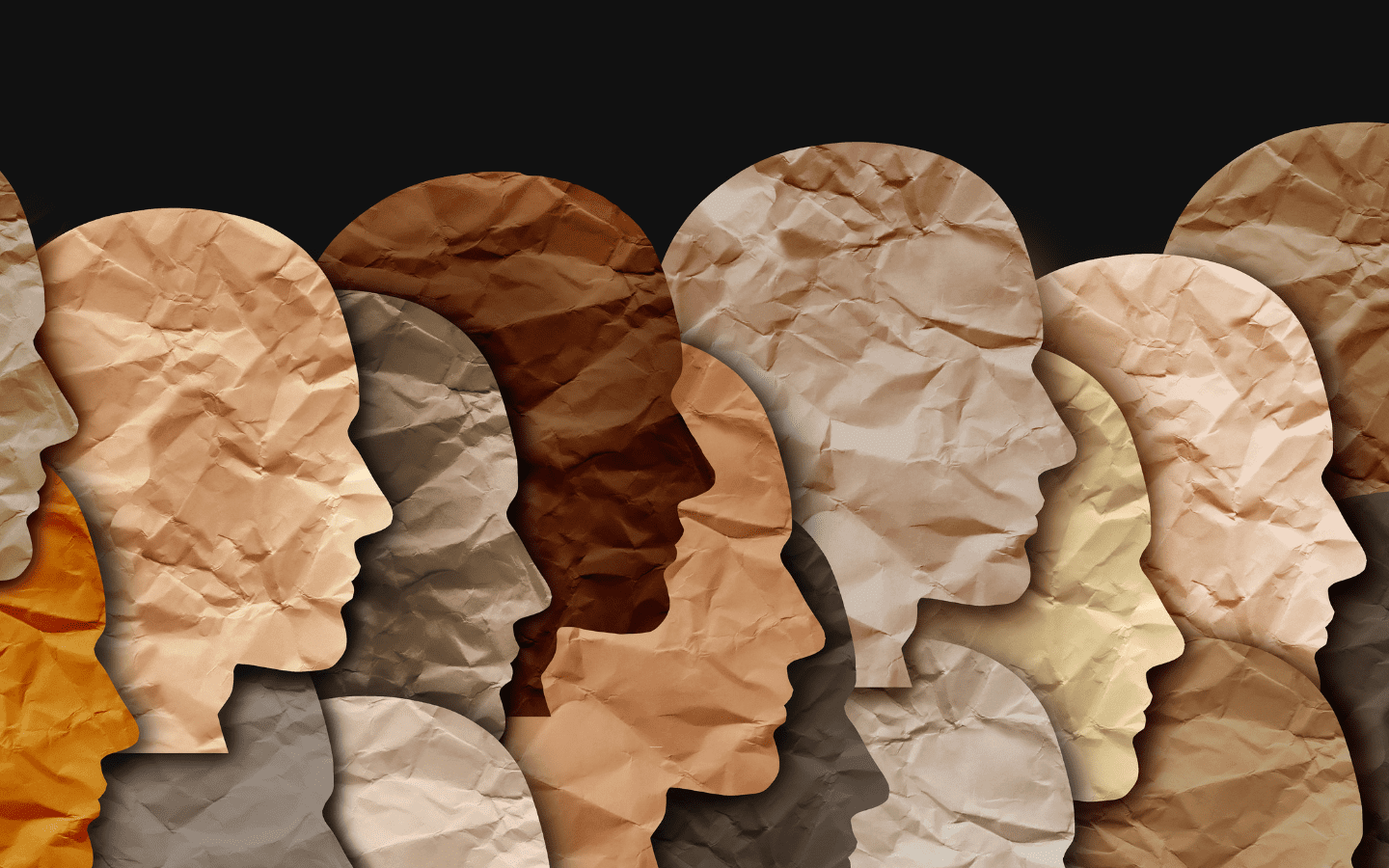
At the founding of the United States, two conflicting philosophies vied for supremacy.
The first, influenced by the more liberal aspects of the so-called Enlightenment, argued for a more democratic social-political structure under the assumption that all men are created equal. This philosophy sprang forth from the writings of John Locke and Jean-Jacques Rousseau.
The second, influenced by the more conservative elements of the so-called Enlightenment, argued for more authoritarian rule because of human depravity. This viewpoint is mainly associated with Thomas Hobbes.
Liberal thinkers in what would become the United States succeeded in enshrining their worldview in the Declaration of Independence, the Articles of Confederation and the U.S. Constitution. Because both sides found common ground in Anglo-Saxon supremacy, as “all men” meant “all white men with property,” a compromise was reached.
“We the people” became the law of the land as long as “people” was defined exclusively to include Anglo-Saxons.
While it was a given that Africans, Asians and Indigenous people were subhuman, all other non-Anglo Europeans simply “fell short.” Still, if there was a deficiency in melanin, they, too, could learn how to be white, some even reaching the echelons of those with Anglo-Saxon pedigree.
U.S. history provides examples of non-Anglo-Saxons being accepted as white.
First, there was the Germans in the 1700s. Founding Father Benjamin Franklin warned of the danger of Germans with their “swarthy complexation” being so numerous as to threaten to “Germanize” Pennsylvania. The Irish, referred to as “n***ers turned inside out” in the 1800s and Italians, commonly referred to as “white n***ers” in the 1900s, also had to learn how to be white.
Embracing white supremacy by these non-Anglos provided the opportunity to enjoy the fruits of power, profit and privilege that came with being accepted as white. These groups and other non-Anglo-Saxons learned whiteness when they first learned how to say “n***er.”
In Langston Hughes’ short story “Be Broad-minded, Please!,” he illustrates this phenomenon. Jesse B. Semple, the fictitious African American in the story, recognized that an immigrant foreigner would benefit over and against him within a Jim and Jane Crow America as soon as they learned to say n***er, even before they learned how to sing the Star-Spangled Banner.
Migrants with light skin complexation can become white once they adopt the racist hatred of the dominant Eurocentric U.S. culture committed to reinforcing while masking white supremacy.
The compromise between the liberal and conservative aspects of the so-called Enlightenment held throughout most of the country’s history.
However, deep cracks began to develop during the Civil Rights Movement. During the 1960s, “we the people” became more inclusive, as those who were not white claimed their humanity. The idea that all men and women are created equal began the task of moving the nation to the liberal vision of the Enlightenment project.
Electing a biracial man as president and almost electing a woman fractured the compromise established by both the liberal and conservative factions of the Enlightenment project. “Taking back America” or “making America great again” advocated for the conservative element of how “we the people” has historically been defined.
Are we surprised that those who wish to maintain a more exclusive understanding of “people,” specifically as male and white, sought to pass legislation to achieve said goal? From controlling women’s bodies to building walls to keep out foreigners. From censoring schools to banning books that make whites uncomfortable. From demonizing liberals, people of color, and LGBTQIA folk to denying them the right to vote.
Unfortunately, some of those who still are most impacted by not being included among “we the people” have also learned how to say “n***er,” “sp*c” and other slurs.
Think of a particular southern Black politician hoping to be the next Republican vice president or a certain Supreme Court justice. Both have learned, through the policies they advocate and the racist political leaders they support, the language of white supremacy.
Or the numerous Latine evangelicals who excuse Trump’s vilification of Hispanics because they specifically are not being included in the diatribe. They are the “good” Latine.
Their embracing white Christian nationalism makes them white. White Black people. White Brown people.
Zora Neale Hurston said it best: “All my skinfolk ain’t my kinfolk.”
- About the Author
- Latest Posts
Professor of Social Ethics and Latinx Studies at Iliff School of Theology in Denver, Colorado, and a contributing correspondent at Good Faith Media.