

Rev. Dr. Sarah Boberg is the Assistant Professor for Christian Education and the Director of Empowering Families for Spiritual Formation at Campbell Divinity School. I have had the honor of getting to know her as a student in her class, “Life and Work of the Minister.”
Dr. Boberg has served in youth ministry and was recently diagnosed with ADHD. She is gifted with honest eyes and a holy imagination that allows her to speak truthfully, hopefully and practically about ways churches can meet the diverse needs of our communities and families.
I recently visited with her about her personal faith and reimagining accessible church spaces. Our conversation has been edited for space and clarity.
In typical ADHD fashion, we jumped from topic to topic, circling back, interrupting each other in our excitement to agree or share a new idea. We began by talking about receiving our diagnoses later in life, a common experience for women.
After a journey that led Dr. Boberg to discover her daughter’s anxiety was actually a result of ADHD, she and her husband began to grow curious. “As we were filling out all the paperwork and surveys for her, my husband and I looked at each other,” she said. The question lingering between them was obvious: “Does this sound like anyone else?”
This led to Boberg being tested and diagnosed with ADHD two and a half years ago.
“It was interesting,” she said, “because I do have anxiety, but I didn’t realize how much of it was from my inability to function normally. My anxiety was overcompensating.”
Boberg noted that it is common for women, especially high-achieving women, to not be diagnosed until their 40s. We talked about how we both continued to meet the markers of success or normalcy, even to our own detriment.
As people of faith, we talked about the inaccessibility at church and alternative spiritual practices for people with ADHD.
When the prayer practices of her inherited faith and childhood no longer worked, Boberg began to wonder how to connect to God. She said, “None of the traditional praying came naturally. I could do it because I’m an overachiever, but they were always a disappointment.”
Out of her desperation to connect with God, she began walking, journaling, talking aloud and even coloring. “Coloring is one of my favorites,” she said. “But I did not realize that it could be a spiritual practice. Now, I have coloring materials with me all the time.”
For scripture reading, she suggested “small bites,” as long passages can reduce clarity and memory.
Boberg also needs a toolbox for both of her children, who are also neurodivergent. She carries a bag filled with snacks and various activities. Over the years, the contents have changed to match their age-appropriate needs, but the bag still gets packed.
Boberg suggested these bags should be available for both children and adults at church, and we both shared about our struggles with worship services.
Boberg discussed the energy it takes to follow all the routines to get her family to church, only to have to sit down for an extended period. “It is hard,” she said. “There’s very little room for processing, particularly verbal processing, which is what I need. Even the mental hurdle of anticipating being in that room for a whole hour can be a lot.”
She expressed sympathy for other adults with ADHD who give up on church altogether. In addition to packing her own activity kit, she even permits herself to step out of worship to break up the long service.
Knowing that not everyone has the tools she has, Boberg believes churches must take initiative to become more accessible.
The physical discomfort of wearing church clothes and maintaining a “ladylike” posture was a shared experience we discussed. As a parent, she has adjusted her expectations of what her children wear to church, as well as her own outfits, dressing more comfortably to help pay attention.
“Clothes are a big deal,” she said, “and it’s another reason why I like to dress differently for church now. It was more of a coming into my own, but it also helps with function.”
Congregations need to understand that finances aren’t the only reason people struggle with wearing certain clothes to church. Boberg believes that we need to talk about all these struggles associated with neurodivergent attendees.
“I think the more people can share and teach about it, the better,” she said. “We need real-life examples, because much of the narrative has focused on blaming the individual. I really want churches to figure out how to be a place that people want to show up to. Not change for the sake of change, but so more people feel included.”
Inspired by Rev. Dr. Boberg’s vision and imagination, I asked about one gift or insight that ADHD had offered her in her life and practice.
“In some ways, ADHD has been my superpower,” she said. “The hyperfocus can make me so productive, and without it, I’m not sure I would have finished my doctorate.”
She added, “In other ways, ADHD makes me very observant, because distraction makes us observant. Because I am not hyper-focused, I am always feeling, checking and watching the room. Being distracted is helpful because I notice when people are sad, when they leave, or when something is missing from the room.”
Boberg noted she won’t typically sit down to pray, but she is “connected to those scriptures that are hidden in my heart, and how they come to mind, like looking at the birds of the air.”
She wears jewelry that reminds her to pray when she fidgets with it. She also texts people random prayers. “Because our brains are always going,” she said, “I could be in the middle of something and it dawns on me that I need to reach out to someone and text them right then or send them a prayer.”
Boberg’s personal journey with ADHD has helped lay the groundwork for her work with the Empowering Families grant from the Lilly Foundation. One focus of the grant is helping churches become more accessible for all types of people.
“Think about how long it took us to become handicap accessible,” she said. “These things are not going to happen naturally or quickly. It’s going to take lots of conversations about things like bags of tools, live feeds in baby rooms, alternative spaces for worship, and blankets, among many others.”
- About the Author
- Latest Posts
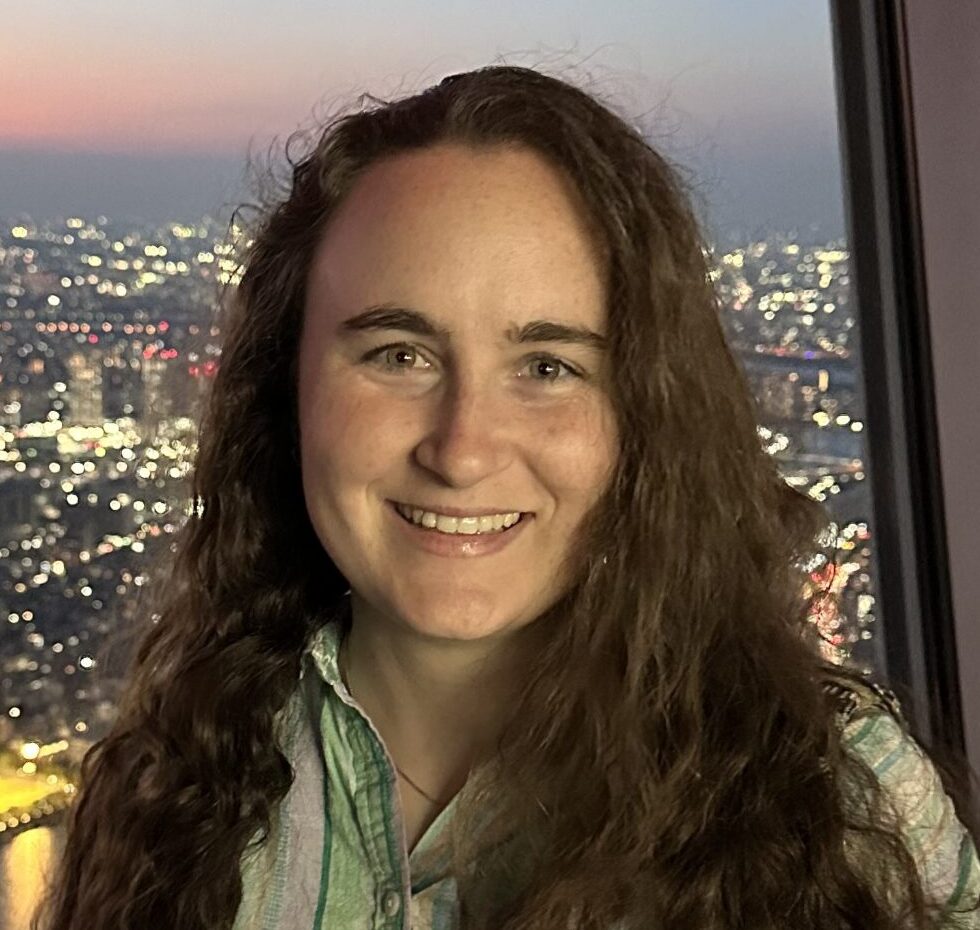
Erin is a current student at Campbell Divinity School, attending night classes for the Master of Arts in Christian Ministry. During the day, she participates in the holy work of teaching public school teenagers how to cook as a Family and Consumer Science teacher (formally known as Home Economics). A self-proclaimed Jack of all trades, Erin dabbles in an array of hobbies when school allows, including knitting, crocheting, spinning yarn, sewing, gardening, reading, writing, and, of course, cooking.