
As a Food and Nutrition teacher, I teach food safety handling and managing principles. The longer I have taught, the more I have realized food safety is an underrated yet crucial aspect of community care.
Church potlucks may be one of the best reasons to be a church member, at least here in the South. Not only do we look forward to the chicken salad, fried chicken, homemade rolls, pineapple cake, Oreo pie and fruit platter, but the fellowship is good for the well-being and morale of the congregation.
The organizing ladies certainly do not need my tips on successful planning or execution. However, while we trust our church members to bring delicious food, it is also essential to follow food safety guidelines, so our fellowship can avoid foodborne illnesses.
Over 48 million Americans become sick with foodborne illness each year. As with other diseases, elderly, young, and immunocompromised people are most susceptible.
As faith communities, our charge to care for one another should extend beyond just sharing food to understanding and practicing safe food handling practices. Caring about reducing the chances of foodborne illness and food allergies is one of the many practical ways to demonstrate Christ’s love and our dedication to quality fellowship.
Keeping Hot Food Safe
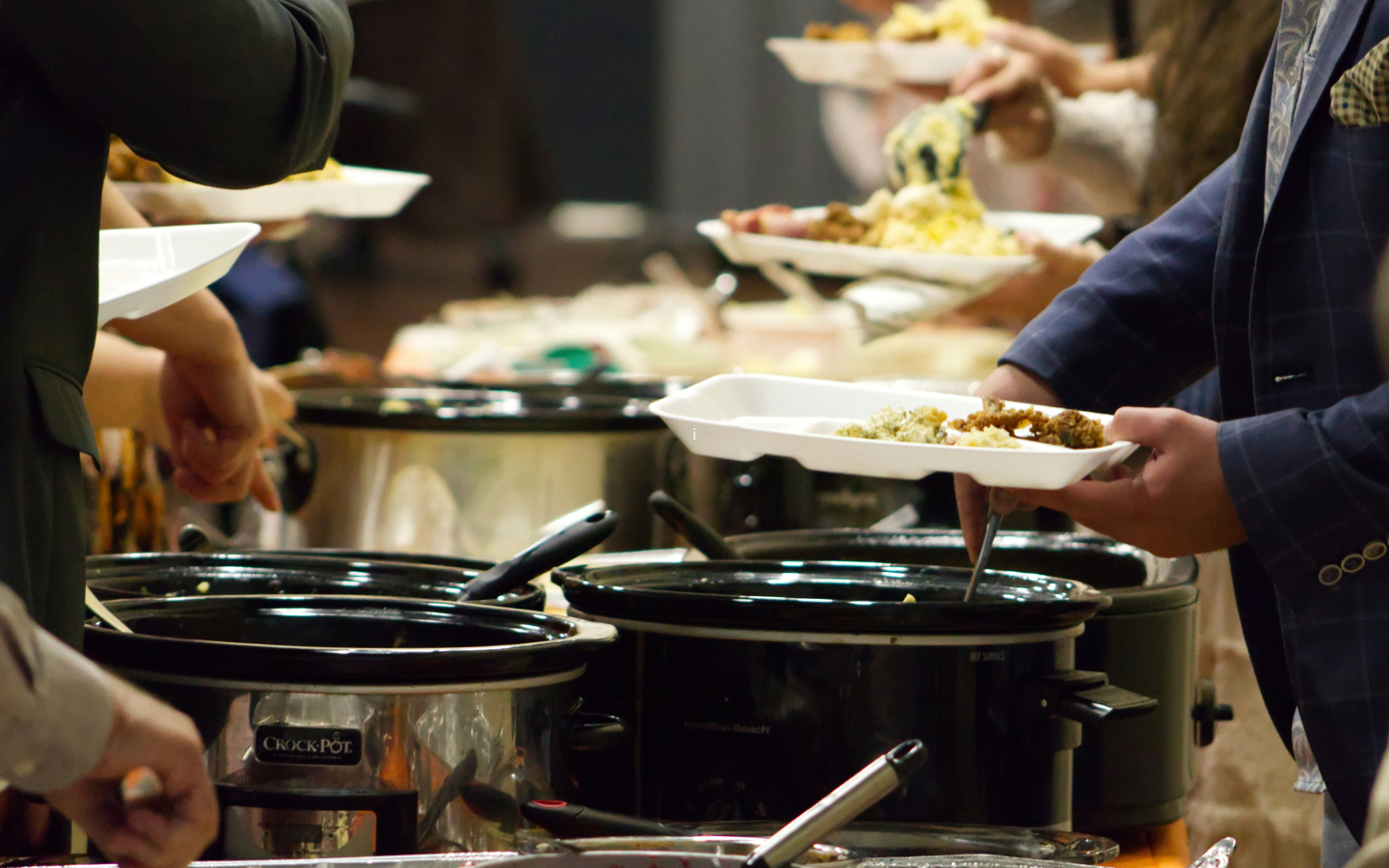
Hot food should be kept warm on the stovetop, in the oven or crockpot at 135°F. Having instant-read digital thermometers on hand (sanitizing between dishes) can help ensure the food stays safe in the hours between arrival and lunch.
As hot dishes arrive, take their temperature to ensure it is 135°F or higher. If the dish is colder, a quick reheat to 165°F, followed by hot holding at 135°F, will maintain food safety.
Keeping Cold Food Safe
Cold food should be held at 41°F, typically in the refrigerator or an ice bath. Digital read thermometers are also helpful for taking the temperature of cold dishes as they arrive, as well as at the time of serving.
Cold food can be held without temperature control for four hours (or six hours if it is colder than 70°F), but it must then be discarded.
As I tell my high school students, “Don’t let grandma take that potato salad home. You know she’ll try to save it and eat it again.”
A simple note and documentation of the time when all food is set out will help you determine if the food needs to be tossed instead of taken home.
Safe Serving
While you can’t force members to wash their hands before eating, hand sanitizer at the beginning of the line is good practice and helps to reduce the risk of diseases such as norovirus. Make sure there is one serving utensil per dish to prevent cross-contamination and cross-contact (that is, the movement of allergens from one food to another).
Regarding allergens, provide members with cards to label their dishes and mark any of the nine common food allergens in their dish. Also, encourage members to grab new plates when it’s time for seconds to prevent contamination.
Further Education and Outreach
If food safety becomes a concern or a passion at your church, holding food safety certification classes with a certified ServSafe instructor (through the National Restaurant Association) could be an incredible community program and outreach opportunity. Every restaurant must have a ServSafe manager on duty, and folks with their certificates are more competitive in the job market. These classes can be a fantastic community outreach by helping community members and congregants improve their resumes while learning food safety.
To be prepared for the basics, make sure your church kitchen has several instant-read thermometers on hand. Thermometer probe sanitizing wipes can be a handy way to clean the probe between dishes. Someone will need to make sure all the thermometers are calibrated before the event. You can easily use an ice water bath to measure 32°F while following the manufacturer’s instructions.
To further encourage good hand hygiene, keep a supply of non-latex single-use gloves to help prevent bare-hand contact and consider including signage for correct handwashing procedures in the kitchen.
The USDA also offers excellent, free resources and information on keeping food safe. Also note they are now recommending a hot holding temperature of 140°F, as opposed to the 135°F recommended elsewhere.
Implementing food safety principles will require a little more effort and communication, but ensuring the safety of our congregations is crucial.
Loving one another as Christ has loved us sometimes means taking extra precautions. Armed with a bit of education and several thermometers, we can demonstrate our love and care for one another in the Spirit of Christ while enjoying the potluck bounty!
- About the Author
- Latest Posts

Erin is a current student at Campbell Divinity School, attending night classes for the Master of Arts in Christian Ministry. During the day, she participates in the holy work of teaching public school teenagers how to cook as a Family and Consumer Science teacher (formally known as Home Economics). A self-proclaimed Jack of all trades, Erin dabbles in an array of hobbies when school allows, including knitting, crocheting, spinning yarn, sewing, gardening, reading, writing, and, of course, cooking.