

Early in my life, I started my journey through this earth as a refugee when my parents fled the rise of an authoritarian regime in their homeland. With just the few possessions they were able to stuff into a suitcase, they arrived in New York City—with me, just eighteen months old—in the spring of 1960.
Refugees are slightly different from immigrants, who migrate in search of economic opportunities. Refugees flee political persecution.
I find it humorous that United Statesians refuse to use either term when referring to themselves while migrating abroad. They refer to themselves as “expats,” even when they migrate in search of economic opportunities or to flee the rise of our current authoritarian regime. Euroamericans have made the term “immigrant” so derogatory that they refuse to use it to self-identify.
I, too, can play that game and call myself an expat to the U.S., but I won’t.
Those of us who are refugees carry upon our bodies the stigmata of authoritarian rule. We are intimately familiar with its ways. We recognize the foul aroma of demagogues, attuned to their narcissistic bluster, familiar with their demonizing swagger as they crush opposing views. Or at least we should.
The Convergence of Extremes
Personally, I find value in the horseshoe theory, even though political scientists no longer embrace it, arguing that it oversimplifies political differences. Although fundamental differences do exist between the far left and far right, still, as one who has experienced both extremes, this theory nonetheless rings true to my being.
The horseshoe theory rejects a straight-line political spectrum that moves from the extreme right to the extreme left, both separated by the political middle.
Instead, it argues that the political spectrum is best understood as a horseshoe. The two extremes curve toward each other, bringing them closer together and thus more alike than they are to the political middle.
Fidel Castro, the authoritarian figure of the country I left, and Donald Trump, the authoritarian figure of the country to which I found refuge, have more in common than they do with the political center. Although they are radically different in terms of political ideology, notable parallels exist.
While Castro claimed he was the champion of the poor, Trump claims to champion the “forgotten” working class. Both employed populist rhetoric in their appeal to disaffected segments of society.
This appeal is based on toxic masculinity. Castro cultivated the resilient macho image of the guerrilla warrior. Trump emphasizes being a culture warrior, possessing so-called “strong leader” qualities that can “Make America Great Again.”
Both portrayed themselves as outsiders fighting corruption. For Castro, the Cuban elite aligned too closely with the U.S. For Trump, it was all about the “deep state,” comprised of Democrats, intellectuals, and the so-called “fake media.”
They both created a personality cult beyond traditional politics, either as a revolutionary symbol or the personification of U.S. nationalism, resignified as “MAGA.”
One ruled for decades; the other constantly hints at his desire to rule for decades. Both were or have been willing to employ violence to sustain and maintain their rule—either coming down from the mountains or storming the Capitol.
The leadership styles of both emphasized personal loyalty over competence and expertise. Critics and those lacking sufficient loyalty are purged from bureaucratic government jobs, while critics and dissenters face persecution by the so-called justice system over imaginary charges.
Both give long-winded, emotionally charged speeches to large crowds. They castigate perceived enemies and develop a persecuted “us-versus-a-well-organized-them” narrative.
Both attempted to control public discourse by discrediting opposing views. One employed revolutionary propaganda to dominate the conversation. The other attacked all media outlets, using social media to directly communicate with his minions.
You either loved Castro or you hated him. You either love Trump or you hate him. Depending on your perspective, they are either a liberator or a tyrant.
True, these comparisons are not ideological. But then again, ideology is not that important for either man. It served as a useful tool to achieve a self-interested political end.
Let’s not forget that Castro, along with his economic advisers, flew to Washington, D.C., four months after the Revolution’s success (April 1959) to maintain friendly relations and continue economic support.
Let’s not forget Trump was a Democrat until 2009, shortly after President Obama was inaugurated, contributing to the campaigns of liberals such as Hillary Clinton, Chuck Schumer, Rahm Emanuel, and Harry Reid. He was a businessman who provided a gender-neutral bathroom at Trump Tower.
Ideology for authoritarian rulers is unimportant. The end goal is the same—political power.
As such, both challenge democratic rule. Both personify egotistic power. Both are a threat to individual freedoms. Both seek absolute loyalty.
These similarities are troubling. More troubling is the support Trump received from my compatriots here in the States—who should know better—when we consider their history as refugees.
Sixty-eight percent of Cuban American voters in Miami-Dade County said they voted for Trump this past November, Trump’s highest recorded approval rating up to that point. As the WASPiest Latines, they see themselves as white, even while Euroamericans see them as Brown—especially when they venture beyond Miami.
The Road Ahead
If Trump had been president when I entered this country as a refugee, I have no doubt he would have deported my family and me. If Trump were president when the parents of Marco Rubio came to this country as immigrants (not refugees), I have no doubt he would have deported them also.
And no doubt, if he had been president when waves of Cuban refugees washed up on U.S. shores during the 1960s, the Miami of today would never have come into being. Why? Because Cubans, like all other Latines, are not welcomed by Trump nor his racist cronies.
As mentioned, I was a refugee early in life. As I come closer to the end of my earthly journey, I fear I may once again be a refugee, again fleeing authoritarian rule. ¡Coño!

Miguel De La Torre’s Deportation Order
- About the Author
- Latest Posts
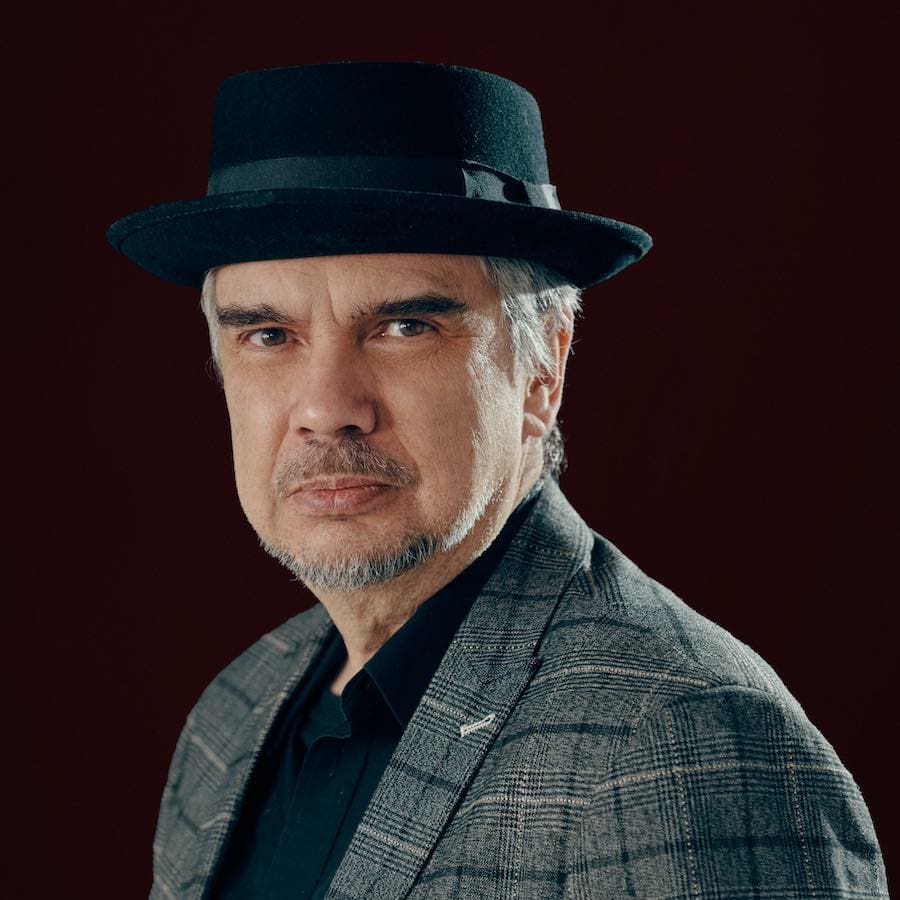
Professor of Social Ethics and Latinx Studies at Iliff School of Theology in Denver, Colorado, and a contributing correspondent at Good Faith Media.