
The sign on the door of Woodland Baptist Church’s office and classroom building alerts visitors that the Department of Homeland Security must treat the property as a “sensitive location.” Immigration enforcement actions are generally prohibited in houses of worship under a 2021 DHS rule that has repeatedly been upheld in federal courts.
I’ve seen versions of this sign posted at churches before. But for this North San Antonio congregation, it reads less like a legal document and more like a declaration of faith.
On a Thursday morning in early March, I visited Woodland at the invitation of Diana Bridges, who directs the church’s ESL program. She and a team of volunteers offer classes for students learning English for a variety of reasons—work, citizenship exams, or simply to understand neighbors and family members better. In a city that is nearly two-thirds Hispanic or Latino, I expected a certain kind of diversity. What I found when I arrived during a mid-morning snack break was something broader: a community of friends from nearly every continent and spanning generations.
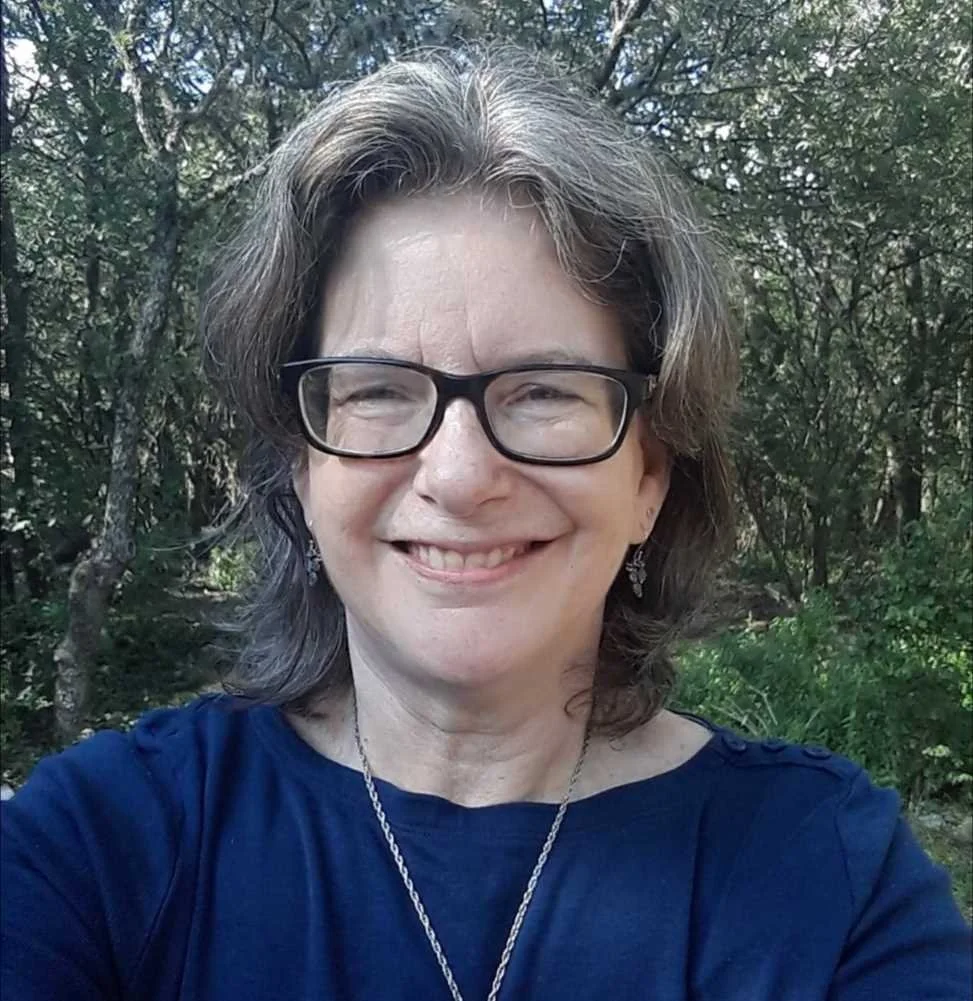
Diana Bridges
Before heading back into the crowd, Diana introduced me to a table where several students were gathered, drinking tea and eating snacks. There were women from Turkey and Panama, and an older Korean woman who greeted me by carefully spelling my name in the air with her finger.
I was soon pulled into a conversation with a man from Iran. Like another Iranian man I had met at the doorway, he was already a U.S. citizen. Given the events of the previous week, with their adopted home suddenly waging war against their country of origin, the space between us felt heavy, but holy. He spoke of grieving for both nations, but also of hope.
A few minutes later, a woman in her mid-seventies joined the table and introduced herself as Kate from Belarus. She was the person I had come to meet.
When the break ended, students returned to their classrooms, divided by language proficiency. I joined Diana’s group, which is the most advanced group of students. They included several people I had already met, along with a Turkish student joining remotely. Kate was among them.
Diana opened the lesson with a discussion of “The Danger of a Single Story,” a well-known TED Talk by Nigerian writer Chimamanda Ngozi Adichie. In it, Adichie warns about the power of one-sided narratives—stories about people or nations that become accepted as truth even when they capture only a fragment of reality. Diana asked the students to describe the stories they had once believed about the United States before they arrived.
Kate spoke about growing up in Belarus during the Soviet era. She had read Aleksandr Solzhenitsyn’s The Gulag Archipelago and understood that many people in her country lived under repression. “And I hoped America was a shining city on a hill,” she told the class, echoing Ronald Reagan’s famous phrase.
As she spoke those words, her youngest son, Lev Babaevski, and his wife were sitting in an ICE detention center about seventy miles southeast of the church, uncertain of their future in the country Kate once imagined as a beacon of light.
Love and Work
Kate was born in the Soviet Union and was a healthy child until, at the age of five, she contracted rheumatic fever. One evening, she was playing outside with her friends. The next day, she was bedridden in severe pain. The hospital became a second home, and its doctors her heroes. She still remembers Dr. Lebedev, a military physician whose presence calmed the children in his care.
“He was like a kind wizard in a medical gown who helped people,” she wrote in an essay on vocation for her ESL class several years ago. “He not only treated us, but supported us emotionally and spiritually encouraged us.”
Kate does not remember many of his exact words, but she knew she wanted to be like him. She decided to become a doctor.
In the essay, she quoted Sigmund Freud on what it means to live a meaningful life. “I am not a fan of Freud,” she wrote, “but I agree with him in this one case: To be truly happy means to combine love and work in all areas of your life.”
Kate became a psychiatrist.
Early in her career, she practiced forensic psychiatry, examining criminal defendants to determine whether they were mentally competent to stand trial. For the final fifteen years before retirement, she worked with women and children who were survivors of trafficking and domestic and sexual violence.
Along the way, she married Aleksandr Babaevski, and together they raised three sons—Aleksandr, Raman, and Lev.
The Babaevski family relished the life of the mind and were voracious readers. Aleksandr Sr. was a physicist who worked with plasma technology and held multiple patents. Because of the Soviet economic system, however, those inventions brought little financial reward.
Aleksandr Jr. and Raman followed their mother into medicine. Lev took a different path, supporting himself as a woodworker and cabinet maker while also playing drums in a local rock band.
In 1994, Kate attended one of the Christian revival meetings that swept across the former Soviet Union after the collapse of the Communist system. Though she had been baptized as a child in the Russian Orthodox Church, she describes this moment as when she truly “came home.” Her husband was initially skeptical but eventually became a Christian as well. The Babaevski children grew up in church and absorbed their parents’ intellectual and spiritual curiosity.
There was another activity the family shared, one that would shape their lives for decades to come: Political protest against the man known as “The Last Dictator in Europe.”
The Long Opposition
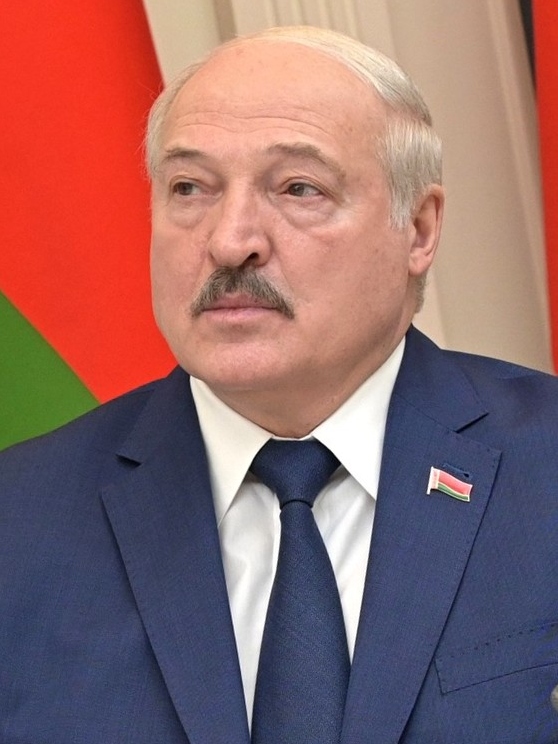
Alexander Lukashenko (Credit: Wiki Commons)
In 1991, Belarus gained independence from the collapsing Soviet Union, sparking hopes for democracy. Alexander Lukashenko was elected president in 1994 as an anti-corruption populist outsider. It was the country’s first free and fair election.
It was also its last.
In 1996, Lukashenko consolidated power through a constitutional referendum that extended his presidential term, weakened parliament, and brought the courts and government institutions under his control. Each subsequent election has been deemed fraudulent by international observers. Candidates who opposed Lukashenko were often imprisoned or forced into exile.
Lukashenko’s rule over the landlocked country between Europe and Russia has long required a delicate balancing act. Economically, Belarus remains dependent on subsidized oil and gas from Vladimir Putin. Yet for much of his time in office, Lukashenko resisted being drawn too deeply into Moscow’s orbit, periodically seeking improved relations with the United States and Europe.
From 1996 onward, protests against Lukashenko’s sham elections were quickly suppressed through arrests and raids on opposition offices. Independent newspapers were shut down. Because of this, and because Belarus avoided the economic collapse that plagued many other former Soviet states, protest movements never reached critical mass.
That changed in 2020, beginning with Lukashenko’s dismissive response to the COVID-19 pandemic. He refused to impose restrictions on mass gatherings and suggested the virus could be prevented with a positive attitude, drinking vodka, and visiting the sauna. Many outside observers also believed the government suppressed data on Belarusian deaths from the virus.
Public trust in Lukashenko eroded further ahead of the 2020 election. By this point, a new generation of Belarusians had come of age. These young people were raised with internet access, exposure to Europe, and little memory of Soviet-era politics.
In that year’s election, Lukashenko claimed victory with 80 percent of the vote over Sviatlana Tsikhanouskaya, who had entered the race after her husband, Lukashenko’s main challenger, was imprisoned. Outside observers saw the result for what it was: fraud.
So did Belarusians.
Hundreds of thousands of protesters took to the streets of Minsk and cities across the country in unprecedented demonstrations against Lukashenko’s rule. They carried the white-red-white flag of the short-lived Belarusian People’s Republic that emerged after World War I and the collapse of the Russian Empire. Organizers used online networks to mobilize crowds and document incidents of police violence against marchers.
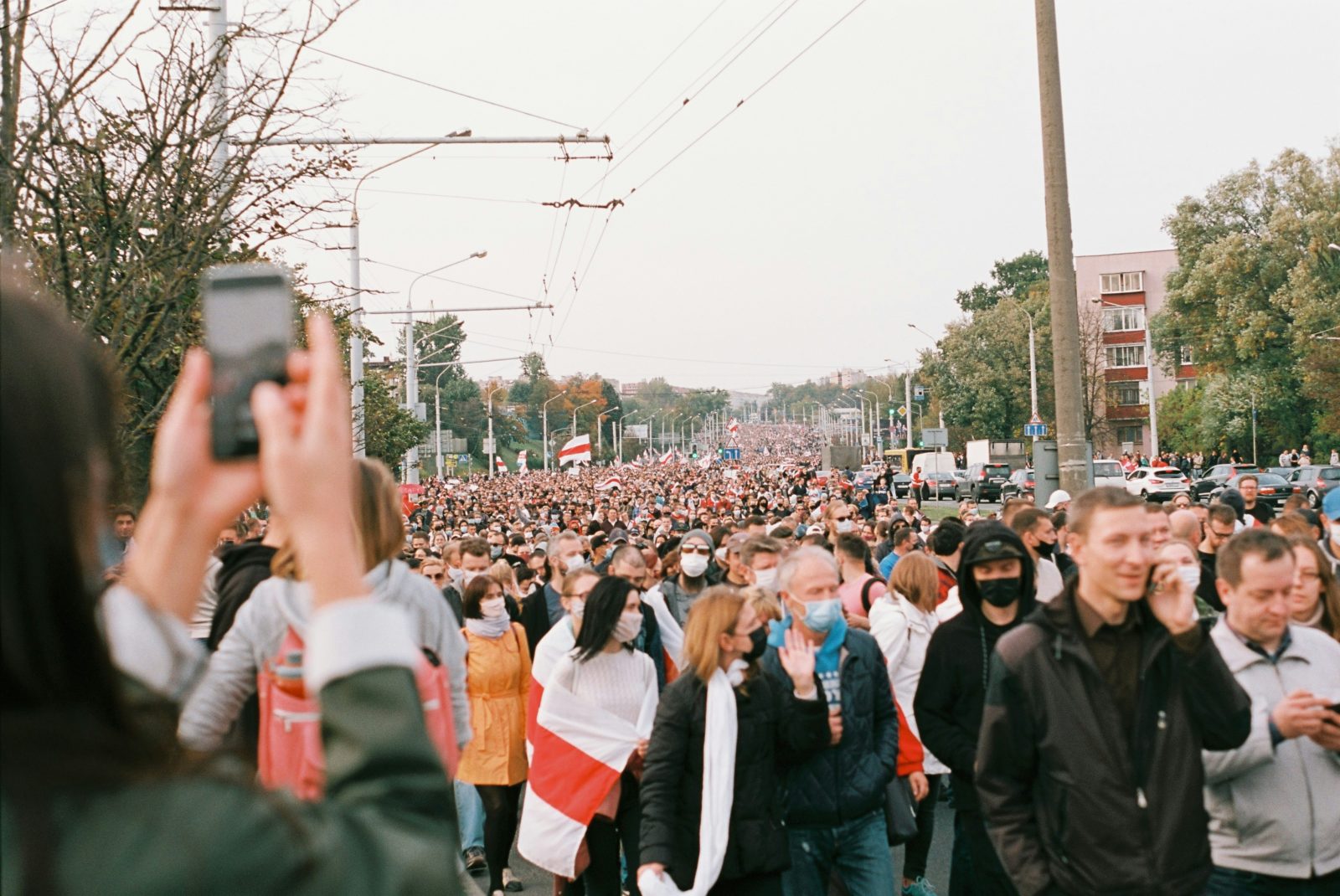
2020 protests in Minsk, Belarus. (Credit: Andrew Keymaster/Unsplash)
It was the scale of protest the Babaevski family had long hoped for and worked toward. Yet by 2020, most of them were in America.
In 2007, the eldest son, Aleksandr, and his wife, Sarah, moved to the United States. Aleksandr became a physician, and the couple became U.S. citizens. Raman followed in 2011, moving to San Antonio to complete his surgical residency. He and his family have remained on a Green Card.
Two weeks before Raman left for the United States, their father, Aleksandr Sr., died of lung cancer. Soon after, Kate joined Raman and his family in San Antonio.
Only Lev remained.

Lev at the 2020 protests. (Credit: Raman Babaevski)
Babaevski Family Values
Lev was not the most politically active member of the Babaevski family, but opposition to Lukashenko had become a family practice. His role in the 2020 protests was modest—helping with logistics, passing out flyers, and bringing water to demonstrators.
However, during a November “March of the Neighbors” event, he was among hundreds arrested by the Belarusian KGB. He was beaten and detained for several hours. When he was released, a doctor determined that Lev had suffered two broken ribs.
In the months that followed, many Belarusians believed the 2020 protests had sparked something that might eventually lead to democratic change. Yet by mid-2021, the government had largely forced demonstrations off the streets. Opposition activity shifted underground, consisting mostly of online organizing and symbolic acts like displaying the historic white-red-white flag.
But Lukashenko was not content simply to end the marches. Authorities began targeting journalists, lawyers, and student groups who had participated in the protests. Using video footage from demonstrations and facial-recognition technology, investigators worked to identify and punish dissidents months after the rallies had ended.
In 2021, authorities raided a gathering of musicians. More than a dozen people were detained, including Aliaksandra Grakhouskaya, the vocalist in a band for which Lev played drums. Her phone was confiscated, and on it was correspondence with Lev that included criticism of Lukashenko and references to attending demonstrations.
Soon, Lev would receive a call from an old acquaintance in the Belarusian security services warning him that his name had begun to appear in investigative files.
With a wife and two young daughters to care for, Lev knew it was time to leave.
Seeking Sanctuary
In June 2022, Lev and his family flew to Mexico. At the Matamoros–Brownsville border crossing, they approached a U.S. Border Patrol agent and requested asylum, following the legal process for those fleeing persecution. They were briefly detained and then released with legal paperwork and a future court date.
At first, Lev, his wife Volha, and their two daughters stayed with Raman and his family in the Dallas area. Eventually, they moved to San Antonio to live near Kate.
The family began building a life in Texas. The girls enrolled in school. Lev and Volha obtained driver’s licenses and paid taxes. Lev found work as a handyman, and Volha worked as a caregiver for older adults. They joined a church and became part of the community.
In February 2023, they hired an immigration attorney and filed an asylum application.
At the time, asylum claims from Belarus had one of the highest approval rates in the U.S. immigration system. In recent years, nearly nine out of ten cases reaching a final decision were granted protection, reflecting widespread recognition of the Lukashenko government’s crackdown on political dissent.
On May 29, 2025, Lev and Volha appeared for their first scheduled immigration hearing in San Antonio before Judge Charles McCullough. Such hearings are usually routine administrative procedures: applicants confirm their intention to seek asylum, and the judge schedules future hearings.
But that didn’t happen.
At the request of Department of Homeland Security prosecutors and over the objections of their attorneys, the judge dismissed Lev and Volha’s case. Immigration officers immediately arrested the couple inside the courthouse and transferred them to detention, where they have remained.
Lev was first sent to LaSalle County ICE Detention, a facility that has faced scrutiny over detention conditions. He was placed in a dormitory with fifty other men. Bright fluorescent lights stayed on through the night. Two toilets stood in the middle of the room with no partitions. Televisions blared constantly, and the noise was disorienting.
According to his family, Lev was later placed in a punishment cell for fifteen days after guards discovered he had saved several ibuprofen tablets that had been prescribed for a toothache.
He was eventually transferred to the Karnes County Immigration Processing Center southeast of San Antonio, where Volha is also detained. There, they await the next decision in a legal process that could determine whether they are released to continue their asylum case—or deported to the country they fled.
Every two weeks, they are allowed to sit together at a table for a few minutes. Lev is occasionally able to speak with family. According to Raman, the calls have become less frequent, and Lev appears to be struggling with depression.
“It’s such a stupid situation,” Raman told me over the phone. “Instead of spending taxpayer money and ruining a family’s life, we could be taking care of him. And in fact, he was taking care of himself and his family just fine.”
“It’s a disaster for no reason.”

Lev celebrating his 43rd birthday with Raman’s family, three weeks before Lev and Volha are detained by ICE. (Credit: Raman Babaevski)
A Mother’s Hope
Lev and Volha’s daughters are now living with Raman and his family in the Atlanta area, where Raman works as a surgeon. The younger daughter is in school. The older one, now an adult, rarely leaves the house for fear of ICE.
Kate has remained in San Antonio. In a pleasant twist of fate, several residents in her retirement community are native Russian speakers. (Though Belarus has its own language, many Belarusians, including Kate, speak Russian as their first language.) She takes long walks with her neighbors and often meets them for lunch.
She also travels to Georgia frequently to visit Raman, Aleksandr, and their families.
Most conversations with Kate eventually circle back to books. She’s quick to mention that her parents first met in a library.
She worries about Lev, her youngest son. She doesn’t know what will happen next for him and his family, but she is trying to hold on to hope.
It brought her particular joy to learn that the Karnes County detention center has a small library and that Lev recently discovered a Russian-language copy of Crime and Punishment to read. It was one of the many books she read as a child during the long illnesses that kept her in bed.
Back in the ESL classroom at Woodland Baptist Church, Diana Bridges asks her students to describe how they see the United States now. Many speak about the freedoms they have found here, along with the challenges.
“I love America,” Kate says. “There are so many great opportunities.”
Then, when many people in her shoes might hurl an accusation, Kate, perhaps summoning the spirit of the kind Dr. Lebedev, offers something closer to a diagnosis.
“America is ill,” she says. “But you don’t stop loving someone when they are sick.”

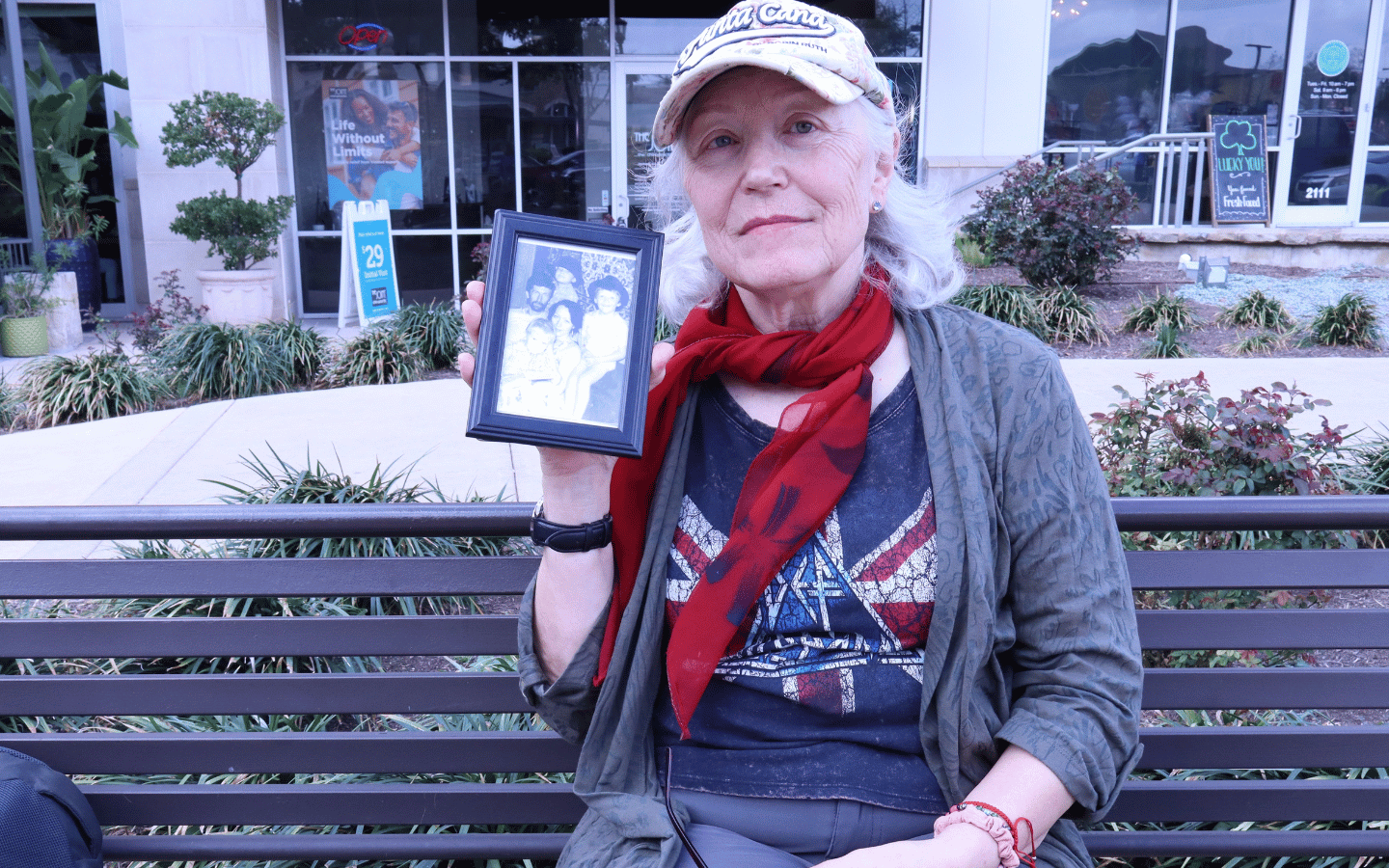
Kate and Lev
- About the Author
- Latest Posts

Senior Editor at Good Faith Media.