
Institutions, like the humans who make them up, contain multitudes. They are never just one thing.
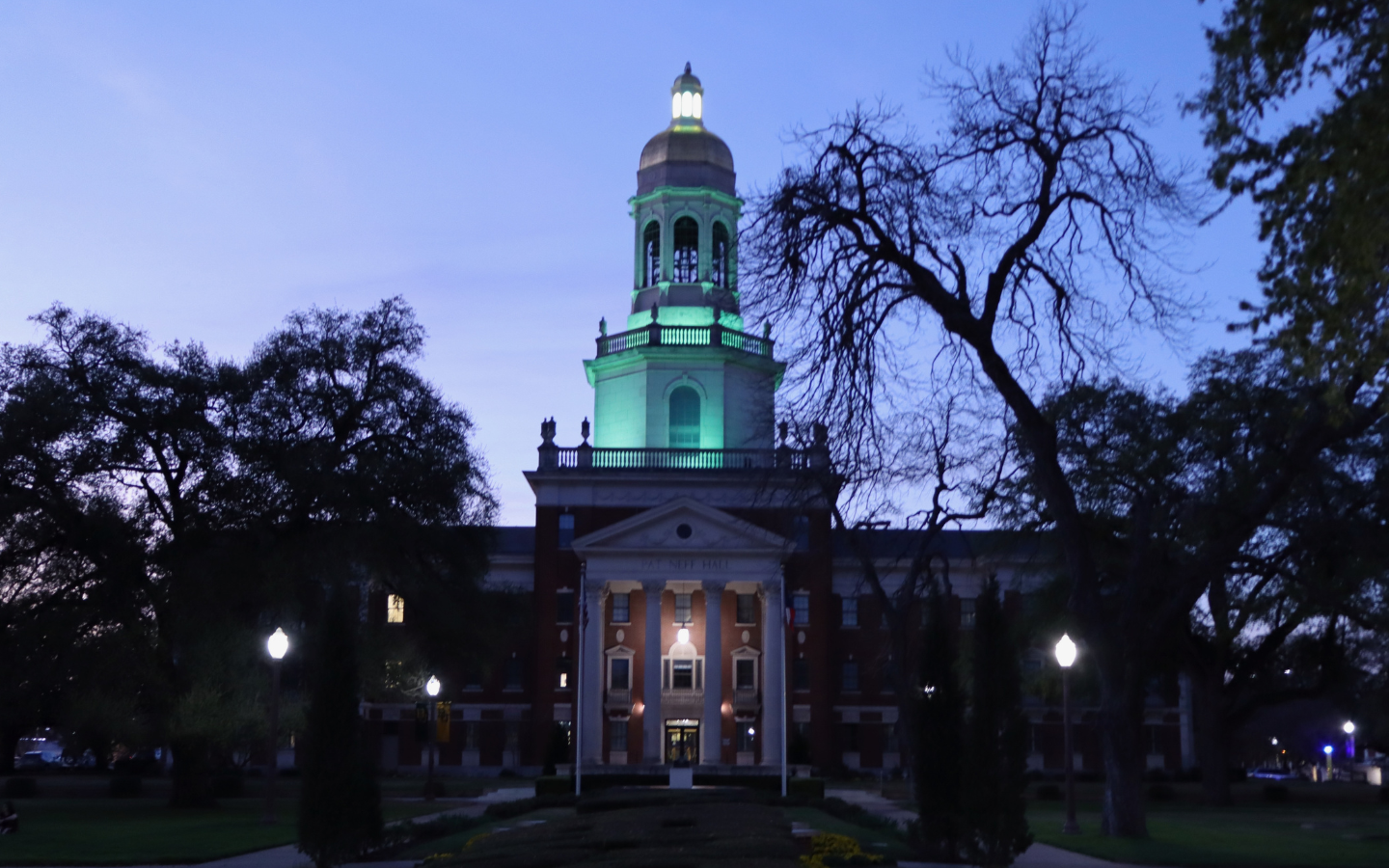
This maxim was on full display last weekend at Baylor University, one of the nation’s most prominent evangelical research institutions.
Since at least the early 1990s, Baylor has been in an internal tug-of-war over various ways to approach and embody its Christian commitment. The university’s “multitudes” aren’t just “not one thing”; they are also far more than a binary of two things. It’s not as simple as “conservatives vs. liberals” or “traditional vs. progressive.” However, while distilling the institution down to “Two Baylors” doesn’t accurately represent the full mosaic, it is nevertheless a helpful device.
Full disclosure for those unfamiliar with my work: I am a graduate of Baylor’s George W. Truett Theological Seminary, and my career has included two stints—many years apart—working for the university. I live in Waco and count myself among the “Baylor Family.” I have also been a fierce critic of the university, particularly since last summer, when it rejected a grant to study how churches can become safer spaces for women and LGBTQ+ individuals. Even before that, while still employed at Baylor, I was vocal about my displeasure with how the institution handled several high-profile issues.
To the credit of those I worked for and their higher-ups, I was never reprimanded nor silenced for my public critique of Baylor. Even today, after much critical reporting on the institution, I feel welcome and accepted on campus. I often remember this when I am looking for hope that Baylor’s better angels will prevail over those who seek to pull it back into the religious fundamentalism it has tried to break free from.
One Baylor
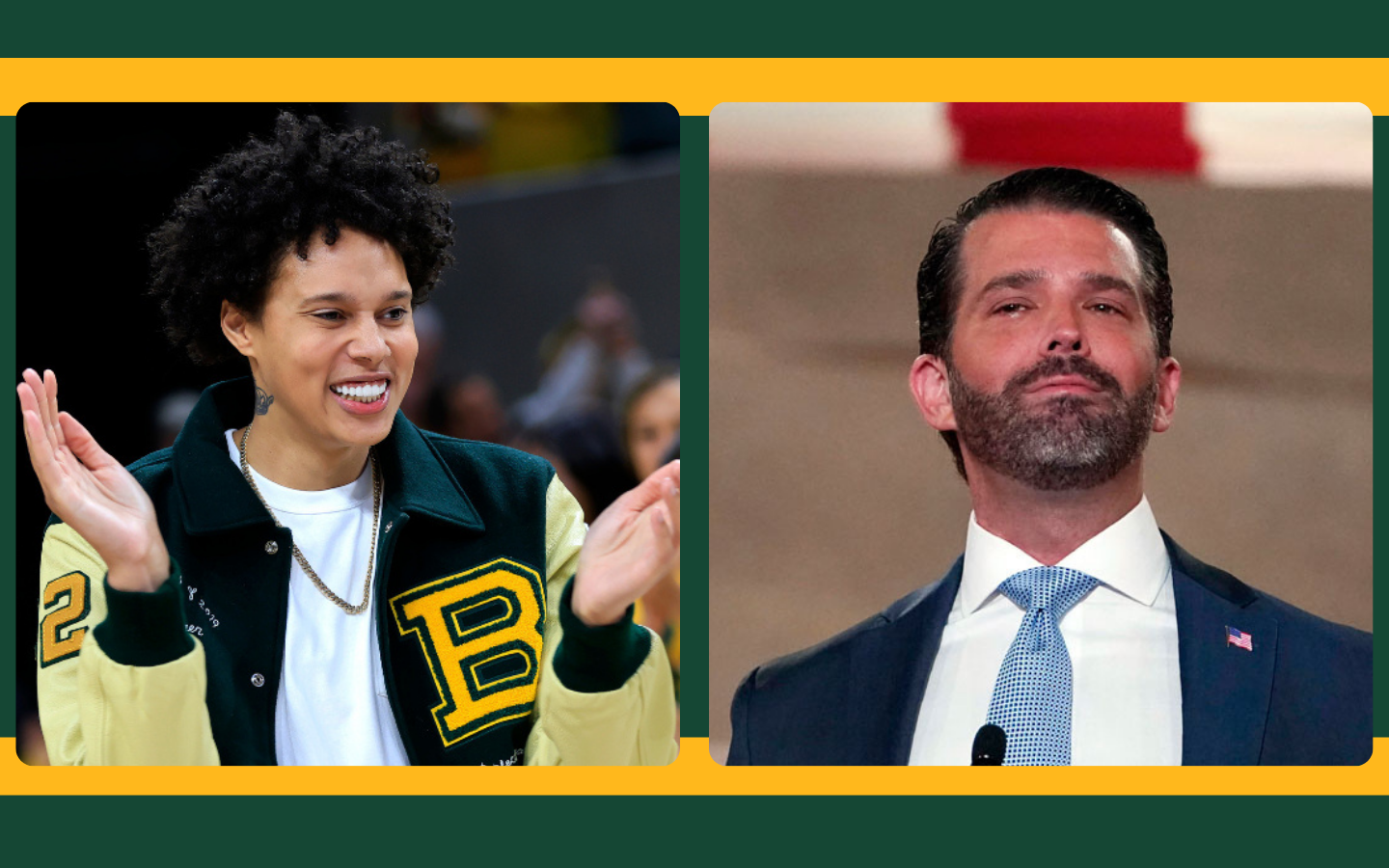
Last Friday, WNBA star Brittney Griner posted an Instagram Reel of her walking off an airplane in Dallas holding her young son and announcing, “We’re on our way to Waco! Let’s go Baylor!” Griner was a four-time All-American at Baylor, leading the team to a national championship at the end of a perfect season in 2012.
Since leaving Baylor, Griner has had a storied professional career, including a WNBA championship with the Phoenix Mercury and six All-Star appearances. She has also played on three U.S. national teams that won Olympic gold medals.
In 2022, Griner was detained at a Moscow airport for possession of small amounts of cannabis in a vape pen. Her arrest occurred just days before Russia invaded Ukraine and led to a months-long imprisonment, conviction and a sentence to an infamous penal colony. She was released in December of that year in a high-profile prisoner exchange. Griner chronicled the experience in her 2024 book, Coming Home.
After she shared that she was on her way to Waco, Griner’s social media feed was filled throughout the weekend with videos of her visiting Baylor and Waco landmarks (including breakfast at Whataburger) and practicing with the current women’s basketball team.
In a public ceremony at Baylor before her February 2024 jersey retirement, Griner apologized for not returning after she left in 2012. She promised to be around more when she is able. Last weekend appeared to be her making good on that promise.
Griner’s time as a student at Baylor wasn’t all honey and roses. In her 2014 memoir, In My Skin: My Life On and Off the Basketball Court, she wrote about the lack of support she received as a young, queer Black woman, chronicling how she was pressured to stay in the closet by then-coach Kim Mulkey.
Despite all that, she still found a home at Baylor. In a “Back to Baylor” video blog of her trip last weekend, she walked around parts of campus that were especially meaningful. With her trademark smile and childlike exuberance, she told stories about breaking her wrist in a longboarding accident in a parking garage and of meeting her now-wife at the student center.
Griner’s video reflections spoke to a reality that may surprise many outsiders: Baylor brings her as much joy as she brought the university. It’s a joy she still embraces, even after all these years.
It’s a gift she’s given Baylor, despite the ways some in the “Baylor Family” have failed her. During her Russian imprisonment, the public institutional support for her and her wife, Cherelle, was tepid at best. Although it is an argument from silence, it’s hard to imagine a different kind of high-profile Baylor legend (straight, white) in the same situation who wouldn’t have received far more prayer services, social media posts and visual reminders of their predicament than she did.
But tepid support didn’t mean no support. There were major figures within the university who gave a voice to Griner’s plight. Chief among these was Nicki Collen, who has been the Baylor women’s basketball coach since Kim Mulkey’s 2021 departure for LSU.
Collen mentioned Griner at every opportunity she had—in press conferences, social media posts and casual conversation. She had the initials “BG” embroidered on the team jerseys for the 2022–23 season, keeping Griner’s name in the public eye at all times.

Nicki Collen
Despite never having coached her, and in light of the fact that much of Griner’s conservative detractors came from the “Baylor Family,” Collen’s public advocacy didn’t come without risks. She had nothing to gain and a lot to lose. Yet she insisted that Griner didn’t just belong to Baylor, but that Griner belongs at Baylor, even today. She recognized Griner’s radiance for what it is: a visible expression of the image of God that exists within all of us—an image worth defending and championing.
Collen is not alone at Baylor. There are alumni, administrators, professors, staff and students who are fighting for a world of justice and inclusion. Some of this work is done in full view, while much of it goes on behind closed doors. These advocates don’t always fit neatly into the categories of “conservative” or “liberal,” but they understand that the missio Dei—the mission of God—is expansive and, like Jesus, scandalously inclusive.
Another Baylor
On the day Brittney Griner posted the first video of her journey to Waco, The Baylor Lariat published a story announcing that Turning Point USA’s (TPUSA) “This Is the Turning Point” tour would make a stop at Baylor in April. The tour is a continuation of the events TPUSA founder Charlie Kirk was holding before his horrific assassination last September.
Any good-faith commentary on TPUSA must begin with this: Charlie Kirk’s death was a tragic event that should never have happened. It was a damning indictment of the illnesses that infect our society: dehumanizing political rhetoric, mental illness and easy access to guns. The image of God resided within Charlie Kirk just as it does within Brittney Griner. All murder is demonic, and he should still be here today to hug his wife and tuck his children into bed.
And.
Kirk created an organization that isn’t just intellectually deficient and dishonest; it is morally bankrupt.

Charlie Kirk
At the heart of Kirk’s work was the manipulation of facts and amplification of partial truths to demonize groups that didn’t fall within his white, straight, male-dominated worldview. He was a chief proponent of the widely debunked lie that the 2020 election was stolen. Kirk’s “prove me wrong” schtick trafficked in logical fallacies while falsely parading itself under the umbrella of “free speech.”
Kirk’s racism, theo-fascism, homophobia, misogyny and xenophobia live on through TPUSA’s “This Is the Turning Point” tour. Announced speakers at the Baylor stop include Donald Trump Jr. and Tom Homan.
Trump Jr.’s corruption and vileness have been on full display since his father descended that golden escalator in 2015. It’s not hard to find examples of his immoral and hateful rhetoric, but this one should suffice: In response to a 2025 Wall Street Journal editorial encouraging Americans not to scapegoat all immigrants for the actions of a few, Trump Jr. wrote on X, “Give me a fucking break. The RINOs at the Wall Street Journal Editorial Board want us to be flooded with millions of America-hating migrants who don’t share our values.”
Tom Homan is currently serving as President Trump’s “border czar.” Immigration activities under his watch have included mass chaos and arrests of innocent people, including at least two killings of U.S. citizens. He has met with leaders of the white supremacist group Proud Boys and was reportedly recorded by the FBI accepting a $50,000 bribe to curry favor ahead of Trump’s second inauguration.
As Mark Wingfield wrote in his March 15 Baptist News Global editorial, the problem isn’t necessarily that Baylor is allowing the event or these speakers. There is an official TPUSA student organization on campus and, assuming it follows all university guidelines, the principle of academic freedom demands that its views should be given a space.
Wingfield speculated what would happen if PRISM, Baylor’s official LGBTQ+ student group, invited prominent Christians like Brandan Robertson, Matthew Vines or Paula Stone Williams to speak on issues of inclusion. It was a good point to raise, yet it’s also important to note that those figures are not the “other side” of people like Donald Trump Jr. and Tom Homan.
Roberston, Vines, and Williams are committed Christians whose work and witness uphold everything Baylor claims to stand for, except in their beliefs about human sexuality. Homan and Trump Jr. are the type of people who made it into a lot of the stories Jesus told, and not as the heroes.
TPUSA isn’t the only representation of “the other Baylor,” and sexuality isn’t the only battleground in the fight for human dignity on campus.
In October 2025, the Baylor Business School invited German architect Patrik Schumacher to speak to students. I attended the lecture, which critiqued how contemporary architecture and urban development have been stymied by “woke” academic concerns that he believes have set back innovation.
Schumacher’s points come from a decidedly libertarian worldview. I agreed with very little of what he said, but he represents a legitimate academic and political perspective that belongs in the world of ideas.
But during the question-and-answer section, which was mostly silent due to napping, uninterested students, I noticed how little genuine inquiry there was into Schumacher’s ideas. There were no questions from professors about how he defined “woke” or concerns about what his ideas mean for the environment or the safety and dignity of workers.
The silence felt like an implicit stamp of approval for ideas that can cause real harm in the world.
Two Baylors
Last weekend, two Baylors emerged. One is on the margins, marked by life and light and a conviction that everyone belongs. That Baylor has been through the fire and walks around with the lightness of Spirit.
Another Baylor will soon illumine the center of campus with pyrotechnics and bluster, carrying a message of exclusion, fear and hate. That Baylor bastardizes and weaponizes the name of Jesus for political and financial gain.
Baylor contains multitudes. It’s not just one thing. But it must decide which one it would rather have at its center, and which belongs on the margins.
- About the Author
- Latest Posts

Senior Editor at Good Faith Media.