
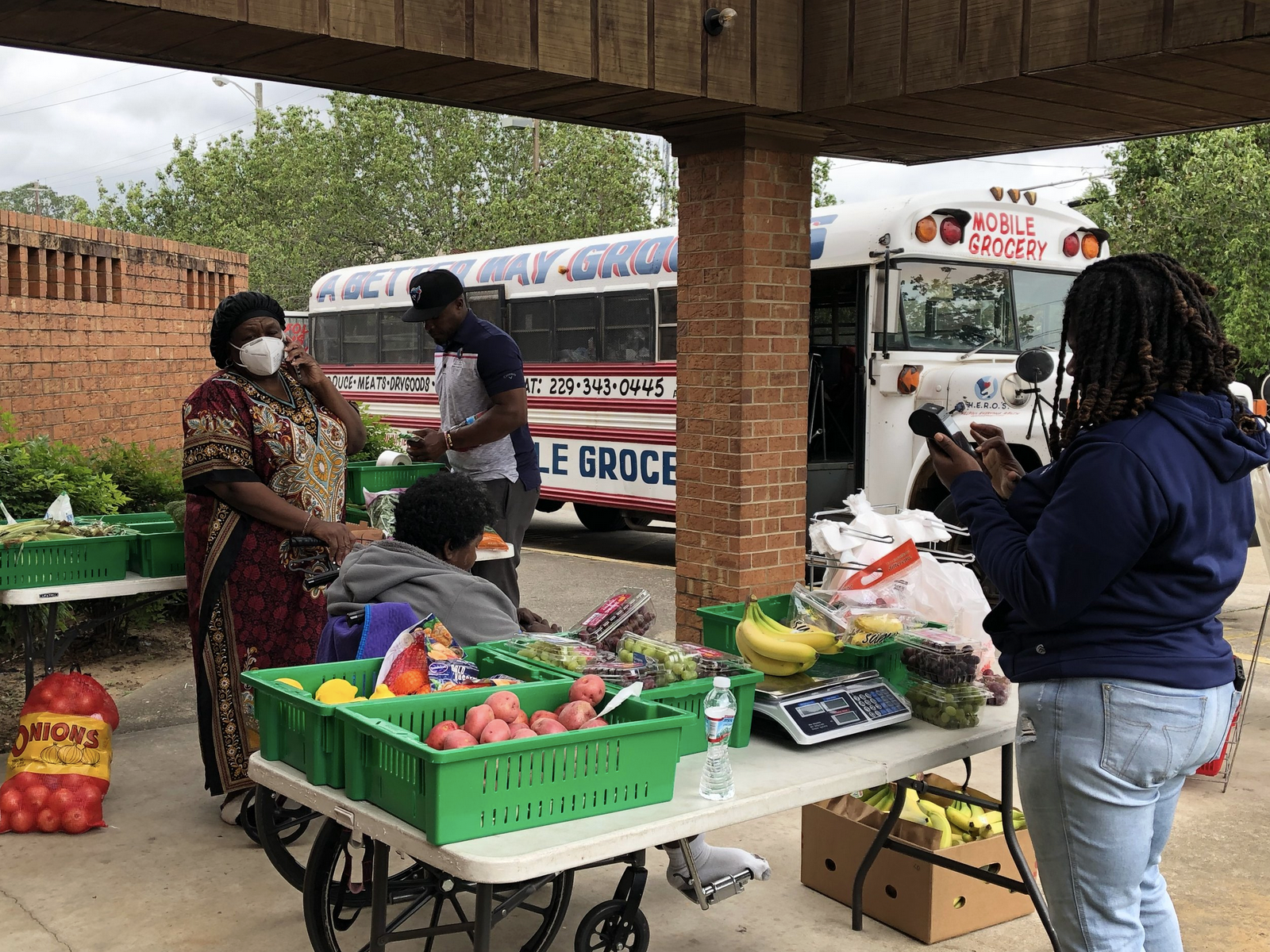
When Rev. Dr. Virginia Taylor heard that 1 in 4 children in her hometown of Chapel Hill, North Carolina, were food insecure, she knew she had two questions to answer in her doctoral project. First, who are these children? And second, how can we, as the church, meet this need?
Although Taylor completed her doctoral degree almost a decade ago, the issue of food insecurity remains a pressing concern. Food insecurity exists in every county across America, with 47 million Americans and 1 in 5 children unsure of where their next meal will come from. In 2023, over 50 million people relied on food programs.
Currently, there is enough food being grown globally to feed the world population, meaning that food insecurity and hunger are problems that stem from distribution rather than true scarcity. Food deserts, which are areas that lack access to affordable and nutritious food, disproportionately affect low-income neighborhoods. The cost of living is continuing to outpace the increase in wages. Currently, 30-40 percent of the U.S. food supply is never eaten, instead becoming food waste. The pressures of food insecurity are likely to rise due to the passing of the “Big Beautiful Bill,” which cut SNAP funding by $168 million, introduced greater restrictions and requirements, and will put over 5 million Americans at risk of losing benefits and experiencing hunger.
Solutions to food insecurity will need to be as nuanced as the issue itself, addressing racism, classism, environmental sustainability, nutritional needs, education, the cost of living, and more. So what can we do? I sat down with Taylor to discuss her doctoral project, which she completed at Campbell University Divinity School, where she focused on the church becoming the bridge between “the least of these” and the already existing food supply in our communities.
As Taylor began her doctoral research, she focused on the summer lunch program because lots of children rely on the meals provided at school. “My initial mission was to find all the hungry children,” she said. Her project began “by looking at the Free and Reduced School Lunch Numbers and identifying these pockets in the community where these children lived.”
With the children identified, the next step was to locate the already existing food supply. They partnered with school cafeterias and local restaurants and began delivering the meals to the kids over the summer.
Taylor described the exciting climate in her hometown as she began her doctoral research, where the newly elected mayor was also focusing on these issues. As awareness was raised in the community, several ministries and groups popped up to help meet the community’s needs, such as Table and Porch.
During this time, several churches in the area partnered up, with one hosting a clothes closet and another a food pantry. In fact, there were sign-ups for congregants to take turns picking up the leftover bread at the end of the day at Panera Bread and taking it to the food pantry. That was another step to bridge the gap between the abundance of food in her community with those who are hungry.
The work of churches bridging the gap between food supply and hungry children also meets another pressing need: the negative environmental impacts of food waste. During the course of her project, Taylor went to local businesses and asked them to help provide meals the week the school cafeteria was closed, or to share leftover baked goods.
For churches that want to begin addressing food insecurity in their community, Taylor suggests working together. Churches don’t have to create the food source or work alone. She reminded me, “God’s abundance is manifest in our communities.”
For more resources, Taylor suggested No Kid Hungry and Bread for the World. As far as her biblical, theological, and social basis behind her process, Taylor said, “Children learn better when they’re not hungry. They do better in school, and when they do better in school, they do better in life.” She cited scriptures from Genesis, and theological background from Walter Brueggemann, on a scarcity-versus-abundance mindset.
But the most important biblical basis for Taylor’s research and project was in Jesus’s ministry and his miracle of feeding the 5,000.
“I think anybody, Christian or not, would feel great compassion thinking about hungry children,” she said. “But when we talk about SNAP benefits and when we start to move it towards more policies that harm people I’m thinking, well, Jesus gave away food.”
“What, if anything, does your hunger have to do with my discipleship?” she asked rhetorically.
“The story of the feeding of the 5,000 reveals that Jesus’s ministry is more than just preaching and healing,” she said. “Jesus himself is both a host and a guest. In the middle of the teaching, we learn just as much in the fact that Jesus stopped everything and said, ‘Okay, let’s get these people fed.’”
- About the Author
- Latest Posts
Erin is a current student at Campbell Divinity School, attending night classes for the Master of Arts in Christian Ministry. During the day, she participates in the holy work of teaching public school teenagers how to cook as a Family and Consumer Science teacher (formally known as Home Economics). A self-proclaimed Jack of all trades, Erin dabbles in an array of hobbies when school allows, including knitting, crocheting, spinning yarn, sewing, gardening, reading, writing, and, of course, cooking.