

There’s a pattern in human nature where people die in winter. This appears because of increased darkness, the colder weather affecting our bodies, and people hanging on until they say goodbye to loved ones.
If you’re in the hospital, you might have a chaplain stop by at death. We aren’t “angels of death,” but we are there to bear pain through grief.
When I’m in extreme pain, the last thing I need is someone trying to make conversation and not just sit with me. When I receive news that no words can reach and I’m in shock, you sure as shit better take me seriously.
Patients tend to have these same feelings. They don’t want sentimentality, cheap grace, or platitudes. They want someone who knows what it’s like to suffer and give words beyond clinical language.
Clinical Pastoral Education didn’t teach me how to smile through pain. It taught me to stop lying about it.
I stopped pretending “quiet strength” was noble when I realized it was just me coping with anxiety and functional freeze. Spiritual bypassing was doing nothing to help me integrate experiences.
Love doesn’t require someone to feel pain as if it’s sacrificial or for some higher purpose. I stopped bleeding myself dry to make others comfortable.
I learned trust isn’t me doing the work for someone else. It’s waiting to see who shows up with their own labor.
Respect isn’t a title. It’s someone meeting me with their own integrity and emotional honesty.
Grounding isn’t a buzzword. It’s me sitting with pain, asking for help even when microaggressions cut, and refusing to carry other people’s insecurities.
Three separate instances changed the way I understand chaplaincy and witnessing through pain and the unspeakable.
Each gave me a bigger perspective on emotional pain and the emotional pain of others. It starts with my own and circles out.
First, Johnny died in May. It inhabits me. I don’t leave her at the door.
Second, in a code lavender with a neurodivergent nurse, we recognized each other instantly. For the first time, I was seen as the real me, not for consumption. Not a transaction.
Third, when I met a Black woman grieving her mother, her broken body, her wrecked car, she told me I “just got it.” That wasn’t magic. It was survival through shared pain.
Being neurodivergent with emotional honesty is not a quirk. It’s survival.
I unmasked because masking was going to kill me. I chose the least violent option: honesty. I choose to live.
My strengths came alive. This stands in contrast to older white men who cast me as a daughter or therapist; I resist being reduced. Pain and humanity are our only shared ground.
From this contradictory experience, I embraced Paris Paloma’s “Labour” as the soundtrack of my survival and learned that my caregiving is straightforward, unsentimental, and real.
Empathy for me is compassion with a backbone. Boundaries are not optional; they’re survival.
In my cohort, I hold the emotional architecture of the group because if I let it go, I collapse. My strongest ties are different with each peer, but together they taught me balance is not optional; it’s oxygen.
After deep inner work, I know myself as a four on the enneagram.
I metabolize pain into presence. I don’t dilute myself.
I don’t chase uniqueness. I refuse to perform.
Comfort is not my god. Truth is.
I am not your daughter, not your therapist, not your savior, not your safety net, not your mirror, not your pet, not your sister, not your wife, not your toy, and in my personal life, not your last resort because you forgot I existed.
Publicly and professionally, I am a chaplain who carries depth like oxygen. If that suffocates comfort, then let it.
Endless comfort is idolatry. Truth is holy.
- About the Author
- Latest Posts
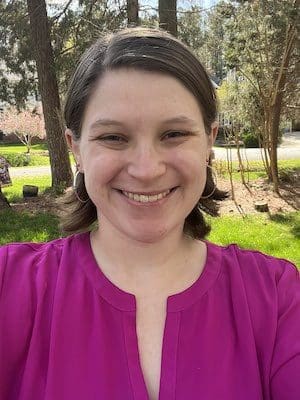
Chaplain Resident, an ordained Baptist minister, graduate of Campbell Divinity School, and a neurodivergent advocate. (Views expressed are those of Delaney and not intended to reflect those of her employer or other associates.)