
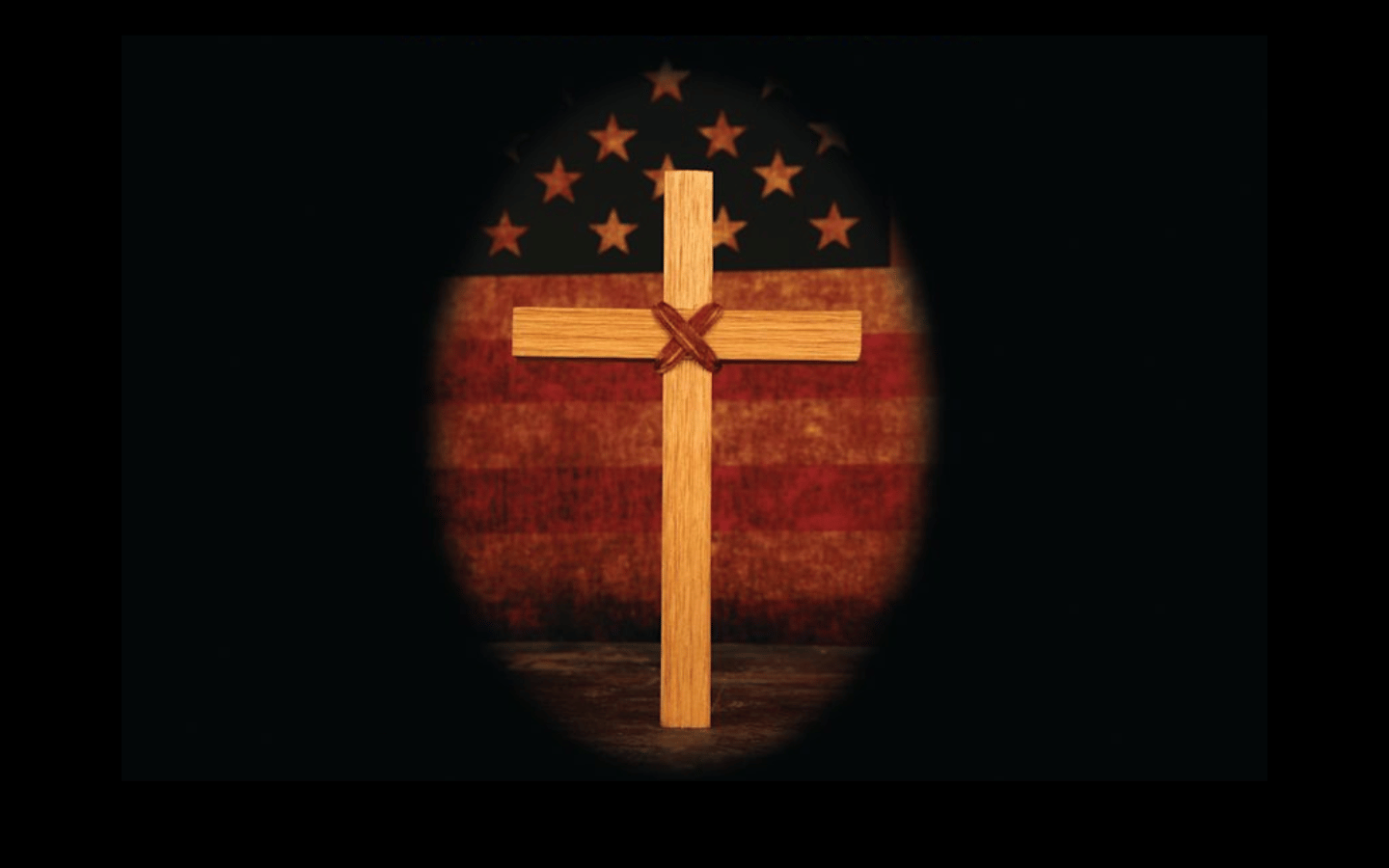
American Dominion: The Rise and Radicalization of a New Christendom by Keri Ladner is now available through Bloomsbury Press. The following excerpt from American Dominion shows the significance of Sean Feucht and his appeal among evangelicals, especially in using worship to create a war-like posture. Feucht is a worship leader and a popular figure in the New Apostolic Reformation (NAR) movement.

(Credit: Bloomsbury Press)
Sean Feucht had gone on numerous mission trips from the time he was a preteen. With Burn 24-7, he traveled all over the world to lead worship in some of the most dangerous locations for Christians – Iraq, North Korea, Afghanistan, to name just a few. These experiences of gathering with Christians who knew that they could be killed for their faith led him to develop a concept of what Christian persecution is, as well as a resolve to show what he called “brazen faith” in the midst of it.
So when the covid pandemic led to global shutdowns in the spring of 2020, he thought that he knew what he was dealing with. California Governor Gavin Newsom implemented strict lockdowns to help slow the spread of the virus, and one thing these lockdowns meant was that church services had to transition from in-person to online. Feucht figured that this move was fine for the first couple of months. After all, he had just lost a primary election that he was so certain God would cause him to win. This defeat had led him into a state of depression as he questioned everything about God and faith. Taking a break and staying home with his wife and four children came like a reprieve.
Then came the murder of George Floyd in May of 2020, and lockdowns meant nothing as cities across the country erupted into rioting and sometimes violence. Instead of staying home, people took to the street to protest police brutality and racist policies that have led to countless deaths of African Americans. Where was the church? Feucht wondered. As the country descended into the chaos of racial unrest during the covid summer of 2020, while churches were unable to hold in-person services, he reached the boiling point.
In July, Governor Newsom issued an order that churches that had begun meeting again could not sing. To Feucht, this order meant that Christians could no longer worship. He had smuggled Bibles into difficult-to-access countries, and now an American government was preventing Christians from worshiping together – at least worshiping as Feucht understood it. “So when we break the law overseas because foreign governments condemn Christian worship and evangelization, what are we to do when the laws of our own nation forbid the same practices?” he wrote in his second memoir, published in 2022. “Then, as tighter and tighter restrictions closed in around us in California, I started getting texts from connections I had made in those dangerous places overseas, asking me things like, ‘What’s going on with your government? I thought you had religious freedom, and they’re saying that you can’t gather, you can’t preach without a mask, and now that you can’t sing?” And then the ultimate question, a challenge really: “What are you going to do, brother?”
What he was going to do is use the greatest weapon that God had given to the church to tear down the strongholds that were gripping the country.
He was going to worship.
A few days after Governor Newsom’s order, Feucht gathered a crowd at San Francisco’s Golden Gate Bridge. He saw prophetic significance in the location, as “one of the gates in Jerusalem that leads to the Temple Mount is called the Golden Gate, and it was through this that Jesus entered Jerusalem.” Through the worship that he would lead on July 9, 2020, he would open up the “Golden Gate” to the West for Christ. Hundreds of people came. In Feucht’s telling, police officers who patrol the bridge for suicide jumpers thanked him. This event marked the first event in his “Let Us Worship” tour, a cross-country series of massive worship rallies that defied covid lockdowns and called on the church to wage spiritual warfare against a government that was trying to silence it.
With his guitar, he had what America needed at this critical hour. “Bold worship is like fervent prayer,” he wrote of the tour’s impact. “It is like the army marching tirelessly… It shouts and declares God’s faithfulness in the face of enemy fortifications. It forces the walls of the enemy to absorb the roar of victory before the victory becomes a reality.”
But then the question becomes, Who is the enemy?
- About the Author
- Latest Posts

Keri Ladner received her doctoral degree from the University of Edinburgh. She is the author of the forthcoming American Dominion: The Rise and Radicalization of a New Christendom.