

Martin Doblmeier
In his new four-part PBS documentary, Christianity at a Crossroads, filmmaker Martin Doblmeier examines institutional Christianity in the U.S. through the lens of church communities at different stages of vitality or decline. Stories include a network of house churches in Houston, congregations shaped by the immigrant experiences of Koreans, Latinos and Scandinavians, and a Catholic parish in New York full of young professionals.
The pastors Doblmeier interviewed span the theological spectrum. The film features appearances by Robert Jeffress, pastor of First Baptist Church in Dallas, and Adam Hamilton, pastor of the Church of the Resurrection, a United Methodist megachurch in Kansas City. Jeffress is well known as an ally and defender of President Donald Trump, while Hamilton is running to become the first Democrat elected to the U.S. Senate from Kansas in almost a century.
The contrasting stories of two congregations Doblmeier followed offer excellent case studies of what may lie ahead for the institutional church in America.
A Funeral
In 1904, members of Belding United Methodist Church (UMC) built a beautiful sanctuary that became an integral part of the central Michigan town’s life. It became the spiritual home for hundreds of people for generations. In Episode 1 of Christianity at a Crossroads, Doblmeier’s cameras captured a congregation of just a half-dozen or so people worshipping in the church’s cavernous sanctuary.
Because of years of rapidly declining membership and skyrocketing costs to maintain the 120-year-old building, the church recently announced it would close.
“When I came here as pastor two years ago, I came here with hope,” Belding UMC’s pastor, Melissa Wagner, said. “I had never been in a building so beautiful. My jaw hit the floor, and I said, ‘I get to work here?’”
On her first Sunday, a dozen people attended, all of them sitting in the back rows.
Members described years of outreach efforts and new ministries. “It seems like no matter what we did, nobody reached back,” Wagner lamented.
Belding UMC reflects a trend across the U.S. Doblmeier interviewed Mark Elsdon, editor of Gone for Good? Negotiating the Coming Wave of Church Property Transition, about the wave of church closures.
“The best estimates we have are that about 4,000 churches are closing in the United States per year,” Elsdon said. “And there are many more than that on the cusp, or wondering about closing, or thinking about repurposing, or just really looking at a different future than the past they’ve had.”
In an interview with Good Faith Media, Doblmeier said this thread has elicited strong emotions among viewers.
“I can’t tell you how many people have told me, as we’re releasing this film, how they see a reflection of their own church in the Belding church story,” he said. “They speak about how there are no more children, how small the congregation is, how large the church sanctuary is.”
He added, “I’ve heard so many people say, ‘This is kind of where our church is headed, and we have to face that.’”
A Thriving Congregation
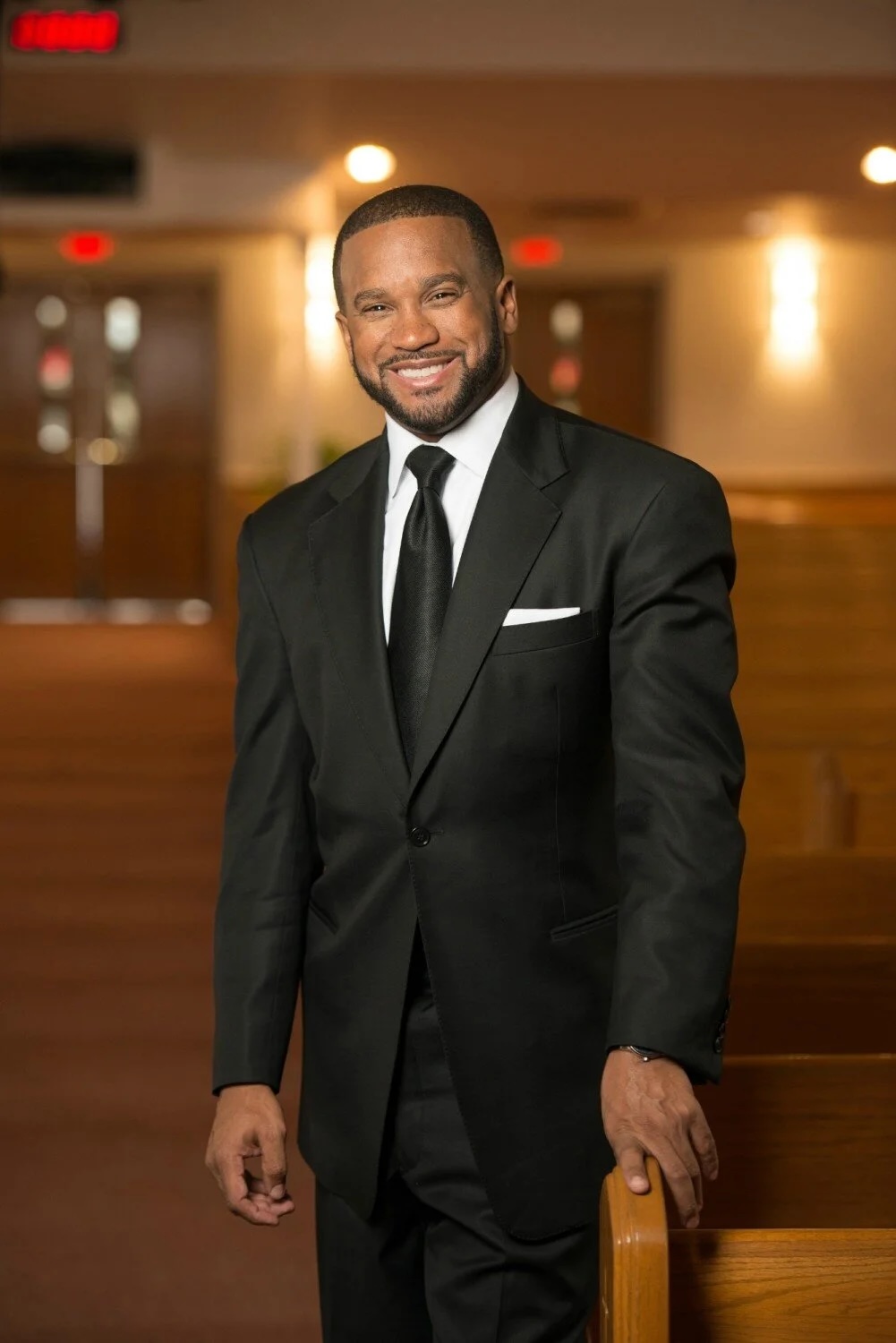
Rev. Howard-John Wesley
Almost 650 miles southeast of Belding UMC, a line of people waiting to enter Alfred Street Baptist Church in Alexandria, Virginia, stretches around the block.
“We were founded by ex-slaves, who scraped together nickels, literally, to try to find the money to establish a community of faith,” said Judy Fentress-Williams, a minister at Alfred Street. “We have gone through Jim Crow and segregation [and] that has shaped our identity.”
According to pastor Howard-John Wesley, that legacy fuels the church’s commitment to the physical location where its members worship. “No matter how much we grow, we will never abandon this site,” he said. “We will never move from this property, because it was purchased by slaves.”
Alfred Street Baptist Church is bucking the trend of church decline and closures, adding new members weekly. The church is also an active partner in the wider Alexandria community. In the film, Wesley told his congregation that the city recently agreed to support the church’s vision of building 145 affordable housing units in Alexandria.
The social justice stream of Christian theology, rooted in the story of the Exodus and lived out in the story of the descendants of enslaved people in the U.S., flows through the pews of Alfred Street Baptist Church.
Much of Christianity at a Crossroads addresses gender and sexuality, which are at the heart of many conversations about Christianity’s future in the U.S. Fentress-Williams, Wesley and the members of Alfred Street do not shy away from those issues.
“I was raised in a very conservative, traditional Baptist background,” Wesley said in the film. “Women didn’t speak from the pulpit. And if you dared to be queer, you’d better not let that be known to anybody.”
As Wesley formed relationships with gay Christians, his perspective began to change. “Their love for Jesus was a hell of a lot stronger than some folk in our church,” he said. “And it made me wonder, ‘Am I wrong on this?’”
Although there is disagreement on gender roles and human sexuality within the congregation, Alfred Street embraces women pastors and the full inclusion of LGBTQ+ people in the life of the church.
For Doblmeier, including Alfred Street in the film mattered because it “mirrors the life of this country.”
“To me, this film was a story that was ready-made for the 250th anniversary of this country,” he said. “I wanted to get this thing out in 2026 so it could be part of the celebration conversation about America.”
What Lies Ahead?
Christianity at a Crossroads doesn’t try to make a declarative statement about why many churches are dying and some are thriving. It simply describes the conditions on the ground, offering anthropological field notes on a handful of communities and institutions at various life stages.
Doblmeier, a Catholic, sees hope for Christianity’s future in the U.S.
“If we go down from what has been about 350,000 churches in this country to 250,000 churches, it’s not the end of the world,” he said in his Good Faith Media interview. “But if those are really good, healthy [churches], and they’re filled with people who really want to be there, not just feel as though they should be there because somebody told them that they should be there, I think we’re better off for that.”
The fourth and final episode of Christianity at a Crossroads will be released today on all PBS platforms. All episodes can be viewed here.
- About the Author
- Latest Posts

Senior Editor at Good Faith Media.