
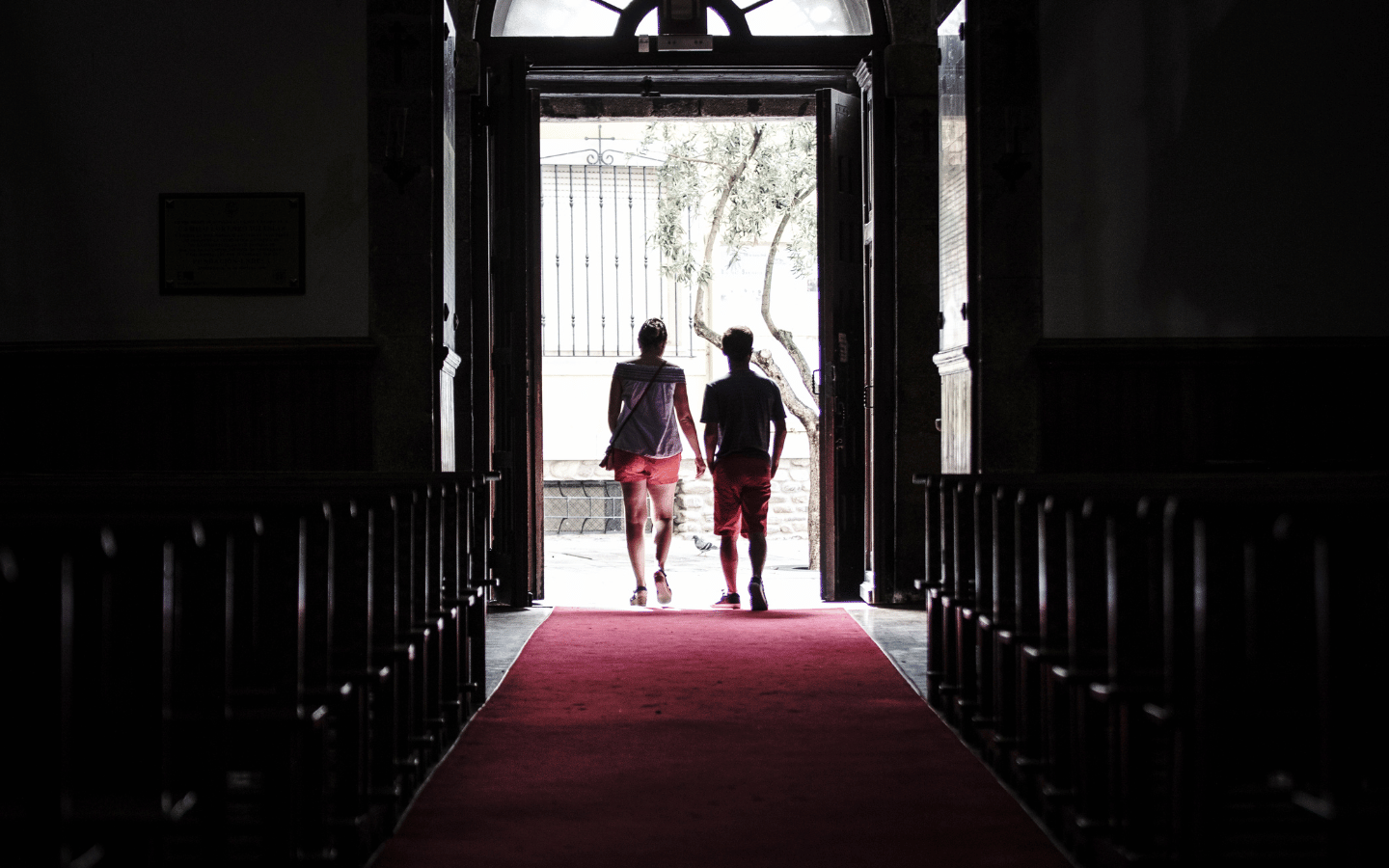
There’s something moving, growing, bubbling beneath the surface. It is an energy that can radically change how we view spiritual communities. This is happening despite empty pews and a decline in the American church.
The Spirit is breaking through, dismantling institutions and oppressive structures. In their place, the Spirit is unveiling something new.
While institutions are failing, the Spirit is not. While structures break apart, faith remains.
I am the executive director of the Federation of Christian Ministries (FCM), which considers itself a place of radical belonging for faith leaders and communities. Founded in 1968 by married Roman Catholic priests, our network has grown into an ecumenical home for ministers outside institutional boxes. We are a home for spiritual misfits, those who don’t (or do not want to) fit in.
Yet we are still faithful. We still minister. We still commune with the Divine.
We embrace the truth that if we are going to believe in a liberating faith, one that stands in solidarity with the oppressed, we must also liberate our structures.
Liberation theology’s core tenet, conscientization, or popular education, was designed to transform how we see power. As scholar Helene Slessarev-Jamir notes in her work on progressive religious movements, popular education helps people see their situation not as a closed world from which there is no escape, but as a space they can transform.
Advocacy groups and community organizing are championing this liberation. But what would happen if we could transform our structures and institutions to not only liberate our people from oppression but also liberate the faithful from institutional control?
This doesn’t mean we should never go to church again. It means rethinking what church even is.
Where else does the Spirit move? In nature? In the breaking of bread? In book clubs?
And for those like me who still love liturgy, are we liberating our language from that of the colonizers? Are we moving past a confined, structured, ancient way of prayer toward a more authentic, radical and inclusive communion?
My doctoral work is a retranslation of the Rosary, not as a means to give it new meaning, but to actually unveil the gospel truth behind structured language. When I say Mass, I try to use inclusive language. I also rewrite prayers that exclude groups of people or decenter important biblical characters such as Mary Magdalene.
Perhaps this means a more Ignatian way of reading sacred text: placing ourselves within the scene, creatively engaging with biblical characters, walking the desert path and speaking with the prophets.
Maybe it also means looking at secondary characters in the text. Instead of focusing purely on the twelve, perhaps we should look at Mary and Martha, the woman at the well, and the men who lowered their disabled friend through the roof to the feet of Jesus.
It might also mean moving outside of scripture in general when it becomes too confining. This looks like finding God in the outdoors, in the laugh of a baby, in the prophetic leaders fighting for justice.
Liberating our structures requires radical imagination. What are the possibilities for finding the Divine outside of Empire? Outside of tradition? Outside of institution?
It’s up to us to find the answers to this question.
It’s up to us to take the leap of “faith,” so to speak, to move beyond traditional religious expectation and ritual into something new. Into something liberated. Into something truly divine.
- About the Author
- Latest Posts
Rev. Madison Jones McAleese (she/her) is the Executive Director of FCM, the Federation of Christian Ministries. She works at the intersection of faith and justice and is interested in translating ancient spiritual rituals into modern, liberated practices. She is ordained with the Catholic Apostolic Church in North America and is a doctoral candidate in social transformation at the United Theological Seminary of the Twin Cities.