

Zephyr Point Presbyterian Retreat Center, in partnership with the North Central California Presbytery, held its annual Justice Conference on May 11 through 14, 2026. The conference theme, “The Work of Advocacy: Humble, Kind, Just,” was taken from Micah 6:8. Good Faith Media (GFM) offered lectures, workshops, worship and sound advice to participants on how to be faithful followers of Christ committed to the calling for social justice.
Clergy and lay leaders from California, Nevada, Oregon, Colorado and South Carolina enjoyed the picturesque setting on the east side of Lake Tahoe in Nevada, beautiful weather, delicious food and lively discussions. Attendees represented Presbyterian, Episcopal, Lutheran and Unity congregations. They all experienced the rich, inspiring content provided by the GFM staff.
After check-in and dinner, GFM’s CEO, the Rev. Dr. Mitch Randall, a citizen of the Muscogee Creek Nation, presented his Theology of Wholeness, an alternative to the theology of conversion. He stated that the Great Commission, given by Jesus to his disciples to go, baptize and teach people Jesus’ commands, has been perverted over the centuries into a call to conquer, convert and control, leading to Christian communities that have little to do with loving God and loving neighbor, especially in the United States.
It’s time to reimagine faith, Randall challenged his audience. It is time to repudiate the Doctrine of Discovery and Manifest Destiny. It is time to decolonize faith and any theology that sees anyone as less than a beloved child of God.
The Rev. Kali Cawthon-Freels, a pastor, writer and leader of GFM’s Faithful Pride Initiative, led the first morning reflection outside on the shores of Lake Tahoe. She shared scripture, songs and stories to encourage us to open our hearts, minds and spirits to learning new things during the conference. She spoke of how “queering the incarnation of Jesus,” Jesus becoming flesh, could be a way that Jesus puts on drag, becoming one of us.

Rev. Kali Cawthon-Freels
Craig Nash, Good Faith Media’s senior editor, led a workshop on advocacy writing, reminding his audience of the theme to do justice, love kindness and walk humbly with God. Embedded in this Bible verse is the call to stand up, speak out and step forward, especially for others who have not been allowed to flourish to their full God-given potential. Silence is not an option for people of faith. One must know their audience and choose multiple platforms to engage in the act of persuasion on behalf of others and write to effect change.
The Rev. Dr. Starlette Thomas, director of The Raceless Gospel Initiative at Good Faith Media, led the justice conversation, “Take Me to the Water: Doing Justice to Our Bodies Through the Lens of Baptism.” We are each claimed as a child of God and equal in God’s eyes, as written in Galatians 3:27-28: “neither Jew nor Greek, slave nor free, man nor woman,” resistant to the status quo.
Thomas spoke of how the Bible never mentions race or the color of one’s skin. Historically, social constructs were developed, especially in America, to create a false narrative and hierarchy that gave power and control to an elite few, namely white men, over all others. Sadly, we are taught and conditioned to believe differences are diminishing characteristics.
This is not what God intended for God’s children. Everyone is somebody. White supremacy has created a lack of unity and solidarity and must be unlearned and dismantled.
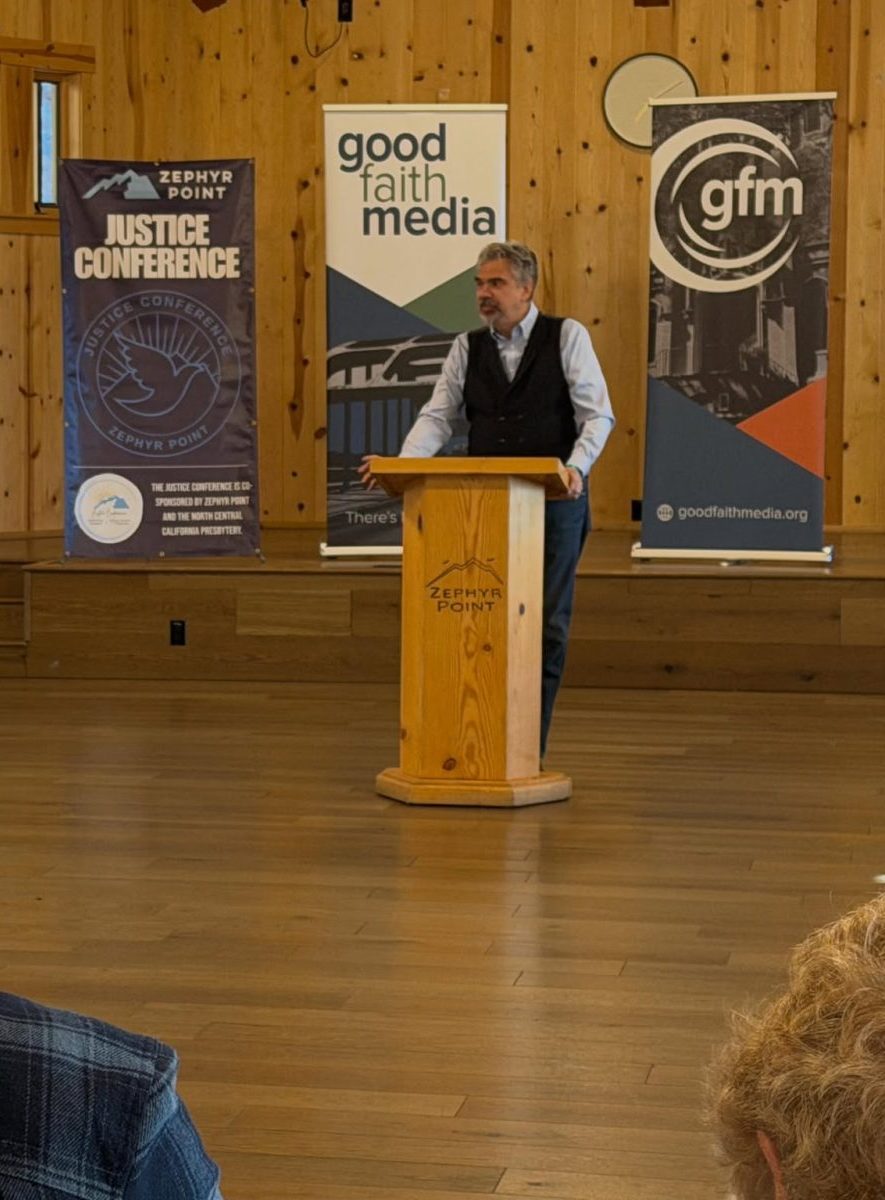
Dr. Miguel A. De La Torre
Dr. Miguel De La Torre, an international scholar, writer, professor and activist, served as the keynote speaker at this conference. It would not be an overstatement to call him a prophet. He unashamedly speaks truth to power but is honest enough to acknowledge his fear.
Privilege allows a person to walk away from difficult conversations, hard work and ugly truths, he stated. But as soon as one walks away, they cease to be Christian, echoing Nash’s “silence is not an option.” De La Torre encouraged “embracing hopelessness,” the title of his keynote.
When we focus on the ease of hope, when we weaponize the hope of heaven to pacify those who have been marginalized, we are not living in the dust of Holy Saturday, between Good Friday and Easter Sunday. White ideology and Eurocentric theology are too quick to jump to the joy of Easter without looking at the full truth of the damage done to communities of color. When religion focuses on the personal—sin, salvation and relationship with Jesus—individuals can ignore the realities of the larger community, especially those who have been othered.
If this hopelessness leads to desperation, not despair and giving up, then it will propel one to action. De La Torre encouraged participants to get involved, hold systems accountable to their rhetoric, and use their own privilege and voice to acknowledge complicity in oppression and facilitate change.
Wednesday morning began lakeside again, with the Rev. Dr. Starlette Thomas leading worship. Not only is Thomas an engaging speaker, but she also has an incredible singing voice. Preaching on John 5, she led us through the story of the man who had been ill for 38 years, waiting by the pool for healing. Jesus asks him, “Do you want to be made well? Then take up your mat and go.” We need to take up our mats and wade into the water.
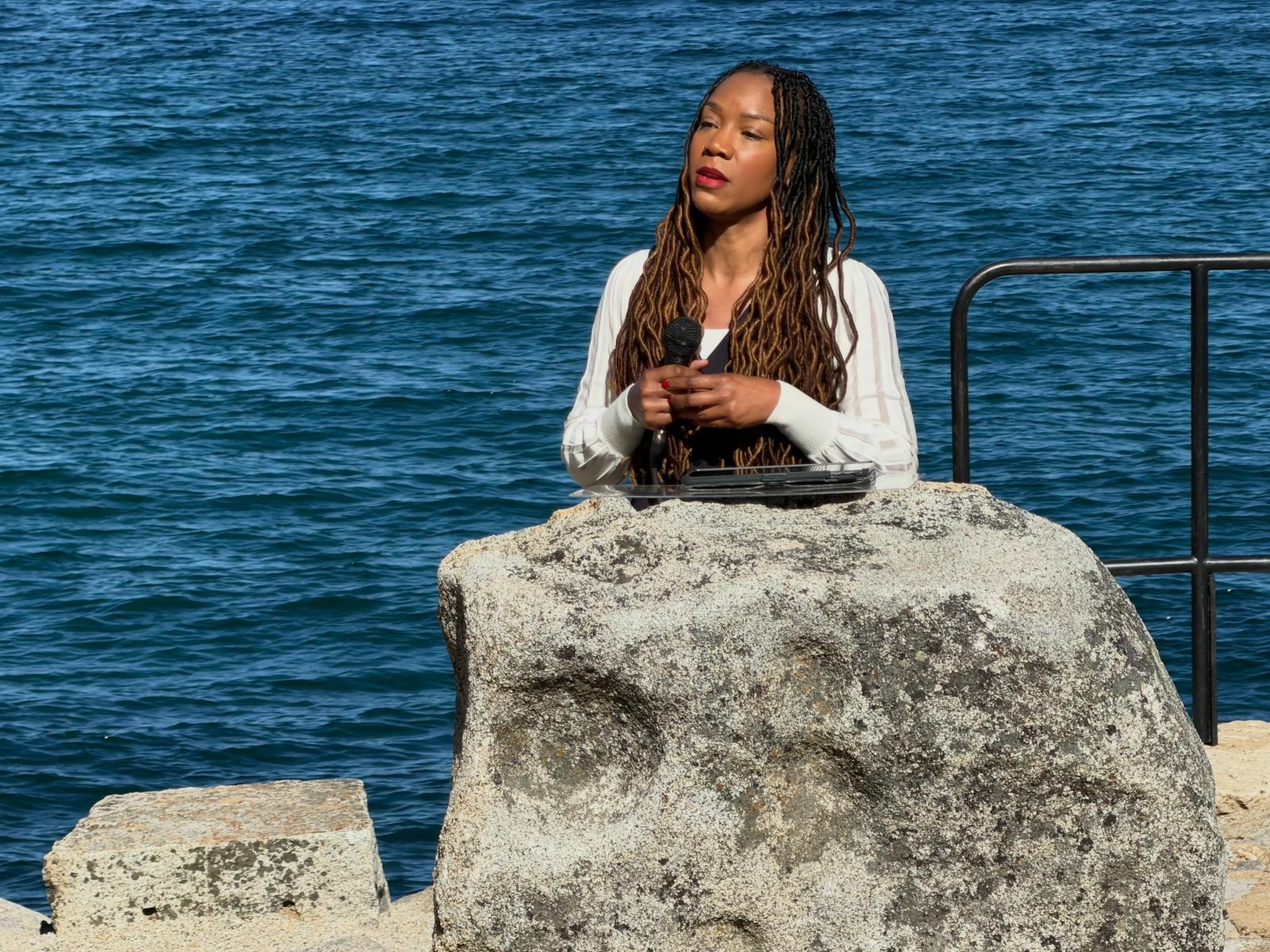
Rev. Dr. Starlette Thomas
Cally Chisolm, creative coordinator for publishing and marketing, gave a workshop titled “ChatGPT Isn’t Your Friend: An Expansive Overview of AI’s Impact on Our Lives.” Some artificial intelligence can be useful and is used frequently in our daily lives, but the bigger picture, she shared, has many frightening aspects. Data centers in our country perpetuate environmental racism, disproportionately impacting poor minority communities with pollution, dire health impacts and rising energy costs. There are climate change issues and mental health issues for those working on content for AI and those using it. Chisolm nails it when she says, “Convenience has a heavy cost.”
Cliff Vaughn, media producer at GFM, makes nonfiction videos, documentaries and podcasts to highlight injustices around the world. He offered “Storytelling as Advocacy,” sharing multiple clips of his work. Seeing and hearing from someone who experienced something is far more impactful than just hearing about it.
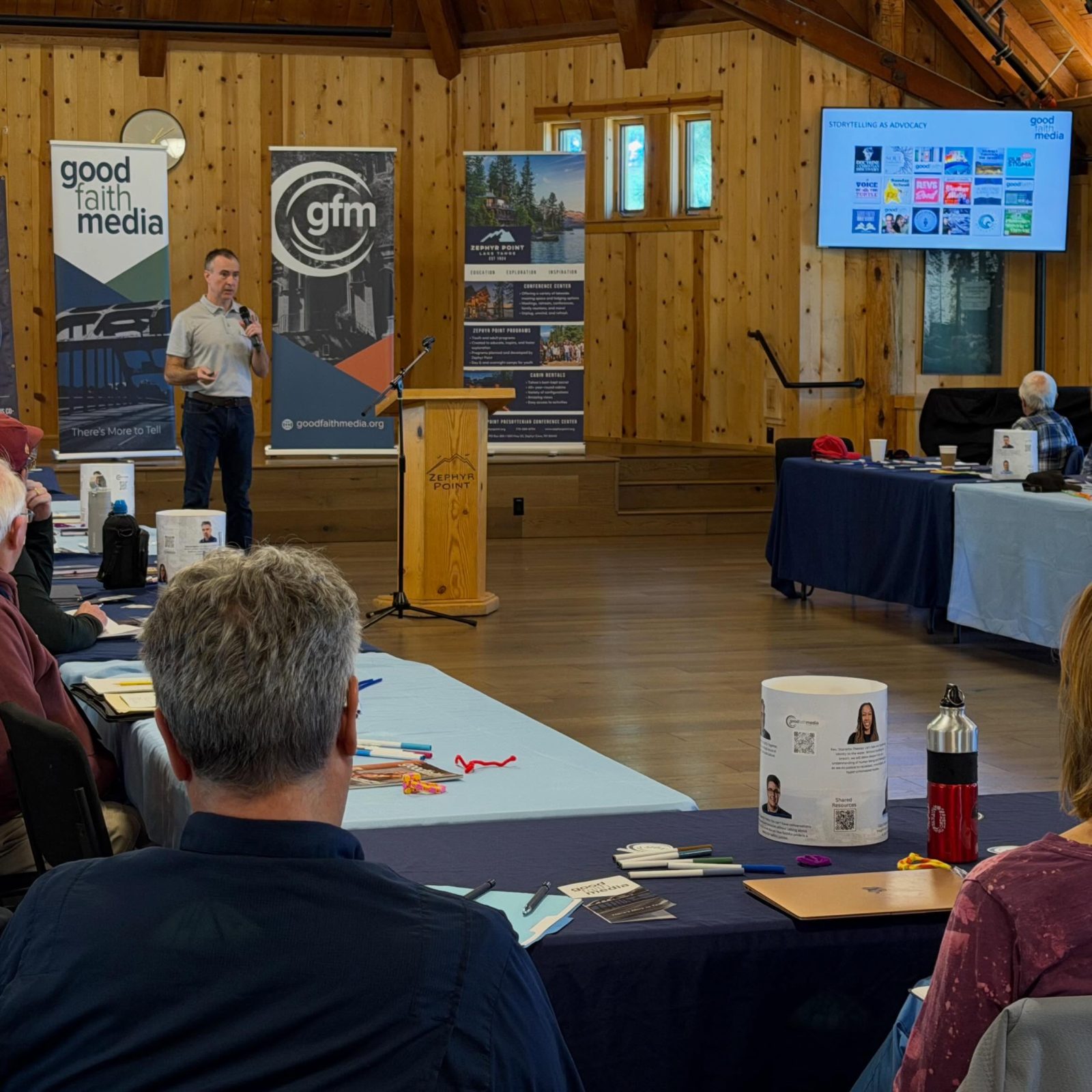
Dr. Cliff Vaughn
Cawthon-Freels then presented “Faithful Pride as a Model for Social Justice.” “Arrogant pride,” she taught, is placing oneself above others and assuming knowledge of another, which causes disconnection and apathy. Faithful pride, on the other hand, is vulnerable, truthful, impactful and intelligent, knowing oneself and getting to know others, thereby cultivating empathy. With empathy, we can truly love and care for one another, admitting when our actions hurt others. We must recognize that God loves everyone and is proud of everyone, as God proclaimed at Jesus’ baptism.
De La Torre’s final keynote focused on immigration, a follow-up to the documentary he and his son, Vincent De La Torre, produced called “Trails of Hope and Terror,” which participants viewed the previous day.
Immigration is a complex and difficult topic. The system is broken, and many are unaware that the U.S. government’s actions abroad have led people to seek refuge here. Crossing the desert to enter this country is an act of desperation.
Often led to believe they will be welcome in the U.S., people who survive the desert find a much different reality. The human rights violations are the worst since Jim and Jane Crow.
Every three days, four brown bodies die on the U.S. side of the border alone. Food and water left by Good Samaritans are destroyed by sadistic Border Patrol agents, as documented in the film. The U.S. government, in conjunction with private prison companies, profits from this broken system with no incentive to fix it.
On the last morning, the presenters sat as a panel to answer final questions and wrap up the conference. The major takeaways included moving from Eurocentric individualism to a more communal way of living, as practiced by most other cultures around the world, acting with humility, and living with the knowledge that we are all connected and that the world is through the love of God.
Finally, all gathered in solidarity to share communion, a meal of bread and “wine,” the body and blood of Christ. Reminded that all are bound together, like a paperclip binds paper, participants were sent out inspired, challenged, and motivated to return to their lives to do justice, love kindness, and walk humbly with God.
- About the Author
- Latest Posts

Pastor at St. Stephen’s Lutheran Church, El Dorado Hills, California.