

In July 2016, I visited the U.S. Holocaust Memorial Museum. After several previous opportunities to see some exhibits, this was the first time I had my act together enough to reserve an advanced ticket that allowed access to the entire museum.
This visit coincided with the 2016 Democratic National Convention. The opposition (at that time) seemed too absurd a reality to imagine coming to fruition, so this trip held an additional layer of depth and meaning.
Additionally, I was leading a group of college students discerning a call to vocational ministry, encouraging them to understand “public witness” and “social holiness” as integral parts of answering such a call. The trip also carried the weight of my clerical identity.
It was the third floor, where the Permanent Exhibition commenced, that had the deepest impact on me at that fateful time in our nation’s history. From there, the tour doesn’t begin with the horrors of deportations, concentration camps, and gas chambers.
Where it Begins
It begins with propaganda. It starts by laying the foundation for the ideology of the Nazi regime that may have started with Hitler and a fringe party, but soon spread like a virus to many a “good-hearted,” average German citizen.
We would be wise to remember, however, that it was not the majority of German citizens who voted for Hitler. He was not “democratically elected” in the way we understand that term within our U.S. two-party system.
Hitler only received 37% of the vote when he ran for office. But that was enough for him to utilize democratic processes—including attempts at overturning election results—to enable the virus of authoritarianism to eventually take hold and rule an entire nation.
The third floor of the Holocaust Museum was jarring, to say the least, set against the backdrop of the hateful and often violent rhetoric we were witnessing from Donald Trump throughout his campaign—and its mirroring back to him from what we hoped was a minority of our neighbors.
At first, I was much like one of those naïve White women that SNL so masterfully mocked immediately following the 2016 election. The things Trump was saying made it seem absurd to think he could win.
But when I visited the third floor, I had to admit there was something eerie about the subtle similarities between the Nazi propaganda machine and the way narratives were being created, especially those about immigrants and communities of color. Still, I couldn’t fathom it.
Then, on election night, even the most naïve among us learned that propaganda, messaging, and rhetoric have a way of becoming ideology. And ideology is much more difficult to root out.
Where We Are
Fast-forward to 2025. We now find ourselves squarely amid what Trump proclaims as a “mandate” to implement whatever levels of authoritarianism he feels inclined to unleash on immigrants and citizens alike. We are seeing the occupation of our nation’s capital by National Guard members who have been authorized to carry weapons as they patrol our city’s streets and use force “only as a last resort.”
The uptick in ICE presence throughout the nation is posing a threat to anyone who looks suspicious or Latine enough to warrant what ICE agents determine to be probable cause for harassment and arrest.
Amid all that is happening in communities across the nation, institutions of higher education have begun bowing to the authoritarianism that is quickly taking root. The Chronicle of Higher Education is tracking at least 392 colleges in 46 states and D.C. complying with Trump’s anti-DEI agenda, and Columbia University recently agreed to pay a $200 million fine to restore federal grant funding. While they are not driving the propaganda machine, their capitulation opens the doors for higher education to be steamrolled by it.
And then there are the museums.
On the day I visited the Holocaust Memorial Museum in 2016, I also visited the Smithsonian National Museum of American History. With displays containing artifacts from the Muppets, Abraham Lincoln’s hat, and the First Ladies’ inaugural ball dresses, it was a stark contrast to the overwhelm of history contained in the Holocaust Memorial Museum.
While I’m sure Kermit the Frog and Dorothy’s slippers have nothing to fear, recent threats from the Trump administration to the integrity of our nation’s twenty-one Smithsonian museums are something every American should be gravely concerned about.
Propaganda, messaging, and rhetoric become ideologies. And if Trump has his way, MAGA ideologies will become our history.
Collectively, the Smithsonian museums are a national treasure. They not only display important (and fun!) exhibitions of the stories that comprise American history, but they also serve as key research and archival centers.
But they don’t always tell a flattering story of this nation’s complex narrative. Instead, they seek to tell the truth.
In 2023, I visited the Smithsonian National Museum of African American History and Culture. An incredible and critical work of truth-telling, it is now one of the museums directly targeted under Trump’s orders to review the Smithsonian Institute, citing “the exact process that has been done with Colleges and Universities.”
The reason? He’s concerned about the museums’ portrayal of things like “how bad Slavery was.”
Propaganda, messaging and rhetoric become ideologies.
Our Responsibility
Then Jesus said… “You will know the truth, and the truth will make you free” (John 8:32).
As disciples of Christ, we bear a responsibility to ensure our nation’s history is told in truthful ways. Because truth is so often obscured to protect dominant systems—including the church—and those in power, we who believe in justice and God’s reconciliation are called to help create healing relationships in the world.
Protecting Smithsonian museums may not be at the top of your church’s checklist of justice initiatives, given the current political landscape. But if propaganda becomes ideology, then a faithful witness in these times bids us all to become lay historians: to seek the truth, tell the truth, and remain vigilant in freeing people from ideologies that propagate domination and erasure.
- About the Author
- Latest Posts
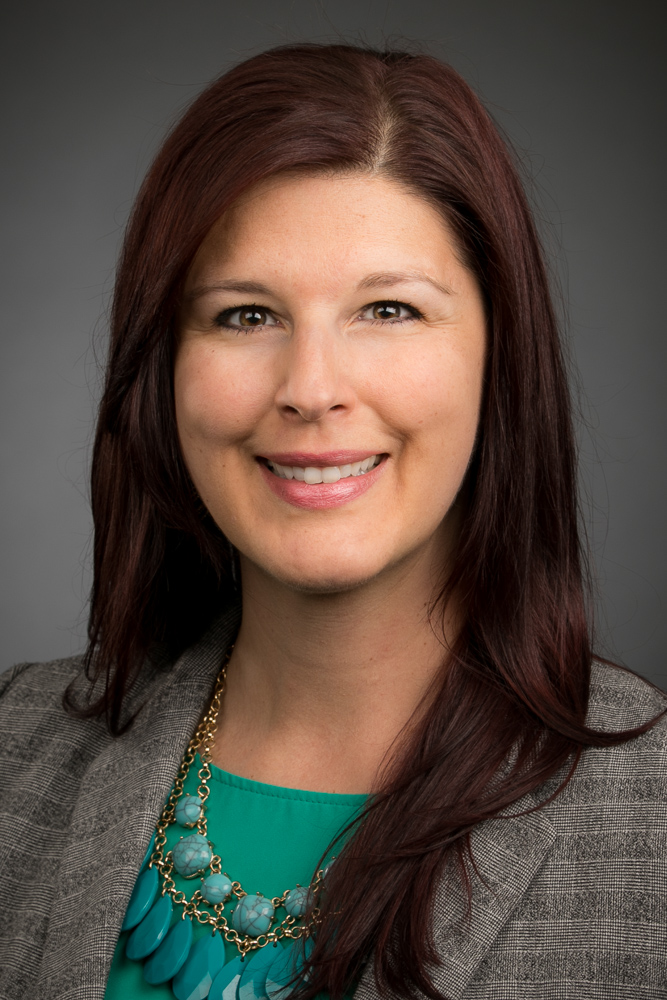
Dr. Rebecca M. David Hensley holds a PhD in religious studies, with an emphasis in theological and social ethics. She is a member of the adjunct faculty for Iliff School of Theology and an ordained Deacon in the United Methodist Church.