
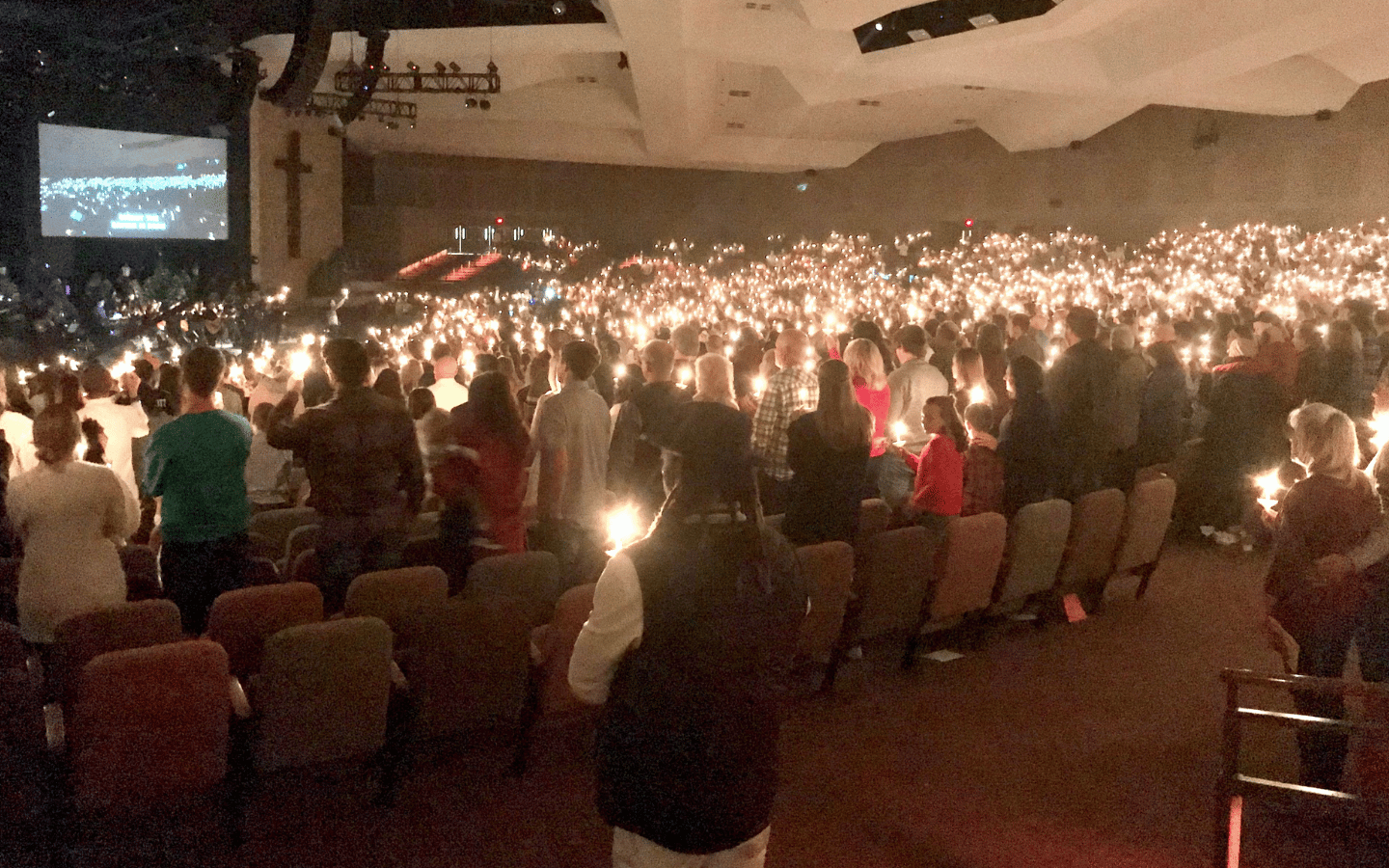
Megachurches are a continually evolving phenomenon in the United States. They have often attracted criticism for supposedly prioritizing financial prosperity over the well-being of their congregations, neighboring communities, and the rest of the world.
Particularly in this age of social media, megachurches (characterized by a membership of 2,000 or more) are often under fire for holding worship services with laser light shows, sending teenagers on mission trips that are better described as tropical vacations, or similar antics.
These are valid critiques. Using church resources and congregational tithes for frivolous purposes instead of helping our vulnerable neighbors is inappropriate and irresponsible.
However, taking a deep dive into the literature and day-to-day operations of megachurches, as well as conducting ethnographic research, allows for a more optimistic outlook.
Many opponents of megachurches center their rhetoric on finances. Outrageous pastor salaries and comparisons to for-profit corporations headline many of these discussions.
So the question begging to be answered is, “Are megachurches just cash cows?” Two Kentucky churches—Southland Christian Church in Central Kentucky and Southeast Christian Church in Louisville—may offer clues to the answer.
In my hometown of Louisville, Southeast Christian Church, with a membership of over 25,000 across 14 campuses, is known as “Six Flags Under Jesus.” Despite this reputation, many of my high school classmates and old friends have found a home at Southland: plugging themselves into Bible study groups, serving as youth group leaders, and building intergenerational relationships with others in their community.
Of the $75 million Southeast brought in during 2024, $9.6 million went to grants, disaster aid, and church plant support. This number may seem like an insignificant fraction of total donation dollars, but in the context of church financial operations, it makes a lot of sense.
A survey of more than 3,000 churches estimates that the average share of church budgets accounted for by salary expenses is roughly 50%. So Southeast likely spent between $30 and $35 million on salaries for its 500+ employees.
These estimates leave around $30 million for operations, ministry expenses, and capital improvements—all essential to maintaining a church. Not to mention, Southeast spent an undisclosed amount on smaller philanthropic projects, such as packing boxes for Operation Christmas Child.
Money aside, Southeast’s ministries are vast and fulfill a variety of needs. Amid a rampant epidemic of loneliness, megachurches foster strong community and provide a place of belonging for many. Small churches are praised for their potlucks and fellowship events; why do many take issue with megachurches for doing the same?
Southland Christian Church in Central Kentucky has around 12,500 members across its five locations. Located just a mile from my college campus, Southland’s Danville campus is well integrated into the central Kentucky landscape. Southland’s young adult ministry team coordinates and pastors my school’s Fellowship of Christian Athletes (FCA) chapter, with families from the congregation taking turns preparing meals for us each week.
Southland facilitates several other unique and valuable ministries. The church sponsors local and international mission trips, such as supporting the Appalachian program after our Eastern Kentucky neighbors were ravaged by natural disasters. It organizes events such as its annual “Jesus Prom,” a free night of celebration and fun for adults with special needs, with a volunteer presence numbering in the hundreds.
Southland’s annual springtime philanthropy has members packaging more than a million meals to distribute to those in need. Megachurches like Southland perform charitable acts at a rate similar to that of smaller churches, but at a much greater scale, thanks to the very feature they often attract criticism for: their size.
At the end of the day, concert-style worship will never be everyone’s preference. TV preachers and proponents of the prosperity gospel will lead many to conclude that all megachurches are unjust cash-grabs. However, if these two Kentucky churches are any indication, megachurches are a crucial component of the American church ecosystem and help carry on the work of Christ.
- About the Author
- Latest Posts

Luke Emerson is a junior at Centre College in Danville, Kentucky studying business and education. He is excited to serve as Good Faith Media’s fall 2025 intern.