

In early adulthood, I developed a strong affinity for plaintive, minor-key Advent hymns, moving away from traditional Christmas carols as Advent stretched toward Christmas Eve.
Plaintive music fits the mood of the mournful Jewish communities of first-century Palestine. These communities lived under Roman military occupation and under corrupt, exploitative practices by Temple authorities controlled by the 1 percent.
The Romans squeezed tribute from the Judeans, disproportionately poor farmers and small merchants. The Temple’s Sanhedrin—the judicial system Rome permitted to rule over civil affairs—often sided with large landholders over subsistence farmers in disputes over land, commerce and debt.
The Temple treasury itself held a monopoly on the sale of sacrificial animals. Its money changers charged exorbitant exchange rates to pilgrims from afar.
The popular Advent hymn tune “O Come, O Come, Emmanuel” is adapted from Veni, Veni, Emmanuel, a Requiem Mass chant by an anonymous 15th-century French composer. In 1851, English composer Thomas Helmore published the adapted tune as we now know it, pairing it with a modern translation by John Mason Neale that is now commonly used in Protestant churches.
With darkness versus light framed as a binary choice, modern North American culture inevitably prefers a chirpy, jingle-belling, cornea-shrinking halogen glow to Advent’s shadowy, foreboding context. We want our angels to be cherubim—chubby infants with harmless allure. We do not want scary interruptions.
We do not want smelly, uncouth shepherds stinking up our nativity creches. We cringe at the thought of pagan sages serving as models for pilgrimages to honor the Christ child or of astrological phenomena guiding their way.
We do not want Jesus to be a refugee.
First, in utero, he is sheltered in Mary’s womb as she and Joseph—complying with a Roman decree—travel to Bethlehem for census registration, Caesar’s means of calculating tax liabilities and compiling military conscription lists. Then again, he is a refugee as an infant, fleeing to despised Egypt, the memories of Hebrew slavery still fresh, to escape Herod’s henchmen and their bloody campaign to eliminate potential kingly rivals through the gruesome execution of male babies in Bethlehem.
We have not yet learned, as Valerie Kaur suggests, that Advent’s darkness might be a womb rather than a tomb.
As filtered through Western intellectual and cultural traditions, the Bible appears to have a pronounced bias favoring “light” and opposing “darkness.” Surely, there is plenty of evidence to justify that assumption.
But another reading is also possible—a minority report more pronounced in Christian mystical traditions—where the Holy One is encountered in darkness.
“Then the people stood at a distance, while Moses drew near to the thick darkness where God was” (Exodus 20:21).
We greatly prefer the certainty of creedal conformity, which is, in fact, a way of taming God’s purpose and presence. This stands in contrast to apophatic theology, whereby we can positively say what God is not but cannot, in the end, make a copyright claim on God’s promise or build a wall restricting the Holy Spirit’s movements.
Yet consider these things: According to the psalmist, fearlessness comes to those who trek “the valley of the shadow of death” (Psalm 23:4); good gospel news comes “to those who sat in darkness” (Isaiah 9:2; Matthew 4:16). To these faithful ones, “the treasures of darkness” are promised (Isaiah 45:3).
Hope is not hope outside the context of threat.
The labor of spiritual formation comes by way of entering shuddering occasions with the confidence that God is not yet done. It is to express confidence that death has lost its sting, that nothing can separate us from the love of the One who takes delight in us, and trust in the One who, in the end, can save simply because we are delectable, despite our flaws, in heaven’s reckoning.
We would do well to pay attention to plaintive voices. We must heed the melodies of lament and arias of agony—from those left behind, the left out and the leftover, those considered surplus and disposable by existing principalities, economies and social consensus.
Their destination is our proper journey into the pathos of God, the One who dares to reside in the heart of human violation and despair. This God is found in the depths of every apocalyptic season.
God is determined to shine healing light on every abscess, to humble the heights and lift the arroyos, to flip the script on every damnable, arrogant narrative, to announce dawn’s joy to all whose nights have marinated in tears.
If the beatific consummation seems to tarry, be patient (see Habakkuk 2:15). Its arrival is assured for those with ears to hear and eyes to see—those with readied, empty hands and hearts made supple by mercy’s sway.
For on that day, “all flesh shall see the glory … the salvation of our God” (Isaiah 40:5; Luke 3:6).
“O Come, O Come, Emmanuel”
New lyrics, old hymn
O Come, thou fount of Mercy, come
And light the path of journey home
From Pharaoh’s chains grant liberty
From Herod’s rage, confirm thy guarantee
Rejoice! Rejoice! Emmanuel
Shall come to thee, O Israel!
O Come, thou Watchful Keeper, bestow
Glad heart, warm home to creatures below
Give cloud by day and fire by night
Guide feet in peace with heaven’s delight
Rejoice! Rejoice! Emmanuel
Shall come to thee, O Israel!
Secure the lamb, the wolf no longer preys
Secure the child, no fear displays
The vow of vengeance bound evermore
God’s holy mountain safe and adored
Rejoice! Rejoice! Emmanuel
Shall come to thee, O Israel!
Arise, you fear-confounded, attest
With Insurrection’s voice confess
Though death’s confine and terror’s darkest threat
Now govern earth’s refrain . . . and yet
Rejoice! Rejoice! Emmanuel
Shall come to thee, O Israel!
O spring, from Jesse’s root, the ransom flower
From Mary’s womb, annunciating power
Bend low you hills, arise you prostrate plain
All flesh shall see, all lips join in refrain:
Rejoice! Rejoice! Emmanuel
Shall come to thee, O Israel!
O Come, announce the Blessed Manger’s reach
All Herod-hearted, murd’rous plans impeach
Abolish every proud and cruel throne
Fill hungry hearts, guide every exile home.
Rejoice! Rejoice! Emmanuel
Shall come to thee, O Israel!
- About the Author
- Latest Posts
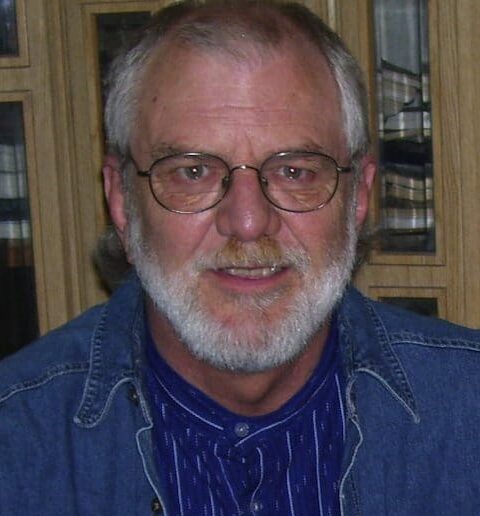
Curator of prayerandpolitiks.org, an online journal at the intersection of spiritual formation and prophetic action, and author of, most recently, In the Land of the Willing: Litanies, Prayers, Poems, and Benedictions. He was the founding director of the Baptist Peace Fellowship of North America and founding co-pastor of Circle of Mercy Congregation in Asheville, North Carolina.