
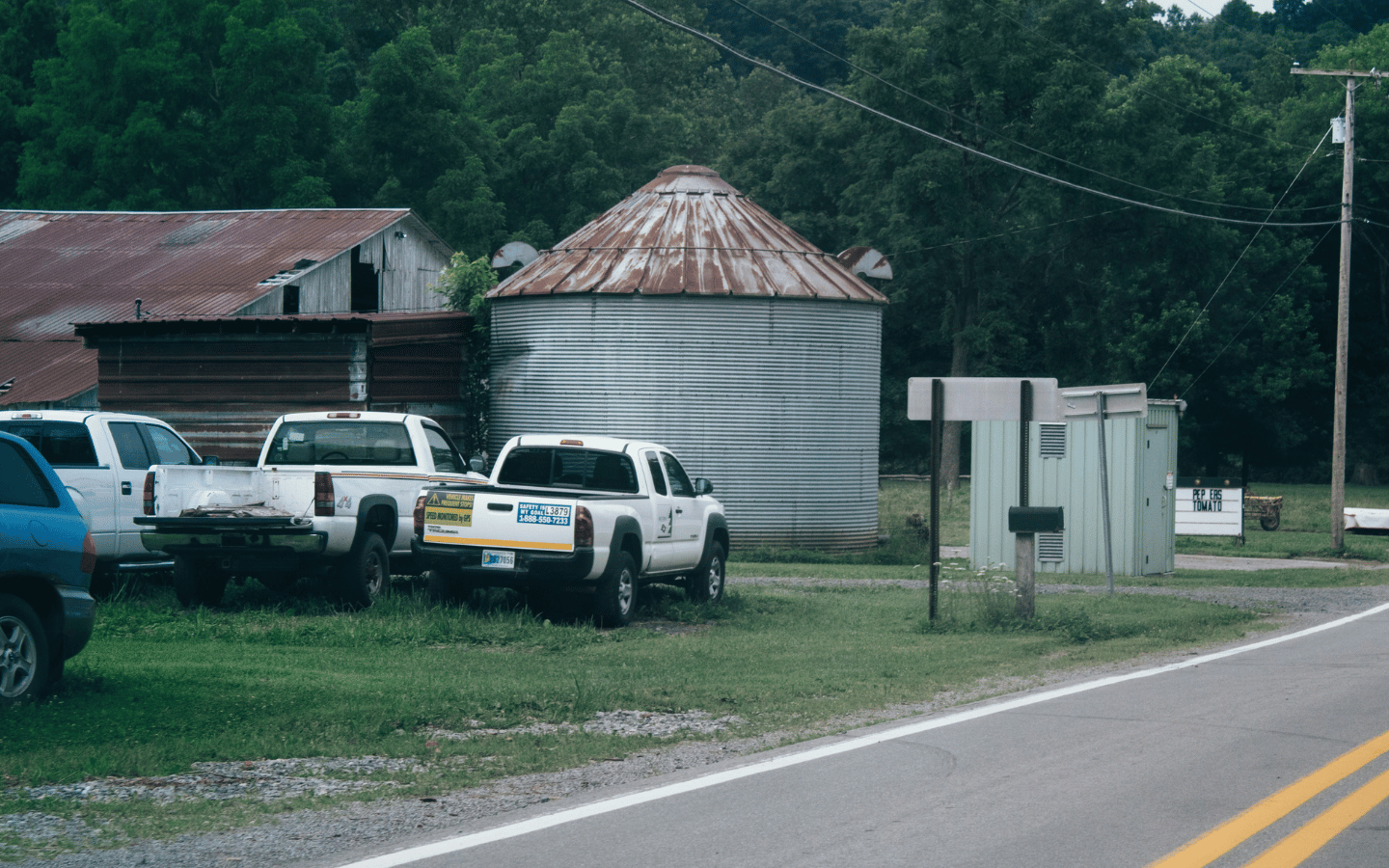
When my father died in 2019, I inherited three vehicles parked on the side of a mountain in western North Carolina. I had no idea what to do with them.
They certainly wouldn’t fit in front of my rowhome in Philadelphia, where the parking police are so bad they have their own reality TV show. But I soon found out a distant cousin of mine, Tom, whom I hadn’t spoken to in years, specialized in fixing and selling vehicles. I reached out.
Appalachia isn’t a place I’ve always felt welcome, even though generations of my family have lived and died there. I lost touch with most of my relatives after my mother died, and the more rigid their political views became, the less comfortable I felt even trying to stay in contact. But here I was with a real need for help, which meant talking with a man who thought Trump was a good idea.
Tom was as kind and helpful to me as he could be. He drove an hour to collect all the vehicles, repaired them, sold them for me and bought my dad’s prized truck to keep for himself.
Tom restored it to a better shape than it had been in years. He pulled up in my dad’s refurbished truck at the memorial service, which I know made my dad look down and smile, wherever he was.
Over the years, I’ve kept in touch with Tom every now and then, usually in times of crisis. Because my professional work has focused on trauma-informed education and peaceful collaboration, I’ve always been intentional about working to understand Tom’s worldview. I’ve spoken to him about health challenges when his child got a diagnosis; I’ve counseled him when dealing with his sister’s alcoholism; and I’ve sent birthday and Christmas cards. I was intentionally curious—always learning more about the inside of a worldview that felt so hostile to my own.
Tom’s world is radically different from mine, even though we share a country. He startles me, angers me, and confuses me.
He owns guns and is, shockingly to me, proud of his middle schooler’s shooting ability. He physically threatens teachers who don’t give his child a good grade. He doesn’t trust doctors’ diagnoses or pain treatment plans. His response to anything that feels threatening—and, to him, most things do—is to fight.
Tom and I will never see eye to eye, but my relationship with him isn’t about sharing a worldview. I believe Tom offers me insight into understanding the chaotic reality we’re in now.
Somehow, I have come to feel a sense of peace and compassion for Tom. My research into the impact of historical trauma helps me see the distortion in his lens. Tom is not crazy. But he is traumatized and, like most of us, he doesn’t know it.
Trauma stays stuck in us because we often don’t have the resources to metabolize life’s hardships. Its power lies in its operation at a non-intellectual level, often causing us to react intensely even after the threat is no longer present. The challenge is that we can’t force it to go away. Neuroscience research shows that popping out to see the distortion in the lens requires compassion, not punishment.
Tom’s been fighting so long that he has no idea the world could be any other way. If he can’t see the impact of his inner experience, then being in relationship with someone who can is the best place to start.
Trauma distorts. If fighting for everything you’ve got is all you’ve ever done, then a politician who tells you the world is awful makes sense.
Someone who says he’ll fight for you, then invents reasons to go to war, appears to be offering a good solution. Being told you’re a victim of your neighbor simply confirms the deep suspicions arising from your lack of a sense of safety, valid or not.
If you’ve struggled and felt like help never comes, then desperation is just the way the world works. You fight for whatever you’ve got. You get arrested for beating up the teacher at school. You scream at the doctors diagnosing your child. You threaten your drunk sister on your lawn.
If peace is only conceptualized as winning the war, then war is life, and peace remains a distant goal. This distorted reality is one that Tom—and millions of other Americans—find normal, and it won’t change until someone shows them that fighting isn’t required.
As our country constricts in response to political fearmongering and reels from a barrage of daily messages sowing chaos, we would do well to see the world through Tom’s eyes.
Here’s the trickiest part: Our fight against Tom confirms the distortion and keeps the cycle intact. It teaches him that to fight is the only way forward. When we respond as if love and compassion are the most logical responses to human pain, then the lens clears and freedom begins.
- About the Author
- Latest Posts

Specialist in trauma-informed education, historian, and author. Lesley founded the Sagely Center for Conscious Leadership in Philadelphia, where she lives with her husband, daughter, and three cats.