

When I was 15 years old, my mother took my sister and me from our home in London, Ontario to Los Angeles to visit our aunt. To us, LA felt like a different universe.
It was warm with a light, gentle breeze, endless beaches and loads of sunshine we didn’t have back home. It seemed like everyone was wearing cropped shirts and shorts, looking laid-back and happy. One of the most exciting parts of the trip was going to Disneyland—my first time at such an elaborate amusement park.
In London, we had a small fair that ran for a brief period in the autumn. It was quaint and modest with rides assembled and disassembled just for the event. So for us, going to Disneyland felt out of this world.
I remember the excitement of getting my Mickey Mouse hat, embroidered with my name on the back, and the heartfelt joy and wonder of moving from one fabulous ride to the next. My mother had a favorite attraction of her own—the It’s a Small World ride. Drifting along in a boat, passing animated children dressed in the traditional clothing of so many cultures around the world, set to the catchy tune of “It’s a Small World,” was, for my mom, a moment of delight, entertainment and comfort.
She loved seeing the world’s beautiful diversity represented on that boat ride, even if the song lodged itself in her head for the rest of the day—and a few days afterward. She made all of us go on the ride twice. The older I get, the more that simple Disney ride stays with me—not for the melody, but for the message. It is a small world, after all, and welcoming that message can lead to a better world.
The song was written by the Sherman Brothers for the Disney attraction at the 1964–65 New York World’s Fair, which served as a salute to the United Nations Children’s Fund (UNICEF). It was designed to be easily translated into as many languages as possible, helping to promote peace and unity. It is a simple song that reminds us how small our world really is—and of our need to live together in peace and harmony.
We live in an age when a flight can take us halfway across the globe in a single day. Our lives intersect in new ways as migrants, refugees and people seeking safety or opportunity settle far from their birthplaces.
Our neighborhoods and schools include people whose languages, foods and cultural practices differ from our own. Even online, we can connect instantly and see what others are doing or saying in real time.
In such a world, learning to live well together is not optional; it is a moral and spiritual necessity. We must be able to live with those who are different from us in language, culture, ethnicity and religion.
Yet many Christians remain fearful of those who practice other religions or spiritual traditions. Some worry that unfamiliar beliefs, spiritualities or rituals are dangerous or harmful to their children or to the Christian faith itself. Fear becomes a wall that blocks understanding, compassion and relationship.
Every year, I teach an “Interfaith Dialogue” course. Some students begin the class having never met a Jewish person, a Hindu or a Muslim. Some were taught in their churches to convert others and not mingle with people of different traditions.
Some forms of Christianity, including the conservative Korean church I grew up in, teach fear of the “other” rather than the message of loving God and loving our neighbors. I was taught to be afraid of engaging in conversation with Muslims or Buddhists, for fear they might lead me away from my Christian faith.
I was told to live into the Christian mandate to go out into the world, share the good news and baptize people. I was also told to fear those of different faith traditions and to convert them.
But fear is not of God. Regardless of our differences, we are called to love, respect and embrace one another.
Students in my course come to recognize both the similarities and the differences among the world’s religions—and the need to welcome and celebrate them rather than fear them.
Across my years of teaching, writing and research, I have come to see the deep presence of the Spirit across religious traditions—a sacred breath moving through all creation. Christians do not own the Spirit. The Spirit moves and breathes new life as it will.
Christians cannot monopolize the Spirit, which hovers over the whole Earth. When we recognize that the Spirit of God is at work beyond the boundaries we draw, we become more capable of embracing and welcoming our neighbors.
We come to see that, despite our differing beliefs, we share a common humanity—and that this recognition is essential if we are to care for one another and for the planet. Seeing the divine in one another does not erase difference; it honors it and reminds us that the world is not only small, but shared.
Quakers have a saying, “That of God in everyone.” If we can truly recognize the divine in one another, then the world will become a better, safer and kinder place.
We are called to build the kin-dom of God here on Earth as it is in heaven. When we do, we share God’s love with everyone and live out the heart of the gospel.
In a time of global migration, rising nationalism and suspicion of the “other,” the call of faith is clear: to love widely, welcome generously and seek the sacred in every person we meet.
After all, it’s a small world and it is God’s world after all.
- About the Author
- Latest Posts
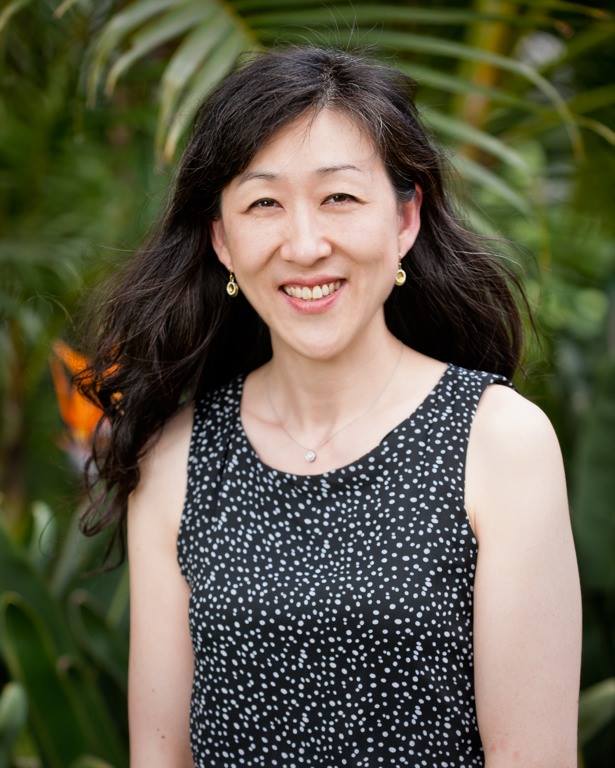
Grace Ji-Sun Kim (Ph.D. University of St. Michael’s College) was born in Korea, educated in Canada and now teaches in the USA as Professor of Theology at Earlham School of Religion, Richmond, Indiana. She is the author or editor of 26 books, most recently, Earthbound: God at the Intersection of Climate and Justice.
Kim is the host of Madang podcast which is sponsored by the Christian Century. She blogs on her substack: Loving Life: Loving Life and has written for Huffington Post, The Nation, Sojourners, Baptist News Global, Faith and Leadership and TIME. Kim has appeared on MSNBC, PBS and C-Span. She has been a guest on BBC Radio, Soul Search Radio, WBEZ Radio, and Keep Hope Alive Radio. She is an ordained PC(USA) minister and enjoys being a guest preacher on most Sundays.