

John Fugelsang loves “Chicago Pope.”
“When I first heard the new pope was an American from Chicago, as someone raised Catholic, I was wary,” Fugelsang told a crowd gathered Sunday for the Summit for Religious Freedom (SRF), sponsored by Americans United for Separation of Church and State (AU). “As an American, I was intrigued. As a comedian, my heart was filled with hope.”
The fact that nobody knows what to make of Pope Leo XIV amuses the actor, comedian and author of Separation of Church and Hate: A Sane Person’s Guide to Taking Back the Bible from Fundamentalists, Fascists, and Flock-Fleecing Frauds.
“Liberals are angry because he’s not liberal enough, and conservatives are angry because he’s not conservative enough,” he said. “And the rest of the world is like, ‘Wait, he’s an American who speaks two languages and doesn’t own a gun?’”
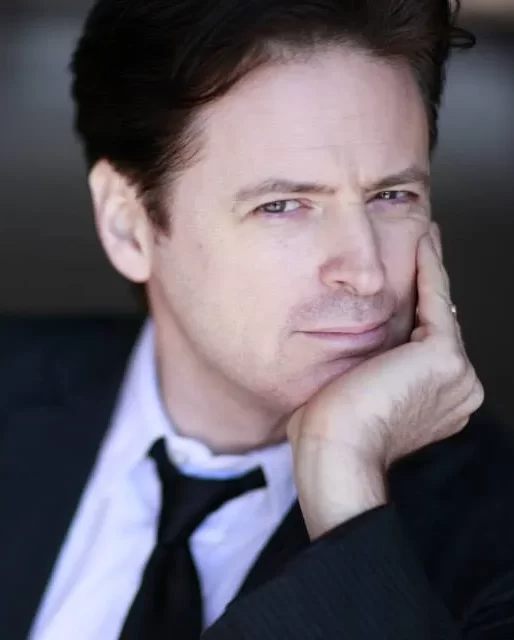
John Fugelsang
Fugelsang believes the U.S. media frames recent social media skirmishes between the pope, President Donald Trump, Vice President JD Vance, and House Speaker Mike Johnson in an unhelpful way.
“I don’t think [the pope] is fighting them,” he said to attendees in Alexandria, Virginia. “He’s showing us all calmly and with no anger or visible outrage how to delegitimize and expose these frauds. He’s making them fight Jesus.”
When Trump, Vance, and Johnson accused the pope of “wading into politics,” they were hurling an accusation better aimed at their own brand of fundamentalist Christianity, Fugelsang said.
“Right-wing Christianity has ‘waded into politics’ to support slavery, the subjugation of women, denying them the vote, segregation, invading Iraq, and taking away abortion rights,” he said. “But suddenly the pope says, ‘Hey, maybe God’s not into mass killing,’ and they reply, ‘Oh, that’s too political.’”
He then joked, “Being mad that a pope won’t endorse your war is like being mad that your doctor won’t endorse your cocaine habit.”
Fugelsang also noted the challenge of what to call those who use Christianity for authoritarian goals, whether “conservative Christians,” “fundamentalists,” or “Christian nationalists.” He said he prefers the simpler term: “fake Christians.”
At the annual event, which brings together people from across and beyond the spectrum of religious belief, Fugelsang highlighted the power of diverse coalitions across religious and secular lines to resist what he described as fraudulent Christianity that seeks to destroy democracy.
“They don’t want to see Christians, Muslims, Jews and atheists united together against them,” he said. “Atheists and believers are going to have to be awkward roommates again. But the good news is, when they work together, they tend to win.”
- About the Author
- Latest Posts

Senior Editor at Good Faith Media.