

Lebanon is often imagined from afar in the laziest possible colors: sandy, flat, dusty, somewhere between a camel postcard and a war report. But Lebanon is not dull or yellowish sepia as movies imagine it.
Lebanon is green. It’s the only Middle Eastern country with no desert or camels.
It’s the ninth most mountainous country in the world, with 81.1% of its land covered by mountains. It contains peaks and valleys, snow and ski slopes, forests and springs, and a Mediterranean coast with azure water.
This is home, not an abstract “front.”
That’s part of the pain of this moment. When war comes to Lebanon, it comes to a place we love, a place of beauty that is mentioned 75 times in the Bible. It comes to churches and schools, to villages tucked into mountainsides, to towns by the sea, and to families trying to live with some semblance of normalcy.
We are living once again under the weight of a conflict pushed upon us by a faction whose ideological struggle is not the struggle of most of the Lebanese. A militant faction acting as an arm of a regime far off wanting to avenge the war on its land, justified or not, dragged the “Switzerland and Paris of the Middle East” into darkness.
We do not care about world politics when we see our little paradise being lost.
Lebanon is not a natural national unity in the romantic sense. It’s a deeply diverse and sectarian country. Much of the way its communities were pushed into one political framework bears the marks of colonial state-making.
The French Mandate didn’t invent every difference, but it did produce a political order in which religious communities that are culturally, historically, and ethnically opposites were bound together under one state without the kind of shared civic formation that might have helped it survive. It was easy to draw the borders that way, but this led to civil wars and today’s war.
This is why many Lebanese speak of federalism, partition, or new political arrangements in which one faction cannot drag the rest of the country into wars it doesn’t want. Whether one agrees with such proposals or not, their very popularity reveals how exhausted people are. They are tired of being told they must forever bear the cost of somebody else’s “resistance,” somebody else’s permanent battle, somebody else’s inherited hatred, and somebody else’s theology of endless war.
Christian Witness
For Christians in Lebanon, this wound runs even deeper. We are not outsiders. We are not a late addition to the story. We are one of its ancient communities.
We have prayed in these mountains and valleys for millennia. Lebanon has long served as a city of refuge for persecuted Christians in the Arab world and beyond.
That is why one of the great Christian paradoxes of this war is this: We are sheltering many of those whose communities have often refused us, warred against us, regarded us as infidels, or killed us. As bombs fall on their neighborhoods, they come to ours. As their areas become unsafe, they seek refuge in Christian towns. We receive them!
We receive them not because history is simple or because pain is absent or because there is no fear. Some of those arriving here are innocent, with nowhere else to go. Others are tied to militant groups whose presence is dangerous to those around them.
To offer shelter at such a moment is not charity; it is exposure. Those who open their doors may be placing themselves at risk without knowing it.
(As I am writing these words, I hear an explosion, see the smoke, and read the news that a Hezbollah leader who was hiding as a “refugee” was targeted in the neighborhood opposite to me in our Christian area.)
This is what Christian obedience looks like in a wounded land. It is neither sentimental nor soft. It does not erase memory or deny anger. It does not pretend that being repeatedly sacrificed on the altar of other people’s ideologies leaves no scar upon the heart.
At our seminary, this means daily chapels, spiritual care, prayer, listening, and psychological and pastoral follow-up. It has meant trying to create a place where the displaced are seen not as a problem to manage but as human beings made in the image of God.
It has meant wrestling before God with our own pain over this reality we have been obliged to. This is one of the hardest spiritual tasks I know: to serve those through whom danger has come in and to do so because Christ commands love.
Generous Hands
There are days when the heart obeys faster than the emotions and days when the hands are generous while the soul is still trying to catch up. There are prayers that God would help us not only to do good, but to love well— not only to provide shelter, but to see with the eyes of Christ, not only to endure them, but to desire their redemption.
True peace will not come through ceasefires, borders, or diplomacy—as necessary as those may be. It comes when hearts are made new in Christ.
This is our mission, even when we sometimes feel we are just done. This is reality.
This is where many Lebanese Christians find themselves today. They find themselves loving in the middle of an unwanted war, carrying burdens they did not choose, serving people whose presence may endanger them, and asking God for grace to mean every word of the Gospel they preach.
Lebanon is in a war it does not want. In the middle of it, the church is still trying to remain the church—not fall into the pit of politics it finds itself in, not grow pale as movies show its country to be, and be the vibrant warmth and touch of Christ in the land.
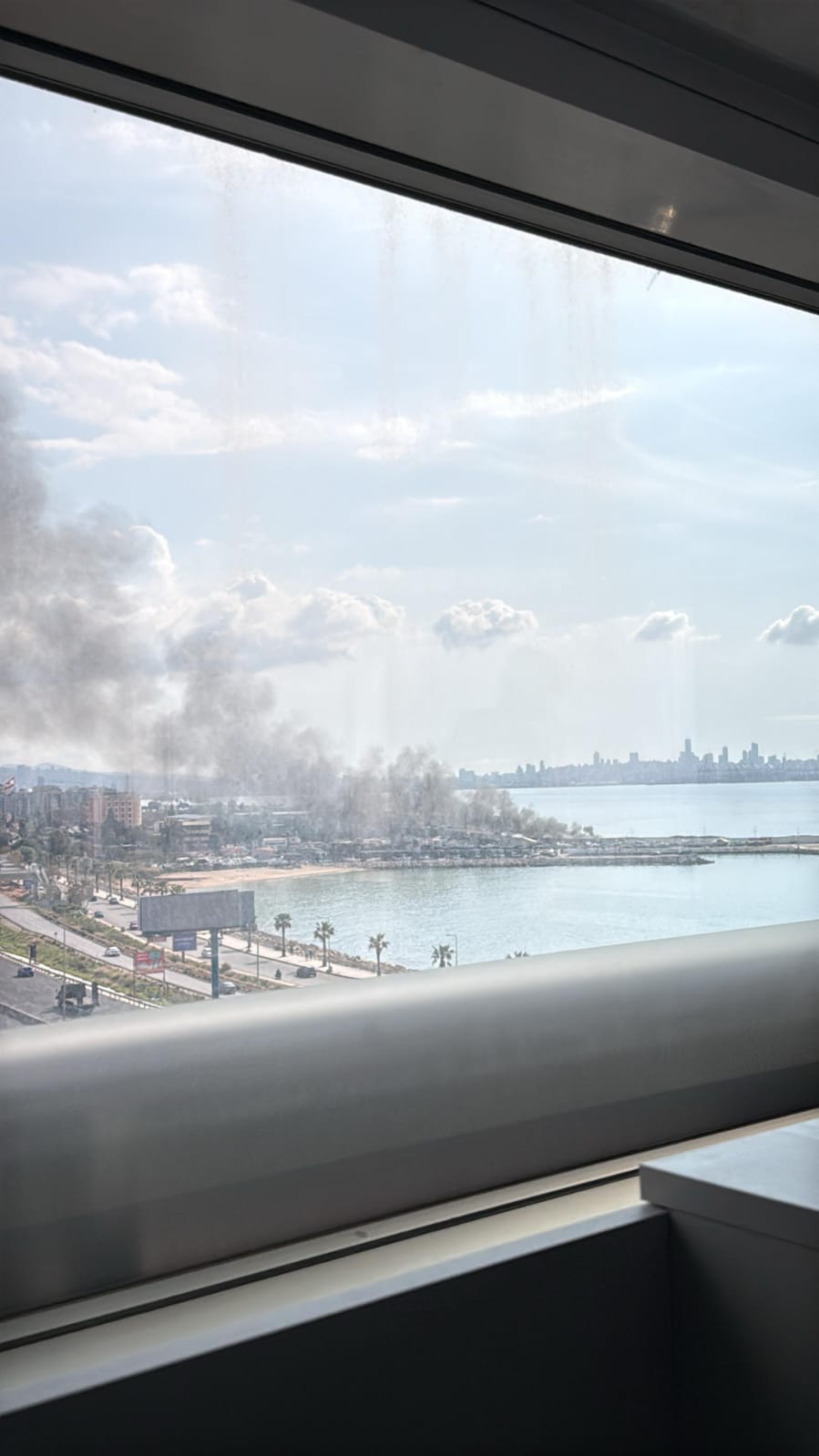
Photo taken by the author after writing this article.
- About the Author
- Latest Posts

Lecturer and Head Librarian at the Arab Baptist Theological Seminary in El Mansouryet, Lebanon.