
Editor’s Note: The following is an excerpt from A Quest for Warrior Priests: Enlisting Warriors as Healers and Peacebuilders by Charlie Reynolds, which is available today in the Good Faith Media online bookstore.
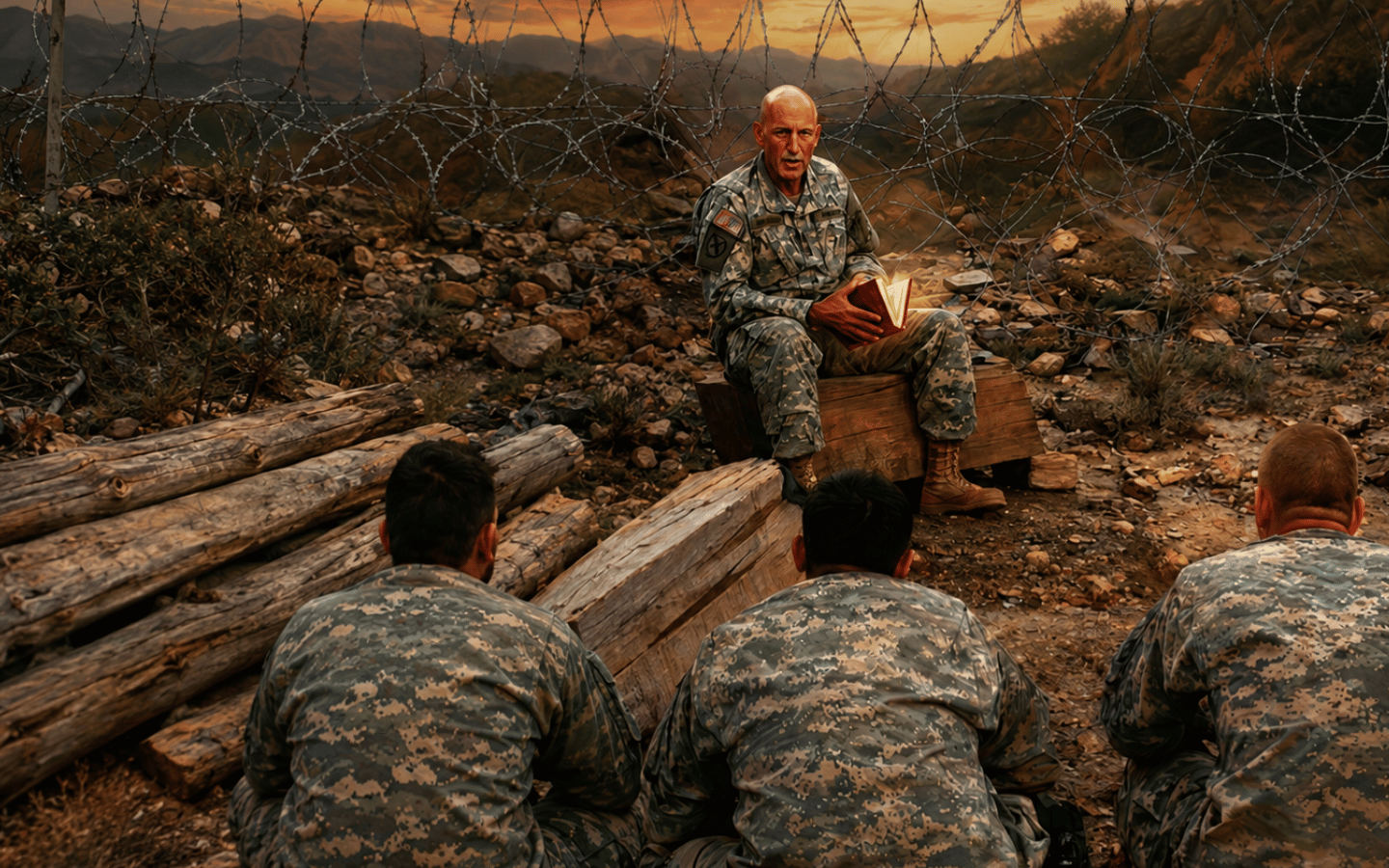
“You need to know that your new boss will not be Chaplain-friendly.” A fellow Chaplain felt he needed to give me a warning two weeks before Major General (MG) Geoffrey C. Lambert would replace MG Boykin as my new boss. Three weeks later I went to General Lambert’s office to give him my introductory briefing. I was not anticipating the ambiance of God’s presence I had experienced in my initial briefing with MG Boykin. I was wrong. When I finished my briefing, I told MG Lambert that I would like to pray for him and asked him if there was anything he would like me to pray for. “Yes, Chaplain,” he said, in a wavering voice, “my brother is very sick, and the doctors do not know if he is going to survive.” As I had done in the briefing with MG Boykin, I bowed my head, only this time it was to pray for my new commander’s brother.
Healing is a dimension of God’s power and presence that is difficult to understand. In a sermon on prayer, Bruce Salmon, a close friend and an experienced pastor, provides insightful assessment on prayer and healing: “Prayer is no guarantee that the sick will always be healed. We humans are mortal, after all. But many times, the Lord does restore the sick…. When we take one another to God in prayer, we are offering something beyond what we could do on a purely human level. There is great power in prayer.” It was with this awareness that I prayed for my new commander’s brother.
I was surprised a few weeks later when I received a call from MG Lambert’s secretary informing me that the general wanted to see me in his office. I immediately walked from my office in JFK Chapel to the general’s office in the SWCS command headquarters across the street. “Chaplain,” he said after he greeted me, “I want to thank you for the prayer for my brother. He is doing much better, and the doctors have said that he is going to recover.”
Entering the window God had opened, I told MG Lambert that it was my custom as a Chaplain to pray with my commanders once a month. I asked him if I could do the same with him. Given the circumstance God had created, it was difficult for him to say no. Every month we met for prayer. I could sense a growing receptiveness on his part to God’s presence in those prayers.
The following summer MG Lambert decided to retire. Our prayer session was scheduled in his office just before the rehearsal for his change of command ceremony. He was late arriving, and we did not have a chance to meet before the rehearsal. With all the preparations for the ceremony the next day, I assumed we would not have time to have our last prayer session. After the rehearsal the general walked over to me. “Chaplain,” he said, “let’s have that prayer time together.” We were standing beside the statue of Arthur “Bull” Simons. When Special Forces operators from around the world get together and share their memories of the best and most talented special warfare personnel to ever wear the uniform, there is always a story about Col. Bull Simons. In the Special Forces world we were standing on hallowed ground. I thanked God for the times we had shared together and prayed for MG Lambert and his wife as they entered a new chapter in their lives. MG Lambert knew I was also leaving for a new assignment and that I would be deploying to Afghanistan. When I finished my prayer, he placed his arm around my shoulders and said, “God, take care of my Chaplain while he is down range.” In that moment this hallowed ground became sacred space in the heart of my Chaplain-friendly commander.
I share this story because I believe it is an excellent example of what individual enlistment should look like. This was a situation that God created, not something that was manufactured.
- About the Author
- Latest Posts
Retired Army Chaplain of 28 years.