
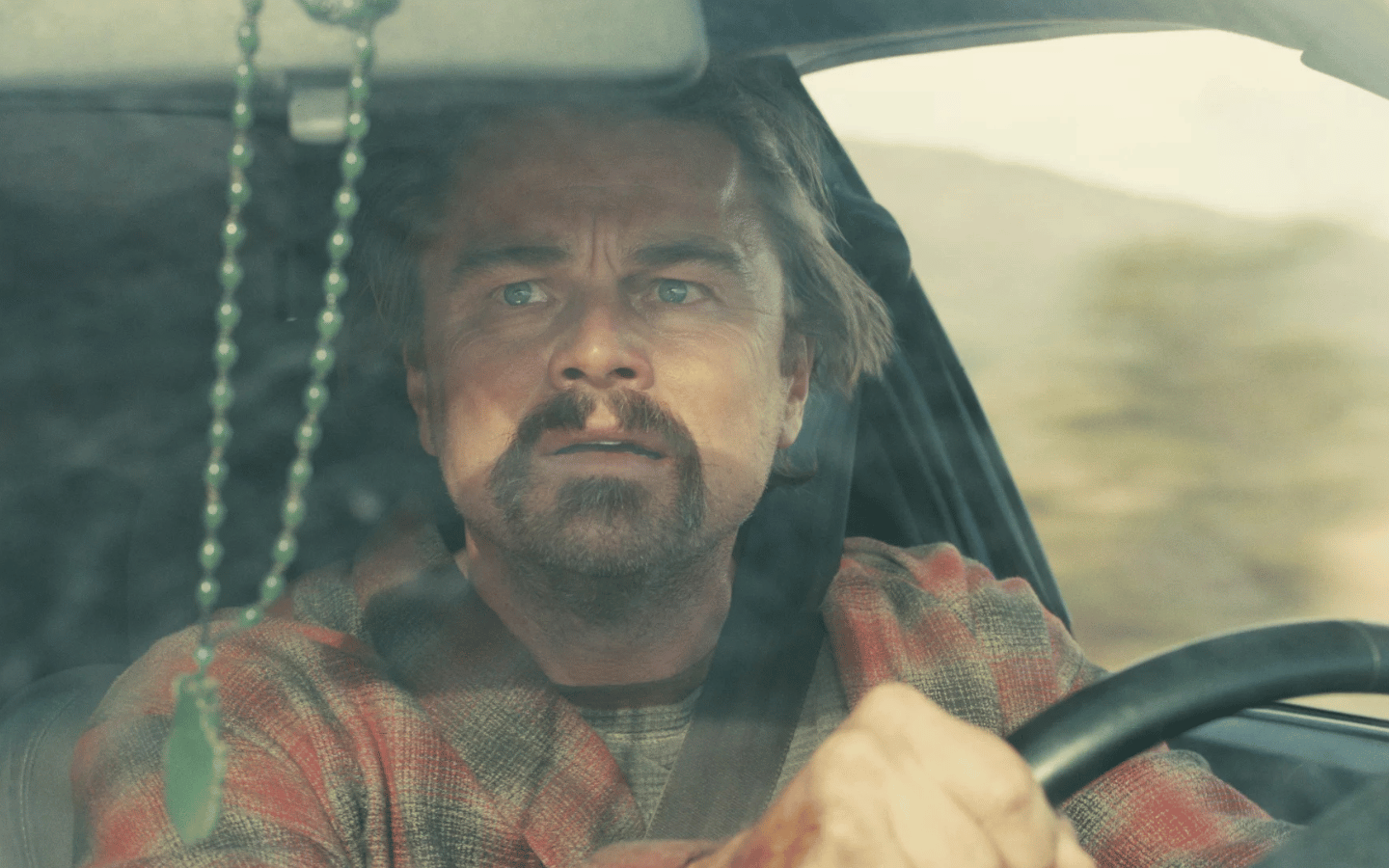
Paul Thomas Anderson took home six Oscars for One Battle After Another at this year’s Academy Awards, including Best Picture. Backstage, he tried to explain what he’d made.
“Our film obviously has a certain amount of parallels to what’s happening in the news every day,” he said, which is an understatement.
The film, adapted from Thomas Pynchon’s 1990 novel Vineland, follows a burned-out ex-revolutionary, Bob, played by Leonardo DiCaprio. Bob lives under a false name, raises a biracial daughter, and tries to stay invisible when the past comes hunting him.
It is a film about people who once wanted to change everything and ended up changing nothing. Anderson wrote One Battle as an apology.
His acceptance speech made that explicit: “I wrote this movie for my kids to say sorry for the housekeeping mess that we left in this world we’re handing off to them.”
That’s not the language of a political manifesto. It’s the language of confession.
The church should recognize it, even if Hollywood doesn’t quite know what to do with it.
Our Confession
The Christian tradition has always had a complicated relationship with activism.
On one hand, Christianity has produced Wilberforce, Bonhoeffer and King. On the other hand, we have watched generation after generation of earnest reformers discover what the book of Ecclesiastes knew all along: That human striving carries within it the seeds of its own exhaustion.
“Vanity of vanities,” the teacher says. “Vanity” does not mean that nothing matters; it means it’s all vapor.
Elusive. Short-lived. Resistant to containment.
One Battle After Another lives in the gap between our ideas and reality. Its revolutionary Bob is not a villain.
He is something more uncomfortable: a person who believed deeply, tried mightily—even violently—but came up short. His failures owe partly to the world’s resistance and partly to his own damage. Yet, the film refuses to let politics be the whole story.
Anderson has said that the real story belongs to Willa, the daughter: “What happens when your parents, who are damaged, have handed quite a difficult history to you? How do you manage that?”
Our Responsibility
That question doesn’t belong only to ex-radicals hiding in the California hills. It belongs to every generation that inherits a world shaped by the compromises, failures and unfinished business of the people who came before. The church is not exempt from this question. Christians carry a specific burden right now.
It is the burden of knowing what justice requires while living in communities, countries, and institutions that have repeatedly fallen short of it.
Many have spent years pushing for change from inside denominations that move with the speed of glaciers. Others have walked away entirely, carrying their disillusionment like a runaway with a knapsack. The temptation, after enough losses, is to either harden into cynicism or numb yourself into a kind of spiritual domesticity where you stop hoping for much at all.
Anderson’s film does not offer easy comfort, but it does offer something.
In an interview, producer Sara Murphy said the film is ultimately “an optimistic take on how we can continue to fight for the things that are important to us and find peace in community.” That phrase, “find peace in community,” sounds almost accidental coming from a Hollywood producer, but it lands on something real.
The Christian answer to exhausted idealism has never been individual resilience. It has been the body.
Our Hope
Paul did not write his letters to lone practitioners. He wrote to communities learning, together, how to hold on.
Willa, at the film’s end, heads back into the fight. Not because the odds are good, not because the adults around her earned her confidence, but because the work still needs doing.
There is something quietly eschatological about that posture—the willingness to act faithfully without the guarantee of results, to continue not out of optimism but out of something more durable than optimism.
The Christian word for it is hope. And hope, unlike optimism, does not require that things look promising. It only requires that something is actually worth fighting for.
Anderson made a movie about how much we’ve wasted and how much we’ve failed. He dedicated it to his children.
That’s not a small gesture. That’s an act of honest love, which may be the most revolutionary act any of us has left.
- About the Author
- Latest Posts

CEO of Sean Palmer Coaching, Homiletician in Residence at Bammel Church in Houston, and co-host of the “Sacred Frames” movie podcast.