
If Christians believe all humans are made in the image of God, then black women’s bodies are not problems to solve or fantasies to consume. They are sacraments of divine presence. Two movies nominated for Best Picture at this year’s Academy Awards center on black women’s bodies, or at least what America has thought and is thinking about black women’s bodies.
There are certainly more knowledgeable and expert people than I to explore this topic. My only qualifications are being raised by a single, black mother and raising two young, adult black women. Plus, I watch a lot of movies.
Yet I remember clearly words I heard as a boy about my mother’s body, words I never heard about white women. And my wife, Rochelle, and I made it clear to our daughters: Though you are biracial, the world will see you as black.
What’s more, this is not really about black women. This is about how the rest of us see black women’s bodies. It’s our problem to solve—our sin, not theirs.
Hollywood’s treatment of black women’s bodies is a long, bruising story of projection and control. The film industry has long been a purveyor of a limited, stereotypical and wrong racial imagination about black women.
A few of the more obvious stereotypes have been the controlling images of the Jezebel (hypersexual and irresponsible), the Mammy (nurturing but desexualized), and the Sapphire (angry and emasculating), which are not just stereotypes; they are tools for managing white fear and white desire.
One film nominated for Best Picture, One Battle After Another, leans heavily in one of these directions. Sean Penn’s Col. Steven J. Lockjaw is an avowed racist who leads a military unit dedicated to rounding up and imprisoning immigrants and/or minorities. Later in the film, Lockjaw has the opportunity to join a racist secret society called the Christmas Adventurers.
The only problem is that years before, Lockjaw had fallen in love, or at least lust, with Perfidia, played by Teyana Taylor, a black woman whom he handled after she left The French 75, the revolutionary group that encounters Lockjaw early in the film.
Lockjaw and Perfidia discover a fetishized relationship centered around guns, power, and domination. At one point, Lockjaw meets Perfidia’s partner in the grocery store and professes how he loves black women.
In One Battle After Another, Perfidia is the Jezebel archetype. Through multiple modes of Hollywood filmmaking, we are supposed to see Perfidia as hypersexual. Her body is the battlefield on which white men’s fantasies about danger, deviance, and disposability are acted out.
But that’s only one aspect of the Jezebel nature. She also has to be irresponsible. In One Battle After Another, Perfidia proclaims that she always has to put herself first, which is what she does. In one tight sequence, she abandons her baby daughter and turns in the names of other French 75 members to Lockjaw to secure her own future.
Her choice is a racist trope: the irresponsible black mother who chooses pleasure over parenthood. One Battle After Another, some have said, takes every racial stereotype of black women and hardens it in viewers’ imaginations.
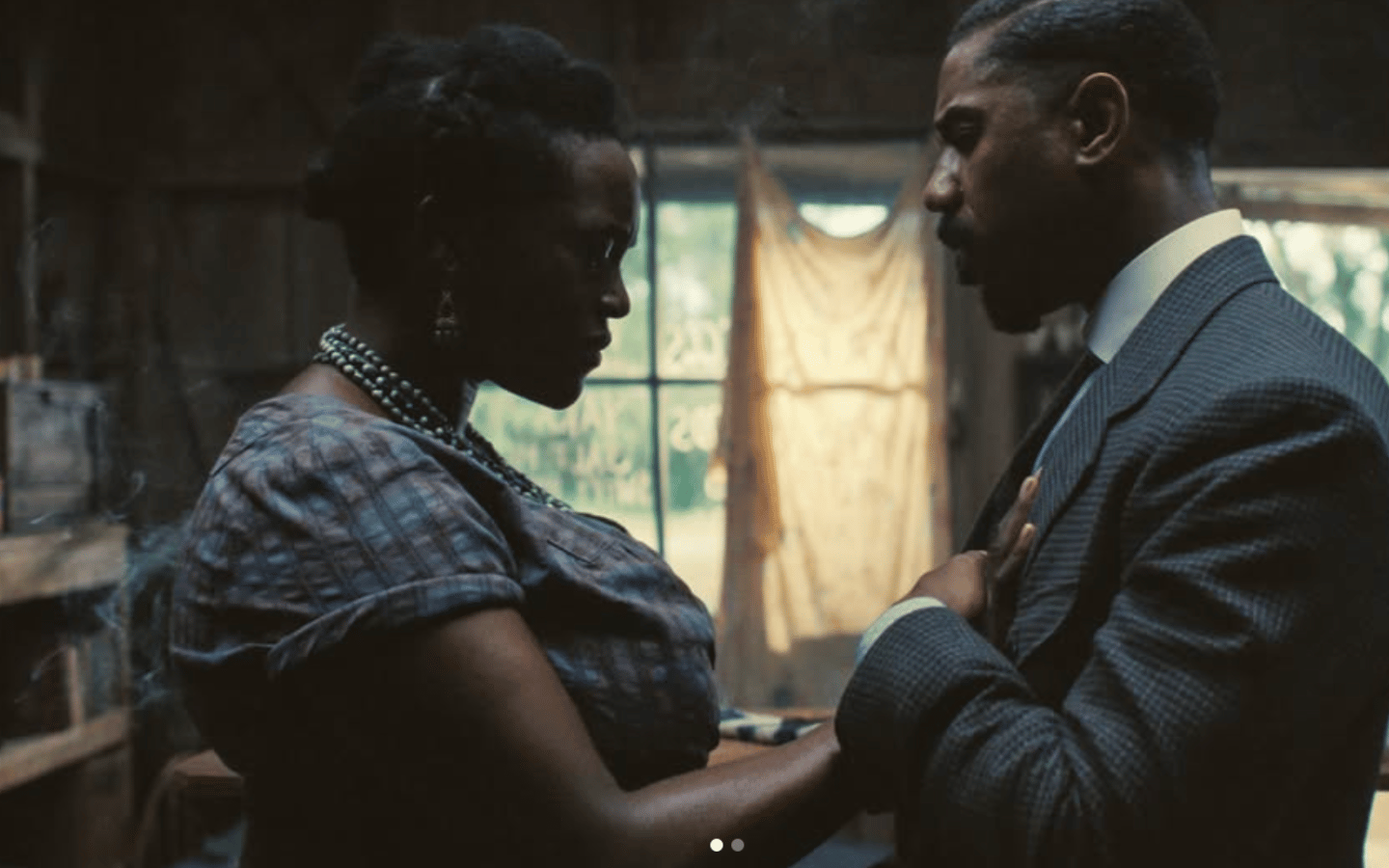
In contrast, Ryan Coogler’s Sinners presents us with a different vision of black women. Here we meet Annie, played by Wunmi Mosaku, whose body does not follow the Hollywood script for desirability. Her body is portrayed as sensual, yes, but also powerful, knowledgeable, and spiritually authoritative.
Like Perfidia, Annie is meant to be seen as attractive, even though she does not fit Hollywood’s narrow, unrealistic expectations. More than that, she is the sage of the community.
She knows the names of children, accepts the payment methods available to her customers, and is rooted in the soul of Mississippi. She is the first to recognize the dangers vampires face and how best to respond. Annie is the one throughout the story with her head on straight.
Her body is not merely a location for eroticism, but is a signal to the depth of both her knowledge and soul. Annie disrupts the hegemonic script against white beauty standards that only render a certain kind of black woman as desirable. And what’s more, the film does not comment on her beauty; we are expected to see the fullness of who she is and accept it.
Sinners is subverting what we imagine when we think of black women, while One Battle After Another is trading on old and tired white mythologies.
The central difference between these two films is obvious: We get vastly different perspectives when we hear communities tell their own stories. It is always outsiders who need to be reminded that different races, genders, ethnicities, and so on are “made in the image of God.” The community never forgets that about itself.
That means when any community tells its stories, the most important aspect of its existence is already embedded in the telling. When others tell a community’s stories, the most we can hope for is that they remember to see the Imago Dei in their neighbors. A community narrating its own stories leads to fuller narratives.
The Christian’s role then is to have open ears to the stories of others. To see one another as they see themselves and take their stories seriously. We have to discipline ourselves not to accept others only as we see them in our minds.
- About the Author
- Latest Posts

CEO of Sean Palmer Coaching, Homiletician in Residence at Bammel Church in Houston, and co-host of the “Sacred Frames” movie podcast.