
Our lives consist of stories. Stories of the past are those our ancestors passed down to us, as well as the ones they left unspoken. Stories of the present are the ones we are crafting today. Stories of the future, whether of hope or dread, inform our choices.
As Leslie Marmon Silko says in her poem “Ceremony,” stories “aren’t just entertainment. Don’t be fooled. They’re all we have, you see. All we have to fight off illness and death. You don’t have anything if you don’t have the stories. Their evil is mighty, but it can’t stand up to our stories. So they try to destroy the stories, let the stories be confused or forgotten. Because we would be defenseless then.”
Empires know the power of stories. Empires forget, confuse, and revise stories to maintain control and defend the world they’ve created.
More Stories
This year, our country marked the 250th anniversary of the signing of the Declaration of Independence. The commemoration told a story of a nation celebrating democracy, freedom, and justice for all people.
To say the least, it told a revised story. To say more, it told a whitewashed story. We heard a story that conveniently left out the fear of losing the labor of enslaved Africans as a motivation for the colonies to band together and fight for independence.
The Declaration of Independence declared freedom from the British Empire, but it doubled down on the creation of the American empire. It’s an empire of settlers, colonizers, and slaveholders that depended upon the labor of enslaved Africans and the erasure of the Indigenous people already living on the land. And yet, this is not the only story we have.
We only become defenseless when we forget our stories.
We also have stories that fight off illness and death. We have stories of resistance—resistance to empire, evil, and hate. It’s these stories that keep us alive, and it is past time we center these stories.
Freedom in this country was not born with the Declaration of Independence. It was born during the first slave rebellion 250 years earlier—500 years ago. Enslaved people organized their first rebellion at San Miguel de Gualdape, the first European colonial settlement in North America.
Project 1526: Resistance at 500 celebrates 500 years of resistance to European Christian settler-colonialism. It tells the forgotten stories of people who have resisted oppression for hundreds of years and forms us spiritually into people willing to resist faithfully.
Sacred Memory
This fall, I joined the Alliance of Baptists on the “Sacred Memory: Truth-Telling in an Age of Erasure” pilgrimage in New Orleans, and I was immersed in stories of resistance.
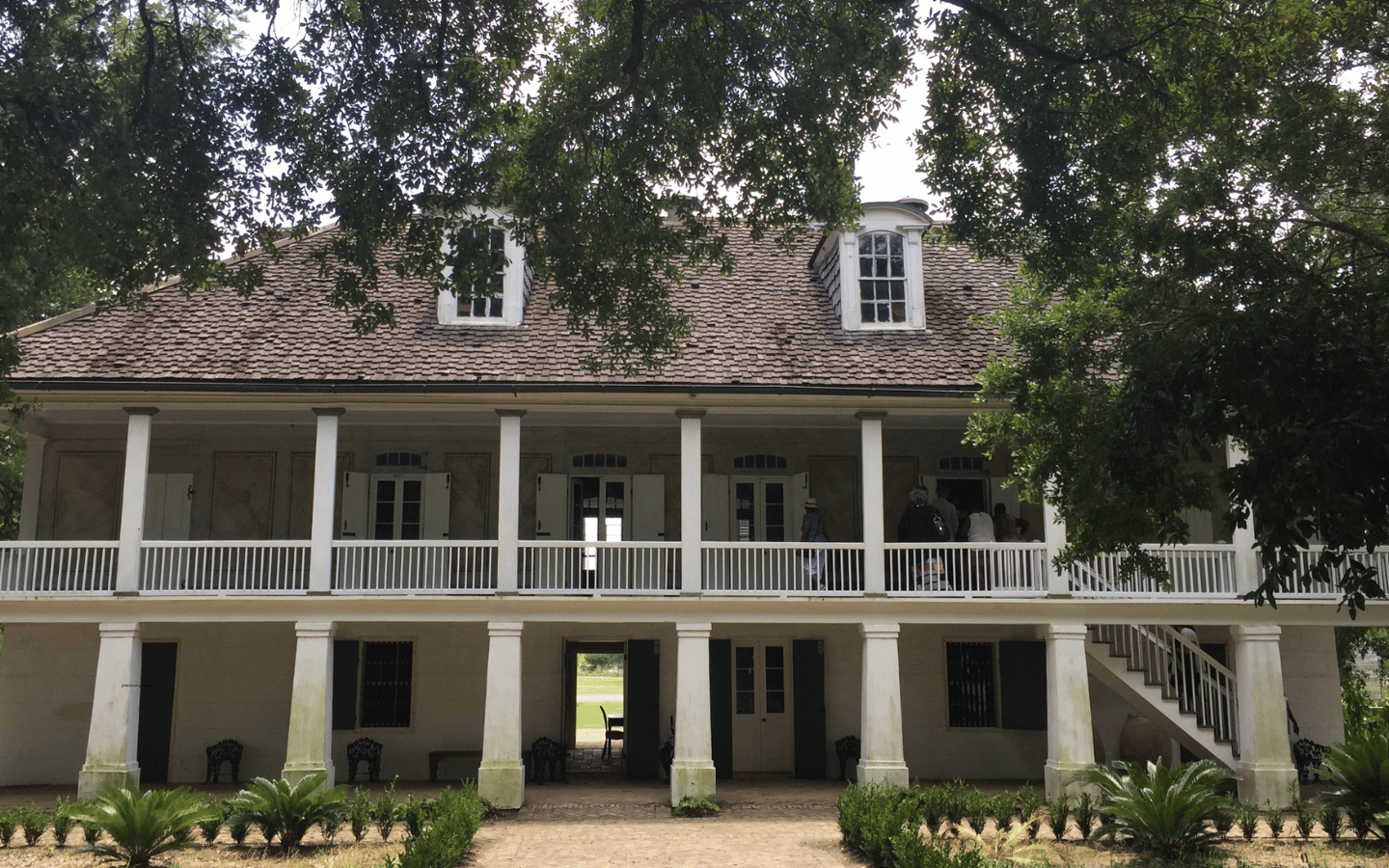
We toured the Whitney Plantation, a museum that opened in 2014 to tell the history of slavery from the perspective of enslaved people. Our facilitators encouraged us to look not just for the stories of settler colonialism but also for the stories of revolt and rebellion.
A memorial at Whitney is dedicated to the leaders of the 1811 slave rebellion, the largest slave revolt in United States history. Known as the German Coast Uprising, it occurred just seven years after the Louisiana Purchase.
Charles Deslondes, the enslaved leader of the rebellion, was working as a slave driver, allowing him to gain trust and strategically organize a revolt over the course of two years across several coastal plantations. The rebels burned down the plantation where Deslondes was the slave driver and marched from plantation to plantation with drums, red flags, horses, and weapons.
They headed to New Orleans to seize the city and take over the colony. Three miles before they reached New Orleans, the rebels were killed by federal troops.
Many of them were beheaded, and their heads were placed on poles along the River Road as a warning. The memorial at Whitney remembers these rebels with 63 heads on sticks, Deslondes’s head at the center. This story is often glossed over or left out of public school textbooks.
From the beginning, slaveholders revised the story, saying that these rebels were lawless, uncivilized, and violent. The slaveholders said they were a danger to public safety, were only interested in destruction, and had to be stopped.
The real story was that it was an incredibly well-organized, strategic rebellion. It was an army of slaves seeking freedom.
They had weapons because they could see no other way to freedom. They meant the words they sang: “Before I’ll be a slave, I’ll be buried in my grave.”
I appreciate the memorial at the Whitney Plantation, as it does not let us forget the story or hide from the brutality and violence of slaveholders and the federal government. However, I can’t help but be taken aback by which part of it is being etched in stone—the defeat, the violence done to these rebels.
Where is the memorial that remembers their resilience, resolve, and courage? Can we not create a memorial of them marching with their flags and drums and weapons, a memory that dignifies their humanity, a memorial that celebrates their brave actions instead of a memorial that immortalizes their defeat?
We don’t have that memorial because, as Albert Thrasher says in his book On to New Orleans! Louisiana’s Heroic 1811 Slave Revolt, the rebels “were killed in the end and were not allowed to make or leave a written account of their tactics (either through dictation or in their own handwriting if they were literate) prior to their execution.”
We’ve been given the story of the German Coast Uprising through the lens of the colonizer, not the freedom fighter and we need to recover the truth of these stories. We cannot continue to tell stories through the lens of empire; we must recover stories of resistance and tell them through the lens of liberation.
The Stories We Choose to Tell
As we reckon with what it means to be people of faith and truth in an age of erasure, what stories do we tell?
We absolutely need to face the violence of the colonizer, but we also need to recover the stories of rebellion, as many of those stories have been revised and erased. As we immerse ourselves in these stories of resistance, we need to learn from the wisdom and brilliance of the rebels. We need to name the connection between what happened during slavery and what is happening today, and then embody the stories of resistance.
As people of faith and truth in this age of erasure, we are called to embody revolt to help make the world of God’s dreams, a world where all people are liberated from what enslaves them. We are called to be as strategic and cunning as the rebels of the German Coast Uprising as we seek to build a community where all can thrive. We are called to embody the greatest story of all—the life-giving, liberating gospel—that gives true freedom and justice for all.
- About the Author
- Latest Posts
Rev. Lauren Hayes (she/her) is the Senior Pastor of Greenwood Forest Baptist Church, a community she has loved and been a part of for fourteen years.