
Editor’s Note: The following first appeared in the July-September 2026 issue of Good Faith Magazine.
About a dozen college freshmen were in a get-to-know-you small group early in the semester. The task was to share a little about yourself with the group. About halfway through the exercise, a very wholesome-looking young woman said to the group, “Well, I have a drug problem.”
The predictable response from peers occurred. Some avoided eye contact; those who prided themselves on not judging looked her directly in the eyes without flinching; and others did the pull-back, widened their eyes, and waited for more.
It was just what she was hoping for when she went on to say, “Every time my church’s doors were open, my parents drug me there.”
Many of us from previous generations had a similar experience. It was a culture. It was more than just our parents making us go to all of the church events.
Besides closing on Sundays, stores in my hometown closed on Wednesday afternoons so people could work in their gardens and attend the Wednesday night prayer meeting. I have talked to many people who did not see The Wizard of Oz until college because it always came on Sunday nights. The rationale was pretty similar to “if you are too sick to go to church, then you were too sick to do anything else that day.” There is no movie with flying monkeys and witches that outweighs being at Training Union, youth group, or Sunday night service.
I was a grown person before I realized this wasn’t the norm for everyone in the world. That was a jolt. I didn’t even know how to explain it to them. It was a cultural phenomenon as much as a theological perspective.
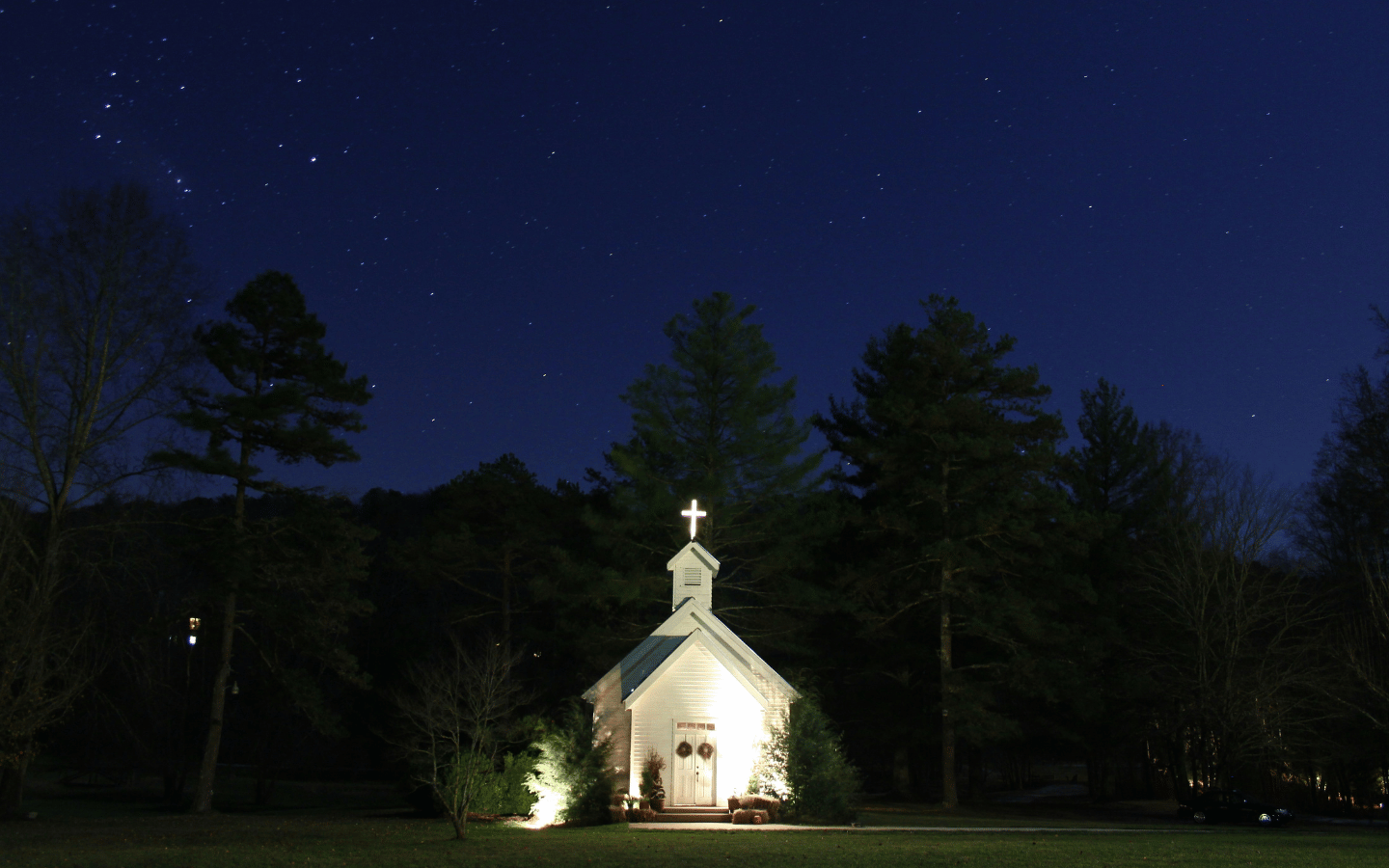
However, I will admit I kind of loved Sunday night church. I loved how we met in the basement, or chapel, or somewhere else more intimate than the sanctuary. I loved the way the lights cast a soft glow and how casual people looked without their Sunday-morning finery. Everyone there knew each other’s names and their whole lineage. It felt like family.
I also liked that the “B Worship Team” was allowed to lead, even though they were not ready for Sunday morning prime time. The fourteen-year-old piano player could hit some notes that weren’t printed, and no one said a word. The pastor felt free to call out people’s names for affirmation and to ask them to pray.
He also learned to be specific. Be sure to say the full name of the person asked to close in prayer, because there may be multiple Bobs and Jims present, and the Bob who just got out of rehab, rather than the chair of deacons, may have some interesting things to add to his prayer.
To my little girl’s mind, the casualness of Sunday night felt like acceptance and grace. Waking up on the unpadded pew to be carried to the car by my daddy, homemade ice cream and watermelon served on the church lawn when the summer days grew longer. Sometimes a group went to Shoney’s for hot fudge cake and coffee (obviously, caffeine and sugar were permissible Baptist vices).
However, when grace and acceptance were most evident to me was when they opened the floor for people to call out song numbers to sing the first verse from the hymnbook. Not only did I get to learn the adults’ names when they said, “Mr. Hearn, what is your selection?” but they also let us children call out hymn numbers, too. When the choir director said my name, and the whole congregation sang my song, it was glorious.
While in seminary, Dr. Dan Aleshire had us write our spiritual-journey stories. Those stories were a litany of complaints about the church’s shortcomings. After letting us ruminate in our dissatisfaction, he spoke into the silence, “And yet you are all here.”
You might want to ask a mid-century pastor for his thoughts on thrice-weekly preparations. But whether we were “drug” to church or went willingly, for many, there is a warm glow, like the halo around the suspended incandescent lighting, that lingers when I think of Sunday night church.
- About the Author
- Latest Posts

Retired campus minister, campus ministry coordinator for the Cooperative Baptist Fellowship of North Carolina, and Collegiate Specialist for the Cooperative Baptist Fellowship.