
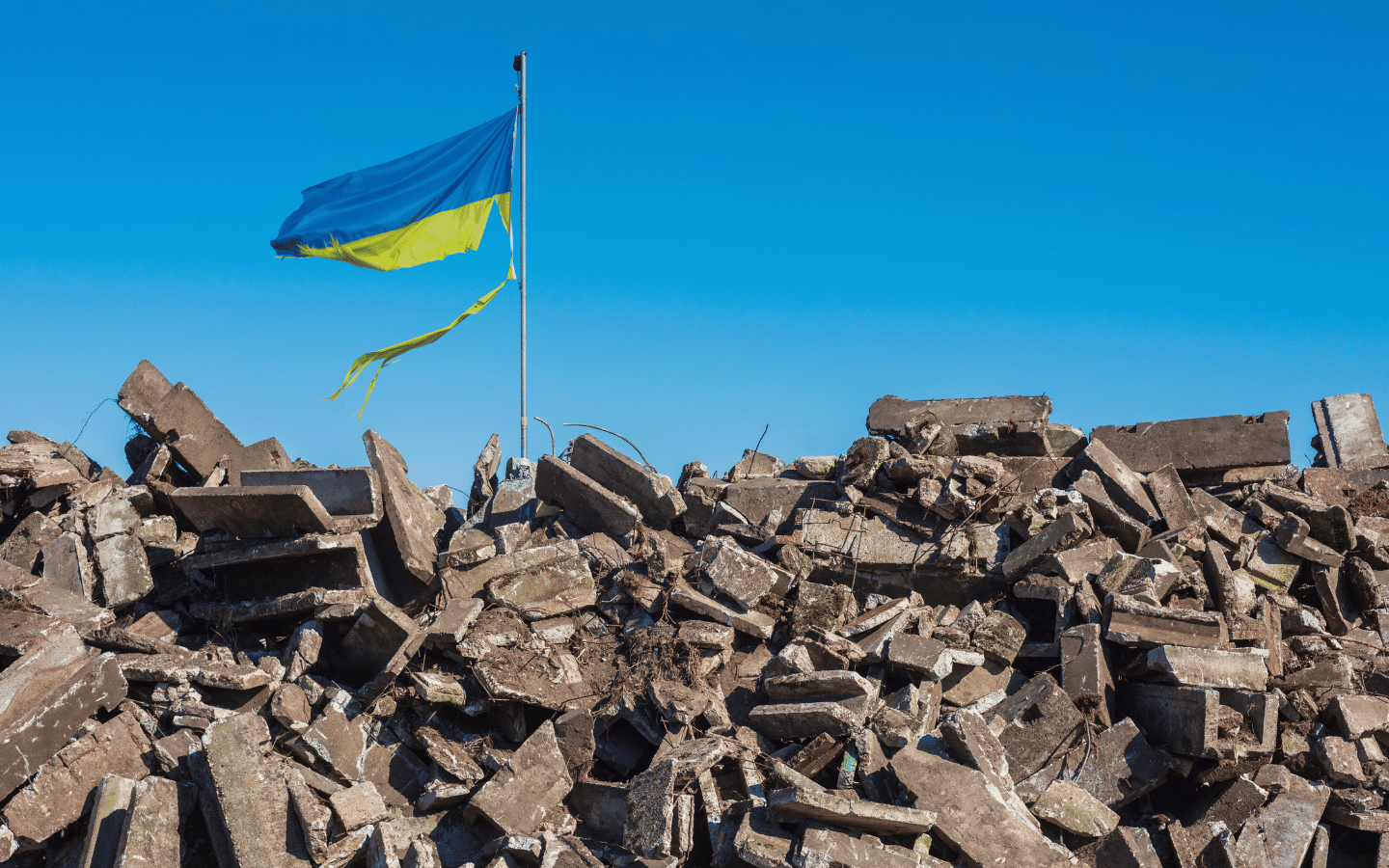
I’ve been home from Ukraine for less than two days, and I’m having a harder time adjusting than usual. Part of it is jet lag. After two weeks teaching at Ukrainian Baptist Theological Seminary in Lviv, my body hasn’t figured out what time zone it belongs in.
But that’s not really what’s keeping me awake. It’s the silence.
There are no air raid alerts here. No checking my phone to see whether drones are moving toward the city. No wondering whether I’ll need to grab my shoes and head downstairs in the middle of the night.
Yet, as I sit in my comfortable Tennessee home, air raid alerts continue in Ukraine. The war didn’t end because I came home.
What has been particularly difficult is returning to American political conversations suggesting that Ukraine should simply surrender territory, accept Russia’s demands, and end the war. As though it were that simple. As though the only thing standing between Ukraine and peace were Ukrainian stubbornness.
When did we forget who invaded whom?
The Children in the Shelter
Early last Friday morning, around 2 a.m., an air raid alert sent my colleague and me into the shelter beneath our hotel. About 20 teenagers, perhaps 13 to 16 years old, were there with one adult.
One teenager wore a jacket with little animal ears on the hood. I can’t get that image out of my mind.
After the all-clear, we headed upstairs. But the teenagers disappeared into rooms, two by two, in the hotel’s old, unrenovated section. I later learned the hotel was housing displaced young people. These were children who should have been worrying about homework, friendships, and the ordinary complications of adolescence. Instead, they were living far from the homes and familiar lives war had taken from them.
And there are younger children across Ukraine who cannot remember life without air raid sirens. Children for whom rushing to shelters, sleeping through explosions, and watching adults scan their phones for approaching missiles are simply part of growing up. Imagine a childhood in which safety is the exception rather than the expectation.
I’m a trauma therapist. I understand what prolonged fear and displacement can do to a developing nervous system. But standing in that hallway, I wasn’t thinking about clinical theory. I was thinking about children.
And my heart broke.
A War Against Ordinary Life
This trip was different from my previous visits. I couldn’t travel by train as I had before because railway infrastructure was being attacked. Even the ordinary act of traveling across one’s own country carries new risks.
Russia continues targeting Ukraine’s energy infrastructure as winter approaches. Electricity, heat, and water are not luxuries. They are necessities for survival, particularly for children, older adults, and those already vulnerable.
Winter in Ukraine is unforgiving. Imagine facing it while wondering whether your home will have heat tomorrow.
This is what gets lost in our political conversations. War isn’t merely about territory on a map. It reaches into bedrooms, classrooms, hospitals, and the places where children should feel safe.
And still, we discuss concessions as though the people living with these consequences are abstractions.
When Did We Stop Seeing People?
Of course, I want this war to end. The Ukrainians I know want that more desperately than we do.
But Russia invaded Ukraine. Russia continues attacking Ukrainian communities. And its demands extend beyond Ukrainian territory into Europe’s broader security arrangements.
These realities are important. So are the people who would live under whatever agreement is reached.
What happens to their freedom? Their churches? Their schools? Their children? And what happens when we decide that the suffering of others is an acceptable price for our own political convenience?
A Word to the American Church
This is where I find myself particularly troubled. Christians can disagree thoughtfully about foreign policy, military assistance, diplomacy and governmental responsibility. But when did political allegiance become more important than biblical conviction? When did we become so committed to defending our positions that we stopped asking what those positions mean for actual human beings?
The prophet Micah tells us what God requires: to do justice, love mercy, and walk humbly with God. Not justice only when it aligns with our politics. Not mercy only when it costs us nothing. And certainly not humility that disappears when someone challenges our assumptions.
In Matthew 25, Jesus identifies himself with the hungry, the stranger, and the vulnerable. He doesn’t ask whether their suffering fits our political worldview. He asks whether we saw them.
I wonder what Jesus would say about the ease with which we discuss surrendering other people’s homes and futures. Would we speak so casually if those children in the shelter were our grandchildren? Have some of us become so committed to defending our political side that we have forgotten the One we claim to follow?
Those are uncomfortable questions, and they should be.
Faith in the Middle of War
During these two weeks, I taught Ukrainian counselors, chaplains and ministry leaders caring for people experiencing extraordinary suffering. They are exhausted. They are grieving. Many carry their own trauma while helping others navigate theirs.
And still, they show up. They pray. They worship. They teach. They sit beside people who have lost almost everything.
Their faith isn’t an escape from reality. It is what allows them to remain present in it.
I wish more American Christians could meet them. I wish they could hear their stories and recognize that Ukraine is not an abstract geopolitical problem. It is a country filled with people who love their families, cherish their freedom, and want their children to grow up in peace.
They are people who bear the image of God.
The Child With the Animal Ears
I don’t pretend to know exactly how this war should end. Peace will require difficult decisions. But peace without justice can leave people vulnerable to the very violence we claim to be ending.
I am home now. My bed is comfortable. My family is close. I can sleep without wondering whether a missile is headed toward my neighborhood. But somewhere in Lviv, teenagers are living in an aging hotel, listening for the next air raid alert.
One has a jacket with little animal ears on the hood.
I keep thinking about that child. And about Jesus’ words: “Whatever you did for one of the least of these brothers and sisters of mine, you did for me.”
Perhaps the question for the American church isn’t simply what we think about Ukraine. Perhaps the question is whether we can still see the people who live there.
And whether our faith means enough to us to care about what happens to them.
- About the Author
- Latest Posts

Sandra Fields is a professional counselor with more than 40 years of experience specializing in trauma and helping individuals navigate difficult life experiences. Since 2023, she has traveled regularly to Ukraine, providing trauma-informed training and support to those affected by the war.