

As someone who has been deconstructing and reconstructing my faith for the last two decades, I knew intellectually that the process is never-ending. New information and experiences constantly mean reevaluating one’s faith practices and theology. I thought I was doing a good job of ensuring that my theology was liberative.
I have read and studied queer and trans theology and have explicitly rejected racist theological ideas about God. I have critiqued interpretations of the Bible that tie God’s blessings to capitalism and of course, I have pushed back against sexist theologies. I believed I was doing everything I could to advocate for a just, equitable and inclusive faith.
And then at 35 years old, I had a small stroke caused by a small blood clot in my brain. It became clear as I was lying in a hospital bed, wondering about the days, weeks and months ahead, that my theology had very rarely considered disability. In fact, when I did consider disability and faith, it was only in reference to whether or not churches and society should be inclusive of those with any type of disability.
My answer then and now is, “Of course.” But I never elaborated on what it would mean to truly be inclusive and accessible. I didn’t realize that my understanding of inclusivity was limited and that just as I carefully deconstructed and reconstructed my faith in light of gender, sexual orientation, and race/ethnicity, I needed to do the same through the lens of disability.
Jesus the Despised
A core part of my theology is the idea that God sides with the marginalized. But it also goes beyond that. This theology asserts that God, via the life, death, and resurrection of Jesus, is one with the despised and marginalized of society.
For example, God sides with those who are victims of state violence, but Jesus, through his death on the cross, is also a victim of state violence. Likewise, God is with those with disabilities, but God is also disabled.
An aside: There is ongoing discussion and debate about the use of identity-first and person-first language. Both languages have their positives and their limitations. Since this column is for a general audience that encompasses people with a variety of disabilities, abilities, and preferences, I have chosen to use person-first language. However, please note that individuals and communities may have different preferences.
As Nancy L. Eiseland points out in her work, The Disabled God: Toward a Liberatory Theology of Disability, naming God as disabled has significant theological ramifications. It influences our understanding of redemption and salvation, of what it means to be made in the image of God and of how we, as humans, understand our relationship to our bodies.
Eiseland points out that in Luke 24:36-39, the resurrected Jesus maintains his wounds. She writes, “In presenting his impaired hands and feet to his startled friends, the resurrected Jesus is revealed as the disabled God.”
Understanding God as disabled forces us, especially those of us who are currently able-bodied or recently disabled, to explore how the theology we have embraced or are surrounded by contributes to ableism and harm towards those with disabilities.
Most of us reject the blatant ableism of theology that ties disability to sinfulness. We tell ourselves, “Of course, we do not believe that; we know better.” And yet, when we explore our theology, we realize that our faith does not include people with disabilities.
At best, we might ignore disability, as I had been so guilty of doing for so many years. At worst, we proclaim a God that can “heal” whether in this life or the life to come. Either way, disability is treated as an inconvenience, a burden, and something to be eliminated.
Beyond the Cult of Normalcy
But saying God is disabled requires us to re-examine our understanding of what it means to be made in the image of God. Too often, Christians subscribe to what Amos Young calls the “cult of normalcy,” which is a societal standard that idolizes autonomy, physical perfection, and productivity while dehumanizing those who do not or cannot embody those standards.
Moreover, embracing an image of God as disabled also impacts how we, as Christians, are to live in the world. In too many places, including congregations, disability is treated as an afterthought. We will “deal with it” when it arises.
But if the disabled Christ reveals an important aspect of who we understand God to be, then the implications cannot be just a matter of abstract theology. Rather, it should reshape and challenge our personal theology and faith, as well as impact the life of the church.
While accommodation is an important aspect of incorporating a disability lens into our theology, it should not be just a box to check off. Disability should fundamentally challenge our understanding of God.
Just as viewing our theology through a feminist, anti-racist, queer-inclusive lens is fundamental to how many Christians explore theology, disability can and should reshape our understanding of God, humanity, the church, and the Kingdom of God.
- About the Author
- Latest Posts
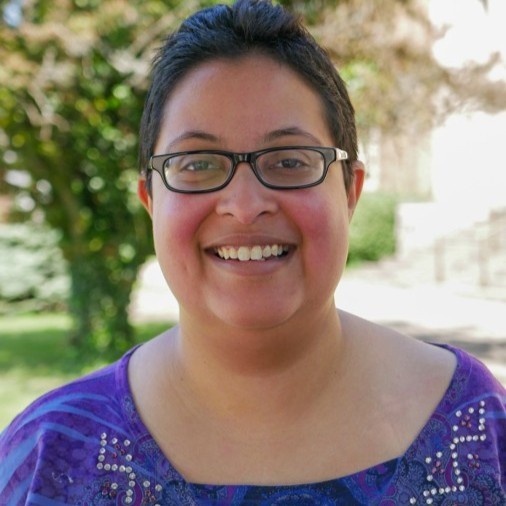
MA student in Theological Studies at Phillips Theological Seminary. Gonzalez also has an MDiv and an MA in History and an MA in Middle Eastern and Islamic Studies. Their writing can be found at https://faithfullyradicalchristian.substack.com .