
Last week, the New York Times released an op-ed written by Matthew Vines entitled “I’m Gay, Not Queer. It Matters.” If one were to only read the title, they might assume that the piece was about personal preference in choosing which letter in the LGBTQ+ alphabet soup best describes how you understand yourself.
In actuality, the bulk of the piece centered around Vines’ argument that radical queer people are the reason that conservative support for same-sex marriage is dwindling. In this piece and in other works, Vines has alluded to his belief that queer folks need to assimilate to the dominant culture and present themselves in a way fitting to that culture. If all the extreme queers would just do that, then our governing bodies would award us our rights no problem.
There’s a phrase for that: respectability politics. It’s a cousin of the model minority myth, which suggests that if you can squash down the most “controversial” parts of your identity and make yourself palatable to the dominant, oppressive culture, then your oppressors will stop oppressing you. It’s a form of victim blaming which suggests the problem is the person who is perceived as different, not the system that harms (or even criminalizes) difference.
Despite being incredibly divisive, discriminatory, and dismissive of the struggles of others, there’s another glaring problem with Vines’ argument embracing respectability politics: The gay rights movement has tried that before, and it didn’t work.
Starting in 1965, members of the Eastern Regional Conference of Homophile Organizations (ERCHO) picketted outside Philadelphia’s Independence Hall on July Fourth in what they dubbed “Annual Reminders.” Their goal was to present themselves as “buttoned-up” and subdued as possible to show their straight peers that they were deserving of deserved the same basic rights as their straight neighbors. They even had a dress code to ensure that the participants looked as straight and cisgender as possible, so as to suggest, “See! We’re exactly like you!”
But no amount of civility won them their rights after doing this for years. Legal discrimination was still allowed, and violence against queer people still occurred. They weren’t gaining any traction by simply assimilating to whom society said they should be.
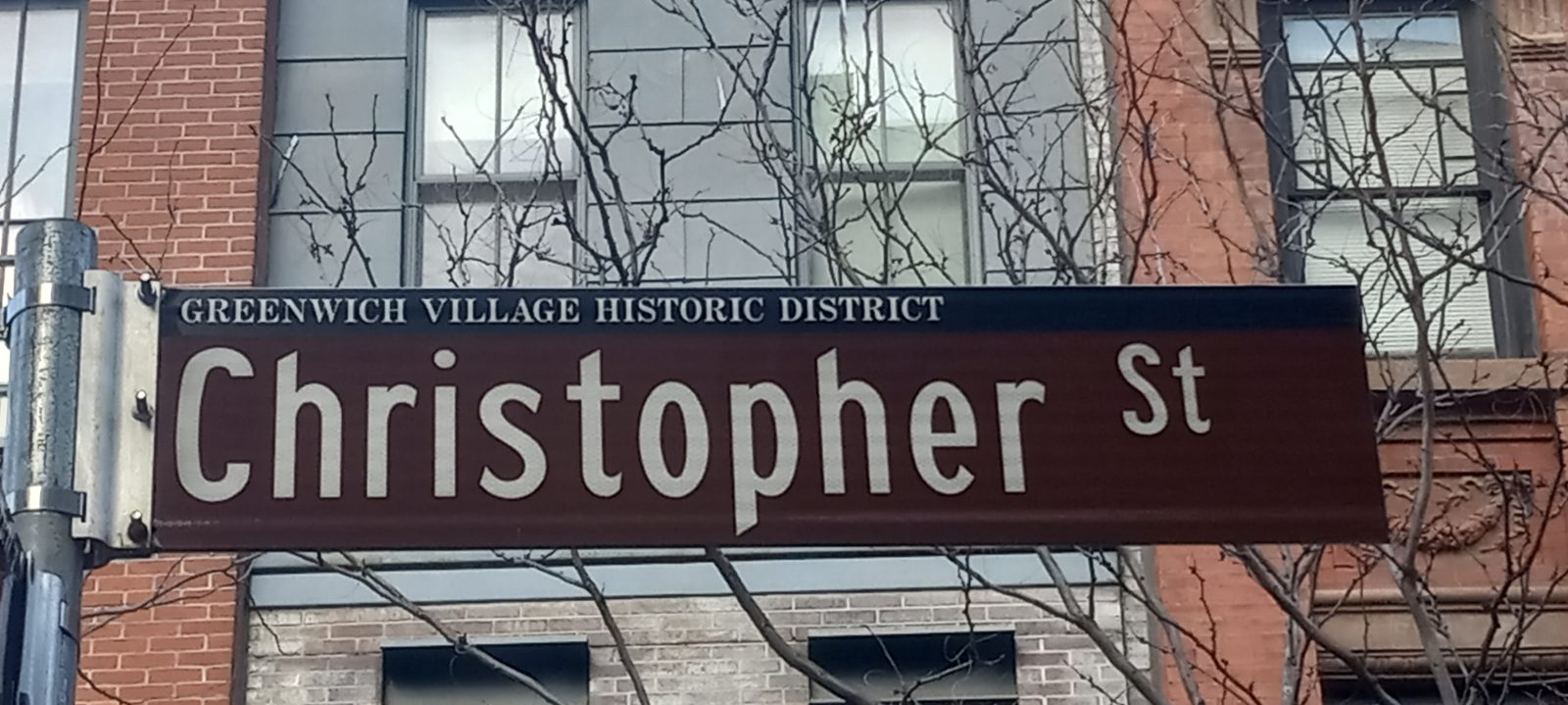
Things came to a head in 1969, when the Stonewall Inn on Christopher Street (a well-known queer neighborhood in New York City) was violently raided by police. The queer residents of Christopher Street, who had endured countless raids, decided that enough was enough. They retaliated to the violence from police with violence of their own. They fought back with punches, kicks, and even threw bricks at police cars to protect themselves and their loved ones.
The violence shown by police at Stonewall shook the queer community nationwide. Members of ERCHO began to realize their “tame and demure” approach to advocating for their rights wasn’t getting them results. Building off the momentum from the Stonewall Inn riot, they planned a march in New York City for June 1970 (on the anniversary of the Stonewall raid) that they dubbed the Christopher Street Liberation Day March, which became an annual event. Several cities around the United States hosted sister marches to show their support for gay liberation.
Unlike the Annual Reminders, the Christopher Street Liberation Day March had no dress code; participants came as their queer selves loud and proud. This change allowed transgender folks (who had been unjustly barred from participating from the Annual Reminders for “looking too queer”) to take center stage. The organization Street Transvestites Action Revolutionaries (STAR)—which is now called Street Transgender Action Revolutionaries, as the word “transvestite” is now outdated and considered offensive—took a leading role in planning the march.
STAR was formed by Marsha P. Johnson and Sylvia Rivera, trans women who had long been advocating for gay and trans rights, and who were rumored to have thrown the first bricks during the Stonewall Riot (though that suggestion is more myth than fact). They led a huge coalition of trans people from Christopher Street during the march. The message from Christopher Street rang loud and proud throughout the country: We want our rights, and we want them now.
Disappointingly, the efforts of the trans folks, drag queens, and others considered “gender deviant” were overshadowed as the gay rights movement gained momentum. After the radicals broke the ice, the “more respectable” gay men and lesbians began to take over the movement and engage in more of the public-facing work, trying to win the general public over to their cause.
Meanwhile, trans folks, drag queens, and others considered “too queer” or “gender deviant” were often arrested for their justice work. Respectable gay men and lesbians distanced themselves from those folks, even though the radicals were the ones doing the more dangerous work to move the movement forward. To reiterate, the “more palatable” gay men and lesbians took advantage of the wins that landed their “gender deviant” colleagues in jail, then did nothing to help.
At the 1973 Christopher Street Liberation Day Rally, Rivera took to the stage to highlight the double-standard the respectable gay men and lesbians were engaging in:
“Y’all better quiet down. I’ve been trying to get up here all day for your gay brothers and your gay sisters in jail that write me every motherf***ing week and ask for your help and you all don’t do a godd**n thing for them…
I do not believe in a revolution, but you all do. I believe in the gay power. I believe in us getting our rights, or else I would not be out there fighting for our rights. That’s all I wanted to say to you people. If you all want to know about the people in jail–and do not forget Bambi L’Amour, Andorra Marks, Kenny Messner, and other gay people in jail…
The people are trying to do something for all of us, and not men and women that belong to a white middle-class club. And that’s what you all belong to!”
For LGBTQ+ of faith, this history is important for us, too, because it parallels poignantly with Jesus’s own life and ministry. Jesus didn’t engage in respectability politics. He routinely communed with those broader society considered too deviant: prostitutes, tax collectors, and folks of lower social standing. These are the people he trusted to move his ministry forward, not the respectable religious leaders.
And when the systems of religion and empire didn’t support his vision for the kindom of God, Jesus responded in radical ways—including flipping tables in one of the places most sacred to him. There’s nothing respectable about that.
I have no doubt in my mind that Jesus would have been in prison with the “gender deviants” during the 1973 Christopher Street Liberation Day Rally, not with those middle-class gay men and lesbians who attempted to take over the movement while simultaneously leaving behind the queer folks who were responsible for the progress seen up to that point. He would be where the healing was most needed.
We are not each other’s enemies. The answer to our current political challenges isn’t in blaming the folks more marginalized than we are. The answer is in improving our solidarity with them. It is my deep, deep hope that LGBTQ+ people of faith remember that, even as we are tempted to leave others behind in an attempt to keep our rights. It’s a false choice; the oppressors will throw us under the bus whenever they please, no matter how respectable we think we are.
Because that’s the case, we might as well follow Jesus’s footsteps in embracing radical love and system-changing justice. That’s the only way we move forward, together.
- About the Author
- Latest Posts

A bivocational pastor, writer and spiritual director based in Williamsburg, Virginia, she currently works as a Spiritual Director at Reclamation Theology. Cawthon-Freels is the author of Reclamation: A Queer Pastor’s Guide to Finding Spiritual Growth in the Passages Used to Harm Us (Nurturing Faith Books), and a contributing correspondent at Good Faith Media.