


(Credit: Penguin Random House)
Something transformative occurs when a person makes the revolutionary decision to choose peace and nonviolence in response to brutality committed against them. When such people lock arms on a mission of peace with others like them, it can disarm the adolescent rationales people in power give for the necessity of war and retribution.
This is the theme of The Future Is Peace: A Shared Journey Across the Holy Land, written by Aziz Abu Sarah and Maoz Inon, two unlikely allies seeking to combat ignorance and hate among neighbors in Israel-Palestine.
Aziz is a Palestinian Muslim. Maoz is an Israeli Jew.
Aziz lost his teenage brother, Tayseer, during the First Intifada. One night during Ramadan, Israeli Defense Forces (IDF) troops broke into the Sarah family home and detained Tayseer for questioning over an incident in which someone in the neighborhood had thrown a Palestinian flag over an electrical line. Tayseer remained in an infamously brutal Israeli prison for weeks, where he was beaten and interrogated before being released.
Tayseer died from internal injuries in the days after returning home. Aziz was 9 years old.
Maoz’s parents were killed by Hamas on October 7, 2023. Early that morning, his father had left him a voice message letting Maoz know they were in a safe room and hearing missiles being fired near their home in Netiv HaAsara, the closest Israeli community to the Gaza Strip.
Later that day, Maoz learned that Hamas militants had broken in, shot his parents and burned their house down.
Maoz and Aziz were already acquainted through their peacemaking work in the region. After October 7, Aziz was one of a few prominent Palestinians who immediately condemned Hamas. Maoz was one of a handful of Israelis who lost family members in the attacks and who called on Benjamin Netanyahu not to respond with more violence.

Aziz Abu Sarah
Aziz hesitantly sent Maoz a note of condolence for the loss of his parents, knowing how difficult it was for Israeli victims of the massacre to hear from Palestinians, and not knowing how, or if, Maoz would respond.
“I’m crying for my parents,” was his initial response to Aziz. “But I’m also crying for every child in Gaza and all the people who will die in the escalation of war to come.”
Both men stayed in touch. Almost a year later, they met in Netiv HaAsara at the site of Maoz’s family home, where his parents were murdered, to begin a weeklong journey together through the Holy Land. The Future Is Peace is the result of their week together.
The Future Is Peace is filled with the wisdom of two men who have known pain and have practiced the discipline of forgiveness, and who know the transformative power of travel.
Aziz is the founder of Mejdi Tours, an innovative travel company that practices a “dual narrative” approach to tourism. Each group that visits the Holy Land is paired with both an Israeli and a Palestinian tour guide. Each site is presented from each guide’s perspective.
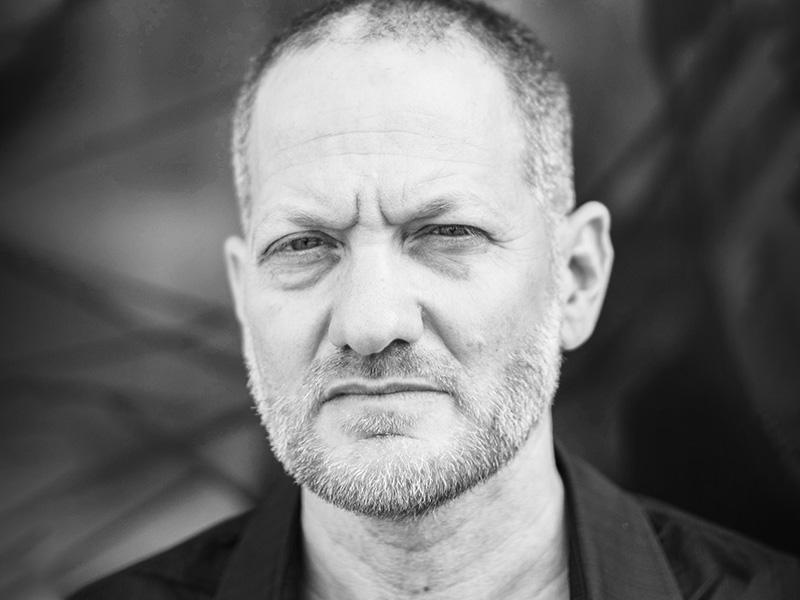
Maoz Inon
Maoz has founded several peace initiatives, including the Fauzi Azar Inn in Nazareth. Although it is now one of many establishments closed by the downturn in tourism since October 7, the inn was a prominent gathering place for hikers along the “Jesus Trail.”
Although The Future Is Peace is primarily about Aziz and Maoz’s weeklong journey, it also provides a history of the region that rivals the best textbooks. Like their peace initiatives, they prioritize the voices of “the other,” seeking to break down walls of ignorance.
Both are honest about how little each “side” knows about the other. They tell stories of Israelis who have no knowledge of the Nakba, the 1948 displacement of up to a million Palestinians, and of Palestinians who have limited knowledge of the Holocaust and its lasting impact on history.
They are also clear-eyed about how difficult peacemaking is and how participating in it often leads to mistrust within their own communities.
Still, they are committed to tearing down walls.
“As we seek peace for our people, we have witnessed the dehumanizing power of occupation and separation,” they write. “From the wall in Netiv HaAsara to the Wailing Wall to this separation wall [dividing the West Bank from Israel proper], we are surrounded by walls … We can already see the future when we will stand in this exact spot, each of us holding a hammer to help bring down this wall, just as crowds of East and West Germans did in 1989 … The physical walls will fall only when the walls in our hearts and minds fall … This book, in your hands, is a hammer.”
The Future Is Peace was released on April 14 and is available wherever books are sold.
- About the Author
- Latest Posts

Senior Editor at Good Faith Media.