

The Trump administration is actively trying to erase African American history and make the present insufferable for persons who are marginalized, criminalized and dehumanizingly categorized as “illegal” and “alien.” So, I work for a future I can live into.
By this, I don’t simply mean move forward but actively resist by refusing to share in Trump’s core political strategy, which is an us versus them framework. His rhetoric is meant to create a sense of urgency and conflict, fabricating and solidifying these polarizing identities (i.e. “both sides”).
“I’m a firm believer that language and how we use language determines how we act and how we act then determines our lives and other people’s lives,” Ntozake Shange taught us. Dehumanization always starts with language.
We become less empathetic and more prone to discrimination as biased attitudes and systemic inequalities are normalized, especially when repeated by an influential figure. Persons are reduced to nameless opponents, generalized as “the other side.”
But remember, repetition is conditioning. This has all been said and done before.
African American women warned this country that this would happen and unsurprisingly, the voting majority didn’t listen. Fannie Lou Hamer said, “I’m sick and tired of being sick and tired” at a rally in Harlem in 1964, dually naming the exhaustion and determination of African Americans regarding civil rights. More than 60 years later, many African Americans decided they are just tired and have sat out protesting altogether.
A race abolitionist seeking to rid all of humanity of domination and by implication, an anarchist as white-body supremacy and its racialized hierarchy are akin to the state, I have no interest in the propaganda of the American dream. It has done more to promote consumer capitalism and the idea of U.S. exceptionalism than to create opportunities and ensure equality for all Americans.
Further, when the U.S. Supreme Court ruled in Citizens United v. Federal Election Commission (2010) that corporations and unions had First Amendment rights and could put their money in the mouths of politicians, resulting in a surge in “super PACs” and “dark money,” I accepted the country’s fate as an oligarchy. Two years later, a national poll found “Super PACs Leave Americans Less Likely to Vote.”
So, I put my hand to the plow and work towards future scenarios where white-body supremacy no longer exists. Luckily, there is a soundtrack for it and proof that it is a shared vision.
African American spirituals, folk songs born of their brutal experience with chattel slavery, offer liberated identities and futures through coded lyrics. Along with those indigenous to what is now the United States, they were the first to experience othering by way of colonialism, fundamentally defined as different and inferior to justify their dehumanization and domination.
Consequently, their aspirations included dignity, justice and a transformed reality where “All God’s Chillun Got Shoes” and can “walk all over God’s heaven.” But while the themes often focused on spiritual salvation, the lyrics doubled as escape routes, as was the case for “Follow the Drinking Gourd” and “Swing Low, Sweet Chariot.”
Breaking free of systemic oppression remains dangerous and requires what Tricia Hersey, founder of the Nap Ministry, described as “trickster energy.” It is defined as the ability to use cunning and imagination to rest, producing a kind of freedom in our refusal of oppressive systems and their social conditions, which require us to “work ourselves to death”—not unlike chattel slavery. Hersey refers to these tricksters as “escape artists.”
Her work is a part of the witness of The Raceless Gospel Initiative. Through the praxis of womanist and liberation theologies and the future-casting of the African American spirituals, its marronage framework, demonstrated by semantic and somatic sovereignty, is sustained by resistance through self-emancipation as embodied by Harriet Tubman, self-actualization as formulated by Howard Thurman, truth-telling as named by James Baldwin, self-regard as narrated by Toni Morrison, self-care as defined by Audre Lorde and rest as devised by Tricia Hersey.
It is a counter to tyrannical imaginations and restricted futures that can only see you and me one way. The Raceless Gospel offers another way of being and belonging to ourselves and in community apart from “the racial contract.” So, if you have ears to hear there is a kin-dom coming, then follow me, that is, unless you want to go the way of this ass-backward country.
- About the Author
- Latest Posts
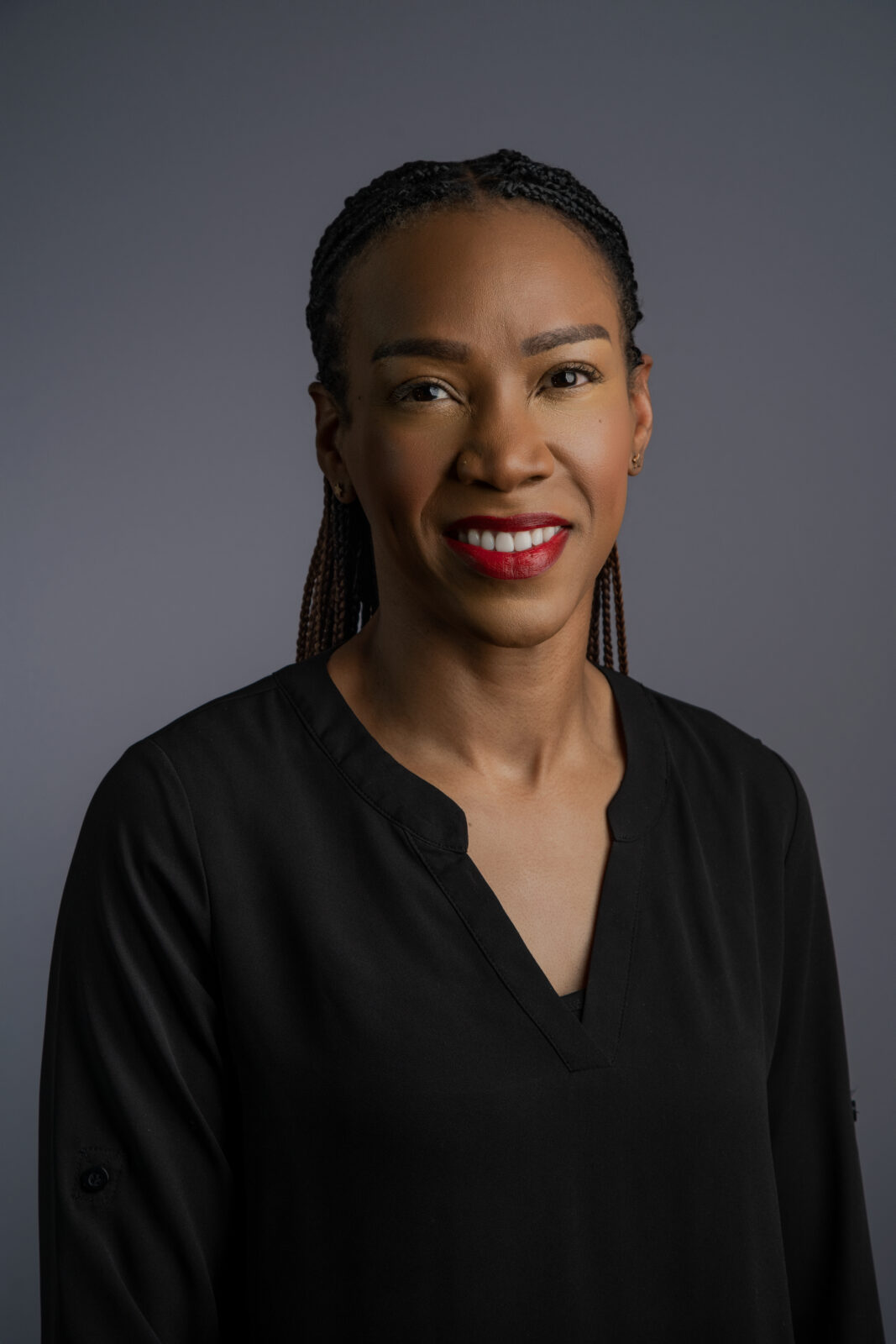
Director of The Raceless Gospel Initiative, an associate editor, host of the Good Faith Media podcast, “The Raceless Gospel” and author of Take Me to the Water: The Raceless Gospel as Baptismal Pedagogy for a Desegregated Church.