
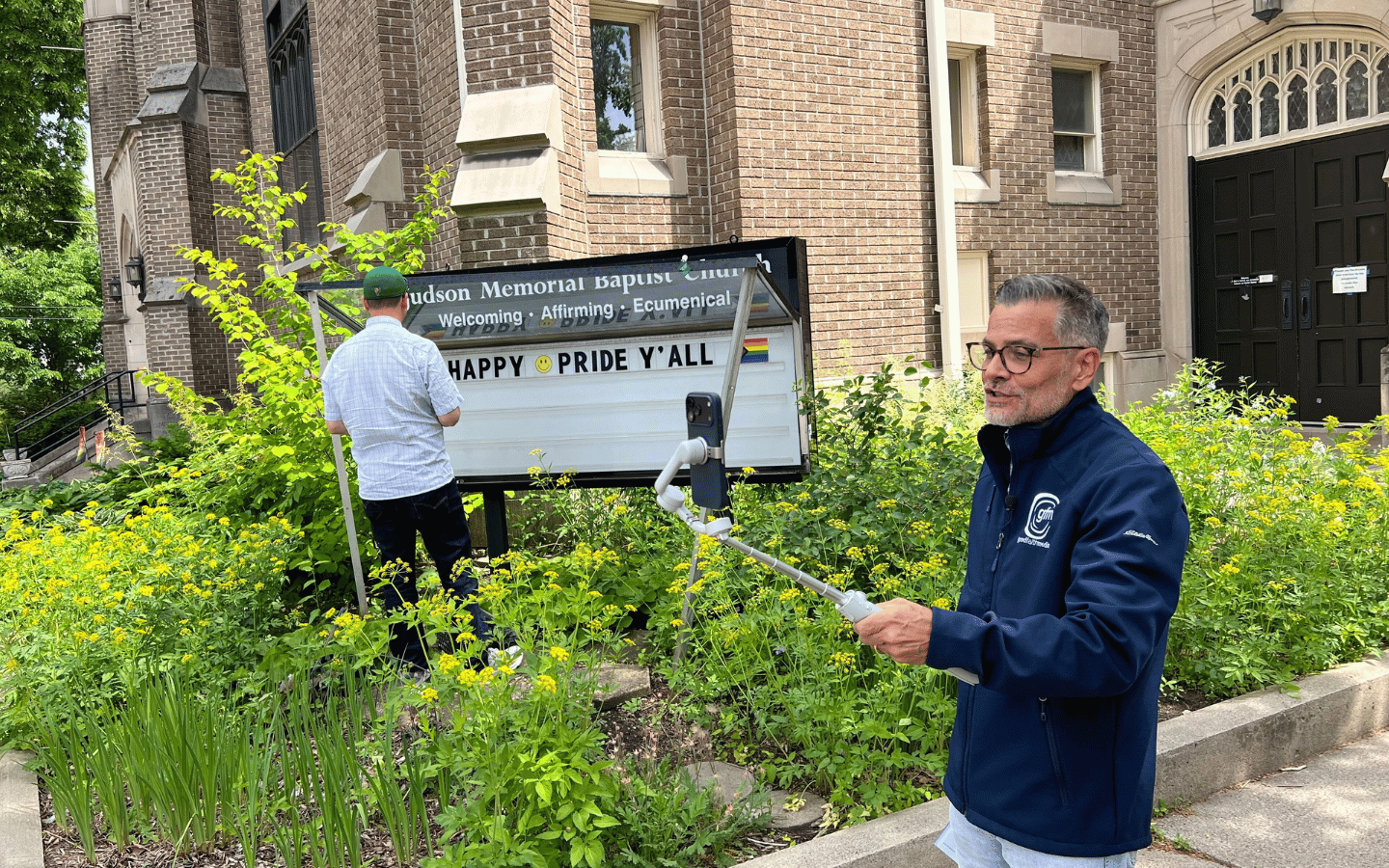
Good Faith Media returned to Minneapolis and St. Paul, Minnesota, this week to follow up on stories we covered during Operation Metro Surge last winter.
In that campaign, the Department of Homeland Security (DHS) sent thousands of Immigration and Customs Enforcement (ICE) agents to the Twin Cities, targeting migrants. The campaign led to over 3,700 arrests and 3,500 deportations.
During the height of the surge, the citizens of Minneapolis and St. Paul began to peacefully counter the agents’ efforts. Tragically, agents ended up killing two protesters: Renee Good and Alex Pretti.
When Good Faith Media returned this week, we talked with clergy and other citizens about their experiences and how Metro Surge affected their community. Before the surge, this incredible city and its citizens had already suffered through several other traumatic events: the COVID-19 pandemic, the murders of George Floyd and Philando Castile at the hands of local police, and the assassinations of state Democratic lawmakers.
When Everything Changed
Rev. Travis Norvell, pastor of Judson Memorial Baptist Church, recalled the moment the atmosphere in the city changed. As agents moved into the city, abducting their migrant neighbors from the street with unmarked vehicles and masked faces, Norvell said it felt like the entire city decided overnight to peacefully counter the surge.
Whistles began sounding when ICE activity was detected. Neighborhood watches turned into neighborhood patrols, using Signal chats to communicate ICE activity on specific streets.
Citizens started putting themselves between agents and migrants, forcing agents to either detain or arrest protesters. The Twin Cities determined they would not allow the Trump Administration’s aggressive and illegal policies to play out without defending their neighbors.
Several citizens commented, “We just wanted to love our neighbors.”
Driving through the Twin Cities, love of neighbor shines through the streets of these remarkable communities. Window signs still display the messages of “ICE OUT” and “The Twin Cities Loves Our Neighbors.”
A City’s Love
Visiting the Renee Good Memorial at 34th Street and Memorial, the city’s love for one of its own remains on display. One sign quoted Psalm 34:18: “The Lord is near the brokenhearted and saves the crushed in spirit.” Other signs expressed their love for Renee, the only kind of love that can “thaw” the cold rigidity of authoritarianism.
At the memorial, Camille Rosenquist talked about the significance of their community, both during Metro Surge and now. While the community created strong bonds during the surge, those bonds are now being redirected to voting. Voting registration efforts are ramping up in the Twin Cities, encouraging citizens to get out and vote, citing the city’s response during Metro Surge as an example of the city coming together for a common cause.
Rev. Justin Bell, co-lead pastor of The Table, was at his church just months before Metro Surge began. He recalled how intrusive the surge was to everyday life.
While a church member and Bell were eating ice cream one day, ICE agents approached. His training kicked in as the situation unfolded before them. He said, “There I was recording with one hand and holding an ice cream cone in another, as whistles blew all around us.”
Additionally, Bell talked about how his church met the needs of migrant communities who had been unable to walk the streets openly for three months. The church began collecting groceries and delivering them to over 30 families in the area. Examples like this reinforced the importance of faith communities stepping up in community crises to live out the Gospel in very practical ways.
The Struggle Continues
Minneapolis School Board Member Lori Norvell (Rev. Norvell’s spouse) reminded us that while the surge may be over, ICE activity remains.
Just before our interview, the Norvells received word that ICE had detained individuals that morning. We must never forget that just because the mainstream media no longer reports on ICE activities does not mean that these egregious acts have gone away.
The lingering effects of the surge have taken their toll. Norvell said the Minneapolis school district has been traumatized by agents detaining students and arresting their parents. The district is doing everything it can to provide counseling to students, teachers and other educators who need it.
A Growing Movement
We wrapped up our time in the Twin Cities by sitting down with Rev. Norvell outside his church. He told us about the severity of what his city has been through over the last several months. He talked about the conversation he had with his children.
He told them he might not be coming home one night because ICE agents were using lethal force against peaceful protesters. He told them about his will and what to do if he did not come home. It’s a conversation a parent should never have to have with their children.
However, Rev. Norvell believes with his heart that the work his church did during the surge continues to be transformative. He reported that the church had 18 people join since the surge, citing the fact that Judson Memorial Baptist Church actually did something during those moments.
Norvell said he could sum up his theology in a bumper sticker: “Love your neighbor!”
The Norvells, Judson Memorial Baptist Church, other clergy and congregations, and the citizens of the Twin Cities showed the world what Jesus meant when he instructed his disciples to love their neighbor. There are moments when loving your neighbor means putting everything else on the line.
The author of Proverbs (17:17) wrote, “A friend loves at all times, and kinsfolk are born to share adversity.” The Twin Cities have demonstrated those words time and time again over the last several years, more than any other city I have visited.
Click here for GFM’s full interviews from the Twin Cities.
- About the Author
- Latest Posts

CEO of Good Faith Media.