
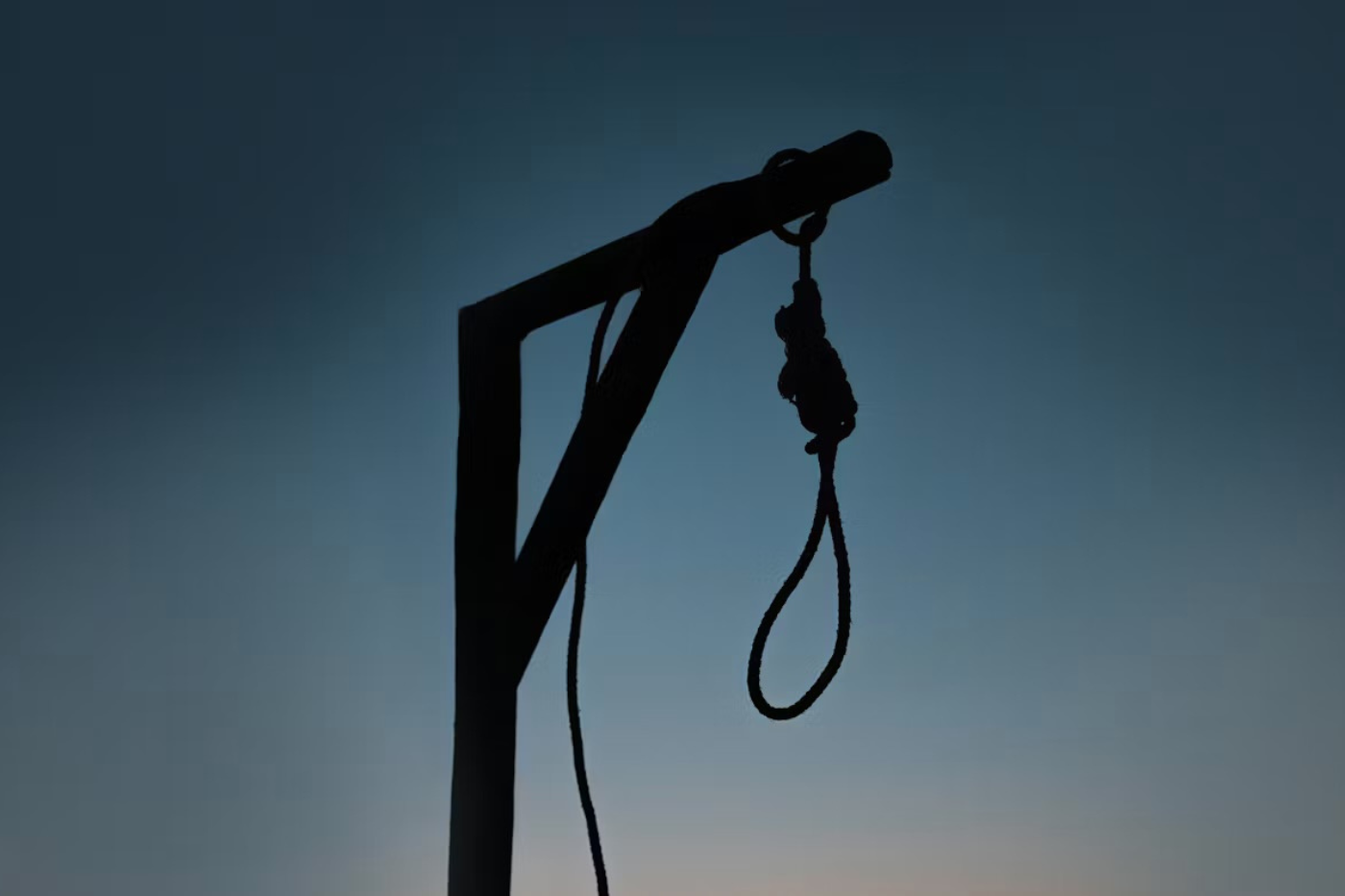
Debate surrounding public and televised capital punishment has re-emerged after the U.S. Defense Secretary Pete Hegseth said the federal military execution of Nidal Hasan would be live-streamed. It is also a reminder of America’s history of lynching.
State-run capital punishment directly evolved from extra-judicial lynchings, functioning as a formalized mechanism of control, where legal systems often absorbed and institutionalized the demands of vigilante mobs. Rainey Bethea, an African American man, was publicly hanged in Owensboro, Kentucky, on August 14, 1936. It was the last official public execution in the United States.
Nearly a century before, states had begun to move executions inside. Pennsylvania became the first state to remove executions from public view and into correctional facilities, marking a transition toward bureaucratized, state-controlled punishment rather than racial terror lynchings, also called public spectacle lynchings.
New York built the first electric chair in 1888. William Kemmler, a man of German descent, became the first person executed by electrocution in 1890, shifting state methods toward industrialized procedures.
In 1909, the North Carolina General Assembly passed “An Act to Prescribe the Mode of Capital Punishment in North Carolina” that took execution powers away from local county sheriffs and transferred them to the state. The state built a central death row and execution chamber at Central Prison in Raleigh and in March of 1910, the state carried out its first state-controlled execution, beginning with the electrocution of Walter Morrison.
By the early 1900s, Southern leaders had grown increasingly concerned with public image. Large, rowdy crowds gathering for public hangings, often treated like carnivals with children in attendance, were seen as barbaric and damaging to the states’ efforts to attract modern investment.
Lynchings didn’t stop due to increased barbarity as the victims were often dismembered, their body parts passed out as keepsakes or kept on display at the local store, available for purchase. No, the lynching of African Americans stopped because it was bad for business. It wasn’t a good look for their European American perpetrators.
So, the method changed. As part of making executions seem more “humane” and scientific, a rope was replaced with the electric chair and then the gas chamber. In 1984, executions were carried out by lethal injection.
While centralization may have removed the public spectacle, it did not eliminate racialized disparities or systemic issues within the capital punishment system. It merely moved the process behind prison walls due to growing concerns over public decency, crowd behavior, and the potential for riots.
Though a smaller crowd gathers, is it not mob violence because it is state-sanctioned? Because the appropriate paperwork has been filed, approved, and the killing scheduled? The problem is not the process.
“The death penalty is not about whether people deserve to die for the crimes they commit,” Bryan Stevenson, the founder of the Equal Justice Initiative, wrote in his memoir Just Mercy. “The real question of capital punishment in this country is, do we deserve to kill?”
Stevenson argues that focusing purely on whether a criminal “deserves” to die misses the moral test of a society. He contends that a justice system marred by racialized bias, poverty disparities, and high rates of innocent people being wrongfully convicted means the society lacks the moral authority or right to execute people.
As Stevenson points out, the death penalty in America is deeply racialized. A person is significantly more likely to receive the death penalty if the victim is European American than if the victim is African American, reflecting systemic biases that undermine equal justice under the law.
Wealth is also a factor. He notes that within the justice system, you are treated better if you are “rich and guilty than if you are poor and innocent.”
Stevenson highlights the alarming rate of wrongful convictions. For every eight people executed in the United States, one person on death row has been exonerated. He argues that no civilized society can administer an irreversible punishment when its margin of error is so dangerously high.
Stevenson argues that if any other industry had a comparable failure rate where one out of every nine operations resulted in a catastrophic error, it would be shut down immediately. Because execution is irreversible, the moral stakes of this error rate are uniquely absolute.
Nidal Hasan will be executed by a U.S. Army firing squad on December 3 at Fort Hood. Hasan was convicted in 2013 for the 2009 shooting at Fort Hood, which killed 13 people and injured 32 others.
Transforming a capital sentence into a digital spectacle would have moved the gallows to our screens and signaled a return to public executions as community events. From a local town square to a global online audience, it would have both sensationalized and desensitized state-sanctioned violence, which should raise profound ethical, social, and psychological concerns.
I worry that it wouldn’t have, which is how we got here in the first place.
- About the Author
- Latest Posts
