
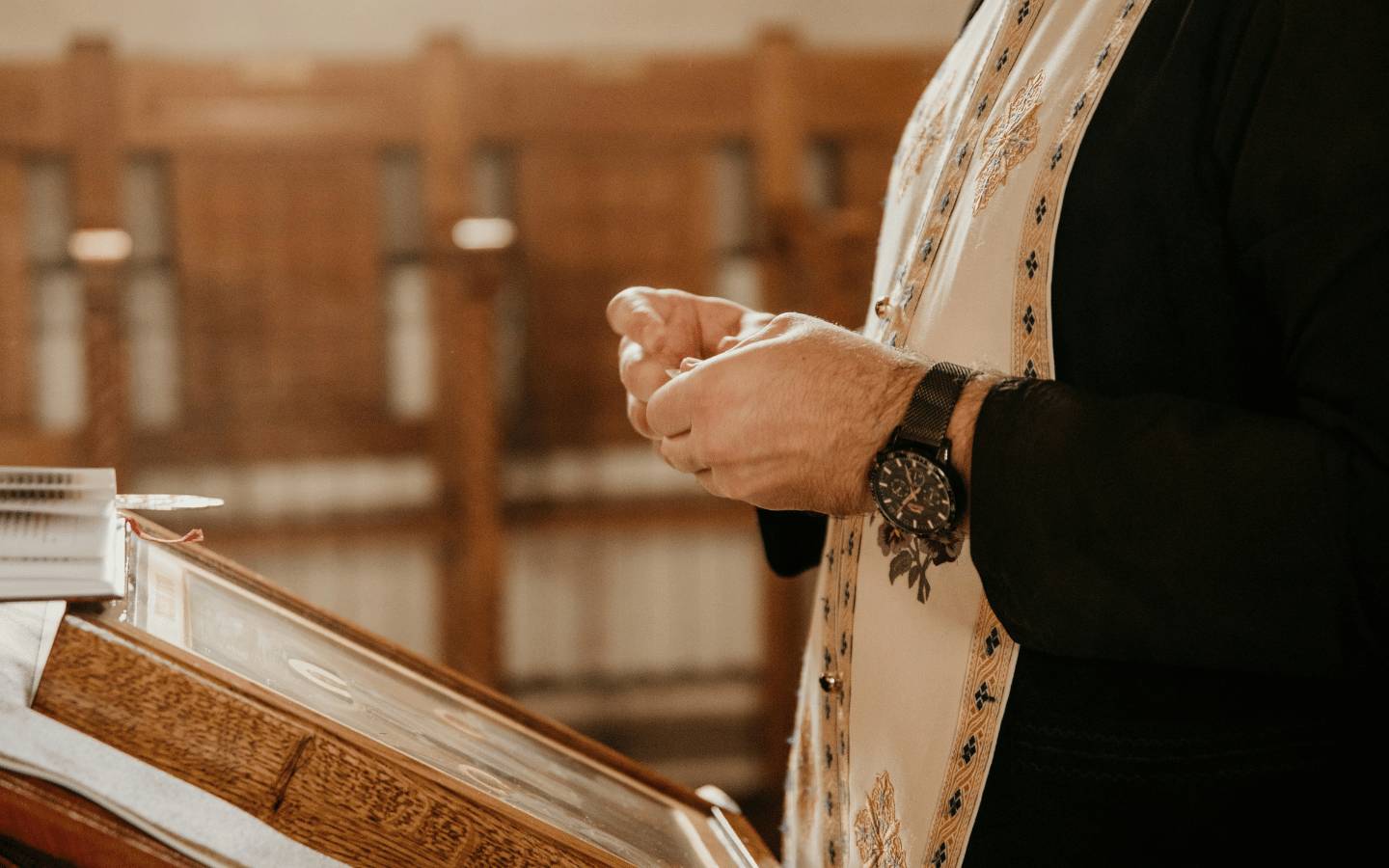
On March 8, International Women’s Day reaches a milestone of 115 years of advocating for equality in women’s work, voting rights and well-being. On this day, clergywomen in the U.S. can also celebrate a milestone in the uphill calling toward equality in ministry. Data released by the Bureau of Labor Statistics (BLS) in February show an all-time high of 96,000 clergywomen, representing 23.7% of the total of 405,000 clergy in the U.S.
When the first International Women’s Day (IWD) was observed in 1911, people gathered to advocate for women’s right to vote. In that year, virtually no women were ordained as pastors, priests or ministers in the U.S.
Half a century later, in 1961, most nations allowed women to vote, although poll taxes, property-ownership requirements and literacy tests still plagued the globe, preventing women from voting in many U.S. states and in countries around the world. Women were employed for pay in growing numbers, yet they still earned less than 60 cents per dollar paid to men. In the realm of church leadership, the stained-glass ceiling limited women to only 2% of paid clergy.
In 2026, voting polls are open to women in nearly every country globally, although cultural barriers and intimidation still prevent women, racial-ethnic minorities and many migrants from full participation or governmental representation. The global pay gap for women remains.
In the U.S., women currently earn 84 cents for every dollar paid to men. Ordination, seminary education and paid leadership for clergywomen have grown steadily since the 1970s, and in 2025, women constituted more of the total U.S. clergy than ever.
Pandemic decline and rebound
In the quarter-century before the Covid-19 pandemic, the numerical trend for clergywomen was a steady rise. In 1995, the BLS reported that only 11% of clergy in the U.S. were women. By 2018, the percentage had doubled to 22%. Mainline denominations, which adopted women’s ordination in the 1950s and ’60s, grew even faster.
When Rev. Bonnie Ernisse Dalious began pastoring congregations in New England as an ordained United Church of Christ (UCC) minister in the late 1980s, she was serving one of the more welcoming denominations in the U.S. Clergywomen constituted 28% of ordained ministers in the UCC in 1986.
By 2015, women had grown to 50% of UCC clergy. Yet Rev. Dalious, like hundreds of clergywomen, spent the next three decades pastoring small churches, occasionally working as an interim pastor, while her spouse earned a higher salary and benefits as lead pastor of larger congregations.
When the pandemic struck in 2020, more than 54 million women left the workforce globally. Women’s labor in the U.S. also took a sharp downturn as women left paid work to care for families and homeschool their children.
One clergywoman of color interviewed for the 2022 #PandemicPastoring Report said, “I’m overwhelmed by how people seem to live in such disparate realities. On a personal level, I am a mother of two young children, and I’m exhausted.” Isolation, exhaustion and struggles with leadership were the top concerns of pastors and ministers interviewed for the report. For some, the “disruption of everything” and “feeling like a scapegoat for general pandemic-induced fatigue and anger” was more than they wanted to face daily.
At the height of pandemic disruption, clergywomen left their ministry labors at alarming rates. More than 20,000 clergywomen disappeared from the BLS data in 2020 and 2021. The percentage of women dropped to 16.2% of all clergy, the lowest point since 2013 and prior to 2009.
Clergywomen left their full-time ministry jobs for a tremendous variety of reasons. Some women came to face their own personal struggles or mental health crises. Others faced overwhelming grief and fatigue. Some were fired or resigned from untenable situations. Many chose to depart to support and care for families. Others found that professional struggles and church conflicts were amplified by the season of pandemic and uprising over racial disparities. Some clergywomen simply retired early.
Rev. Dr. Denise Bell, assistant professor of pastoral leadership at Lexington Theological Seminary, interviewed African American women in ministry during the pandemic. Dr. Bell, an ordained Christian Church (Disciples of Christ) minister, says, “When I interviewed participants for my study on flourishing in 2020–21, they reported noticing that their white counterparts were leaving, while Black clergy were reluctant to step away from their sense of call.” Dr. Bell’s findings will appear in the forthcoming book Soul Stories, edited by Dr. Charisse Gillett (Chalice Press).
Rev. Flora, an African Methodist Episcopal (AME), bi-vocational pastor in rural Texas, began her first ministry appointment in 2020. In the #PandemicPastoring Report, she says, “The change to the way I [lead] worship will be different post-pandemic,” referring to the shift from in-person to virtual services in a vast majority of churches. Rev. Flora became a mental health educator, saying, “I want to help people navigate through mental illness, especially in the African American context, dealing with the pandemic and social injustices that have occurred.”
Rev. Amy Diller Guida was ordained in the Evangelical Lutheran Church in America (ELCA) in 2015. She was pastoring her second parish in the Midwest when the pandemic struck in 2020. As her husband’s job became more tenuous, the Guidas, who were also new parents living far from extended family, stepped back to consider their options. The pandemic was not a “direct cause” for the change, but says Rev. Guida, it was an “accelerant” in their 2021 move to Huntsville, Alabama, where her spouse took a new job. But as a progressive minister, Rev. Guida says, “I thought when we moved to Alabama, I would never work again.” She was far from the truth.
Huntsville has two active ELCA congregations, and since 2022, Rev. Guida has served as a supply pastor and occasional interim pastor for both. The Episcopal Diocese of Alabama, with whom the ELCA has a full communion partnership, has also been eager to invite her to pulpit supply and interim ministry, all while her family continues to grow. She is currently expecting her third child. She is clear that full-time “ministry life is hard on a family unit with young kids.” So she has adopted an “abundance mindset” in relation to her ministry. She expects many ministry jobs to be available when she is ready to work full-time again.
Post-pandemic rise
In 2022, women’s work in the clergy/ministry sector began to climb again, as did the total number of full-time clergy in the BLS data. By 2023, the “Great Resignation” was looking more like a “great renegotiation.” However, women like Rev. Guida and Rev. Flora, who work part-time, bi-vocationally, or in temporary positions, are not included in the data. Thus, the exact contours of the landscape of clergywomen’s labor are not reflected in BLS reports.
Many clergywomen were part of the Great Resignation, leaving ministry permanently and changing careers to become data analysts, college professors, or mental health counselors. Some returned to higher education to retool for new careers. Many clergywomen did not abandon their calling but continued their ministry in new and different ways.
After leaving congregational ministry, Rev. Dalious shifted to hospital chaplaincy. In 2020 and 2021, when numerous chaplains were overwhelmed with death, grief and tremendous barriers to giving care, she found a new kind of empowerment. She said, “I’m a trauma survivor, and for once, reality matched my internal tensions. COVID was something I could stand up to. It was healing because it was a trauma that I could take on actively.” She could say, “Hey, Covid, you are not going to keep me out of these hospital rooms, or from caring for these nurses.” For her, “It was actually empowering in a crazy kind of way.”
This year’s International Women’s Day theme is “give to gain.” Over the past 115 years, U.S. clergywomen have made significant gains and reached a new percentage plateau. They rebounded impressively after declining during the COVID-19 pandemic. However, more profound gains are hidden in the work of ministry: in creative change through crisis, in giving that cannot be reduced to sacrifice, and in empowerment through serving. The aim for greater equity in ordination, employment and wages for clergywomen remains. Yet for this International Women’s Day, a celebration is warranted.
- About the Author
- Latest Posts

Research Associate Professor at Vanderbilt Divinity School. She is Co-Director of the Learning Pastoral Imagination Project, and author of the 2018 State of Clergywomen Report, Pastoral Imagination (2021) and the #PandemicPastoring Report (2022).