
Israeli leaders want us to believe the US-Israeli-Iranian war is an ethno-religious conflict. It isn’t.
In his February 28 speech launching the US-Israeli-Iranian war, Israeli Prime Minister Benjamin Netanyahu sought to rally Israeli citizens by invoking the story of Purim, a holiday commemorating Jewish victory over an ancient Persian villain: “We will ensure the eternity of the Jewish people,” he promised.
He named the war “Lion’s Roar” after a passage in the Book of Amos, consistent with a well-established Israeli practice of giving military operations biblical names, as though God ordained the resort to violence.
Netanyahu’s tribalistic message reverberated throughout Israeli media. “Arab affairs” experts provided analysis of the Iranian regime (which is not Arab) and local and national officials called for unity of the Jewish people against what they described as an existential threat. News presenters delighted over a recording, played on Israel Radio, of an Israeli fighter pilot sending Sabbath greetings as he flew over Tehran last Friday afternoon, presumably to release a deadly payload.
The dangerous mix of religion and weapons sends the false message that the attack on Iran is a war between Muslims and Jews or Arabs and Jews. However, the vast majority of the 15 million people living under Israeli control are partially or entirely Arab—Arab Muslims, Arab Christians and Arab Jews (also known as “Mizrahi” or “Sephardic”) in Israel, Gaza and the West Bank.
In the occupied West Bank, where I live, we feel the war through road closures that the military tightened at its start, making travel between towns difficult. This resulted in schools moving to an online learning format for children and adults working remotely, as loud booms of missile interceptions and the occasional shrapnel falling from the sky.
Jewish settlers, who Israeli authorities have unlawfully transferred to land belonging to Palestinians, have used the war as an opportunity to step up violence against Palestinians. This includes vandalizing cars and homes, uprooting trees, stealing flocks and attacking residents, part of a campaign to coerce Palestinian communities into leaving.
On Saturday night, settlers invaded Palestinian communities and killed three men who tried to defend their homes.
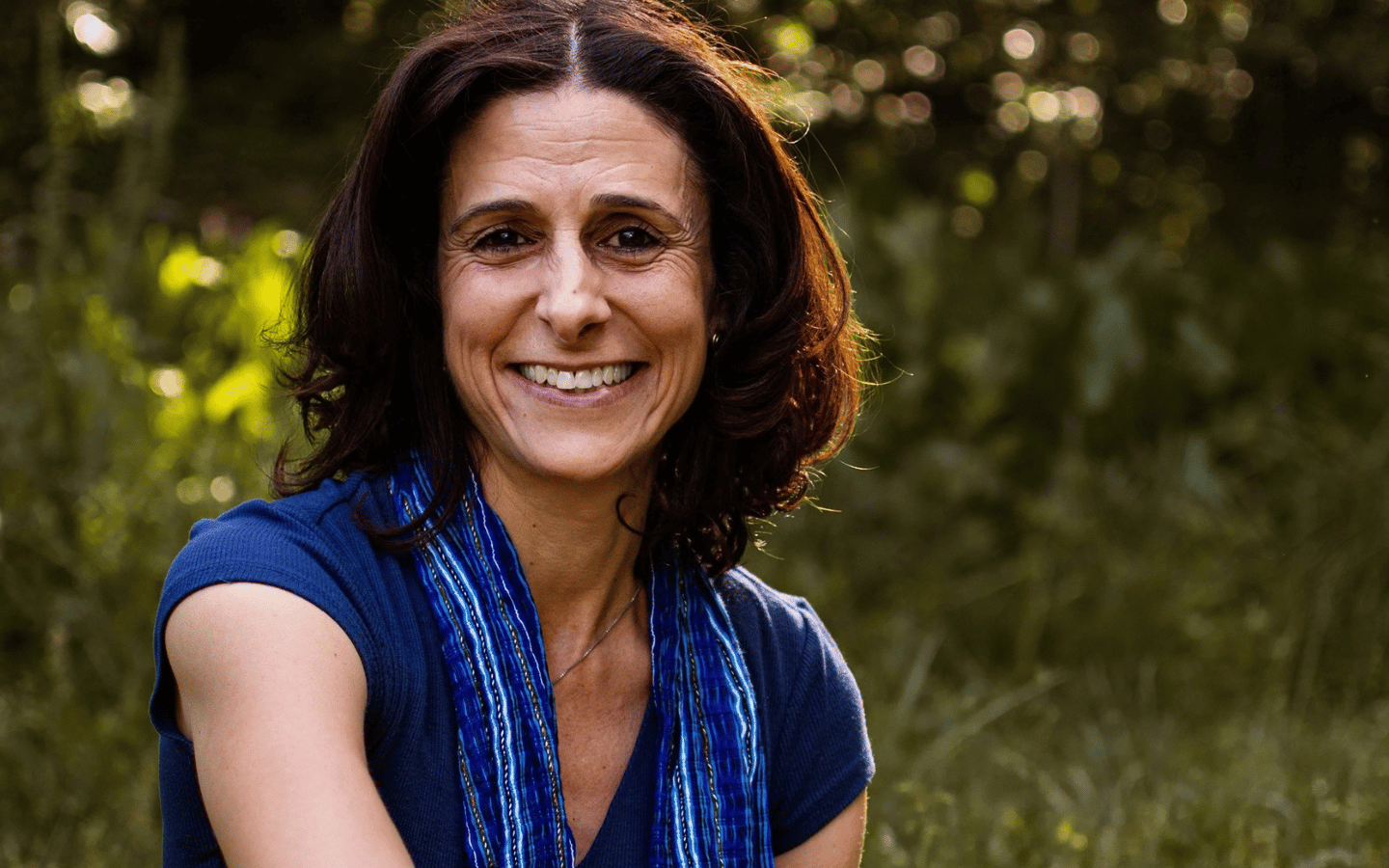
I am an Israeli-American Jew married to a Palestinian refugee from a Muslim family, and together we are raising two beautifully mixed children. I am also a human rights lawyer.
I do not view this war or the broader cycle of violence of which it is a part as a biblically ordained ethno-religious conflict between Muslims and Jews or between Arabs and Israelis. Instead, I see it being rooted in a racist system of governance in which Israeli authorities rule over roughly 7.5 million Jews and 7.5 million Palestinians living between the Jordan River and the Mediterranean Sea, enforcing laws and policies that sustain the domination of Israeli Jews over Palestinians.
Another word for this is apartheid.
Living in a mixed family makes it easier for me to see how the Israeli regime has constructed oppositional ethno-religious identities—Arabs versus Jews—as a tool of control and domination. My family is Iraqi Jewish and nearly half of the Jews living in Israel are also of partial or full Arab descent. This includes Palestinian Jews who, before 1948, were a well-established part of the indigenous Palestinian population.
Before World War I, the Levant—the region of Southwest Asia that includes Syria, Lebanon, Jordan, and Israel-Palestine—had a deep history of pluralism. It was an imperfect, ongoing project that was upended by European colonialism.
Only after the establishment of the State of Israel, when Arab Jews like my family were forced from their homes and fled to Israel, did the Jewish state begin to rebrand their Arab identity as “Eastern.” They were encouraged to abandon Arabic, framed as the language of the enemy and to assimilate into a European-dominated system.
I am part of a community of activists, Israeli and Palestinian, who refuse to accede to falsely constructed tribal rules. Groups like the One Democratic State Campaign are working to transform the current system of government to an egalitarian, rights-respecting regime, including respecting the right of return for Palestinian refugees who were ethnically cleansed from the land to create a Jewish majority.
Groups like the Mizrahi Civic Collective are working to revive and celebrate the Arab-ness and Eastern-ness of Jews from Southwest Asia and North Africa, whose identities and rights were also suppressed by Israeli authorities. We include Iranian Jews who know that neither Iran nor Islam is the enemy. We take comfort in knowing we have an imperfect but robust historical legacy on which to build.
The war with Iran began during the Muslim fasting month of Ramadan, and its third day fell on the Jewish holiday of Purim. In our West Bank home, we invited friends for Iftar, the evening meal that breaks the fast, and I prepared a traditional slow-cooked Iraqi-Jewish chicken-and-rice dish called t’bit and baked Purim cookies, hamantaschen for dessert.
That easy blending of religion, language and culture is natural in our home and native to this land. And it will be the norm again once we succeed in transforming the current regime into one that guarantees rights, equality, and justice.
- About the Author
- Latest Posts

Sari Bashi is a human rights lawyer and the author of the recently published memoir, Upside-Down Love, about how she and her Palestinian spouse met and fell in love.