
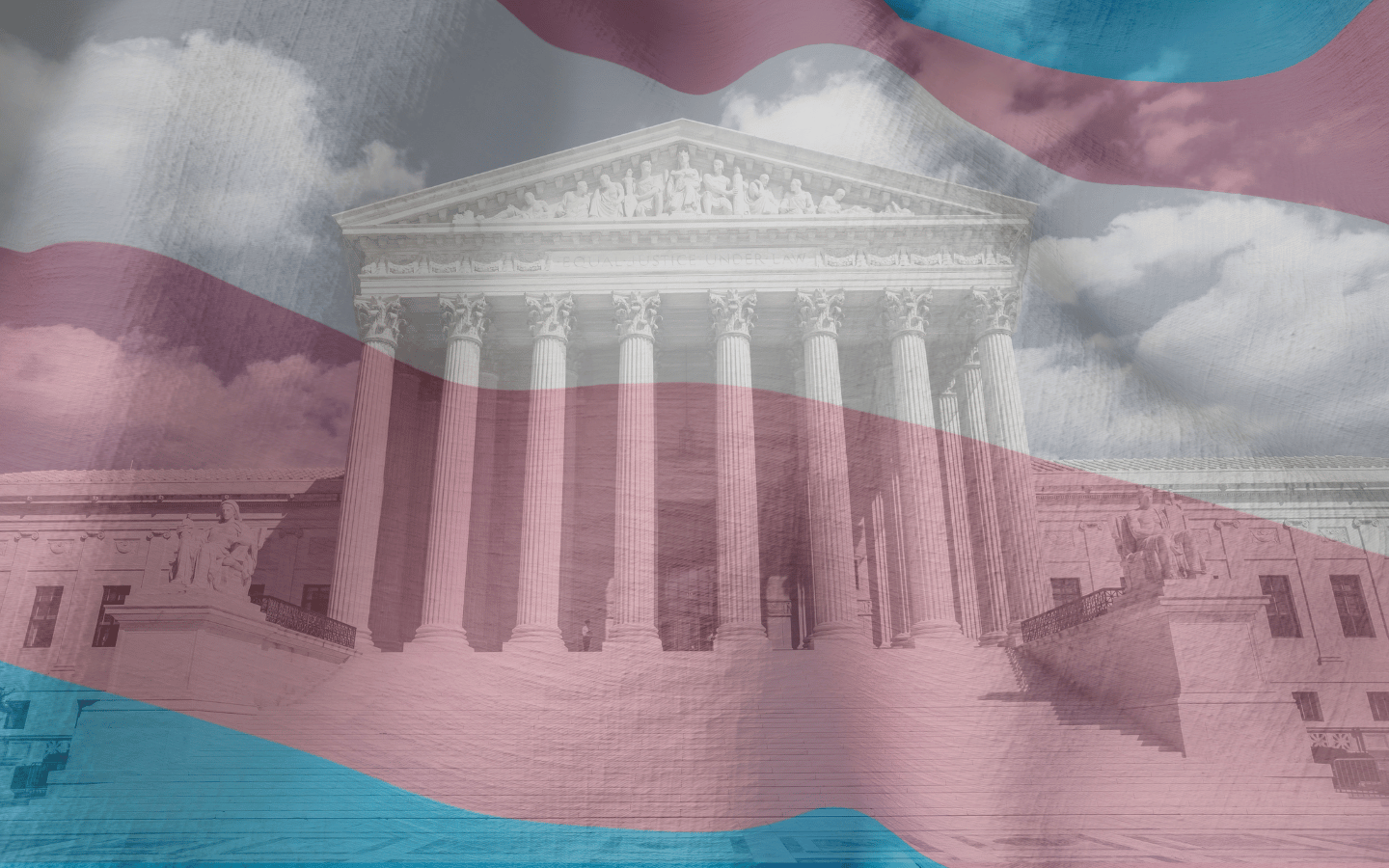
From Kali Cawthon-Freels, who leads Good Faith Media’s Faithful Pride Initiative:
The Supreme Court of the United States is currently hearing two cases related to transgender athletes in sports: West Virginia v. B.P.J. and Little v. Hecox. Since the court began hearing these cases in January, public hostility towards trans people has increased. That’s not a coincidence. As people of faith, we know any ideology that harms our neighbors is an affront to God and must be challenged.
Partnering with Christian Athlete Circles (CAC), we aim to provide straightforward resources to help our readers better understand the issue and support trans people in their lives. In this resource, CAC’s Georgia McKee addresses five common myths about transgender athletes competing, along with facts to dispel them.
An Evidence-Based Resource for Understanding Transgender Inclusion
Conversations about transgender athletes often generate fear and misunderstanding. This resource aims to provide factual, research-based information to help counter common myths with compassion and evidence. Drawing from research and current scientific literature, these facts demonstrate that trans athletes are not a threat to women’s sports, but rather represent an opportunity to create more equitable and inclusive athletic spaces for everyone.
Myth #1: Trans Athletes Are “Taking Over” Women’s Sports
THE MYTH
Trans women are flooding into women’s sports in unprecedented numbers and dominating competitions.
THE FACTS
Trans athletes represent an extraordinarily small percentage of all athletes:
- Trans people make up approximately 1-2% of the U.S. population [1]
- However, trans athletes constitute less than 0.002% (10 out of 500,000) of U.S. college athletes [1]
- Even fewer recent Olympians identify as trans—only 0.001% [1]
- At the high school level, approximately 40.7% of transgender youth participate in sports, but they remain a tiny fraction of overall student athletes [2]
The reality: Trans athletes are vastly underrepresented in sports, not overrepresented. The narrative of trans athletes “flooding” sports is simply not supported by data. If anything, trans youth face significant barriers to sports participation, including discrimination, policy restrictions, and social stigma that make it harder—not easier—for them to participate.

(Credit: Braden Collum/Unsplash+)
Myth #2: Trans Women Have an Unfair Physical Advantage
THE MYTH
Trans women always have insurmountable physical advantages over cisgender women due to their biology.
THE FACTS
The science on athletic performance and transgender athletes is more nuanced than commonly understood:
After hormone therapy:
- Only three studies have examined actual trans athletes as subjects (rather than theoretical models). These studies indicate that any potential performance advantages are negated through testosterone suppression after 12 months, and sometimes sooner [4]
- A 2024 IOC-funded study—the first to examine athletes actively receiving gender-affirming hormone therapy—found that transgender athletes may actually face physical disadvantages compared to cisgender peers [5]
- Trans women experience notable reductions in athletic performance after hormone therapy. Research shows their performance aligns more closely with cisgender women after treatment [6]
The complexity of advantage:
- Dr. Sandra Adaung, an endocrinologist who has extensively researched trans athletes, emphasizes that physical advantages vary significantly by sport and require a nuanced understanding [6]
- Trans women moving their bodies with reduced aerobic capacity and reduced muscle mass can face disadvantages in speed, recovery, and endurance[7]
- Among cisgender athletes themselves, physical bodies and capabilities differ dramatically. Traits that confer advantages in one sport may offer no benefit in another [6]
- Even cisgender women might hold a slight edge over trans women in certain sports due to trans women experiencing muscle strength decline while retaining larger bone structures, requiring greater effort for movement [6]
Research limitations:
As Anna Baeth, research director at Athlete Ally, notes: “The science is inconclusive when it comes to specific advantages for testosterone suppression and trans women athletes, primarily because no study, until this one, has studied highly trained athletes who identify as transgender women” [5]. More research is needed, but current evidence does not support blanket exclusionary policies.
“If governing bodies are serious about creating better and more opportunities for women, their focus should be on the numerous, proven research which consistently finds unequal treatment of women’s sports in participation opportunities, funding and resources, access to facilities and infrastructure, and media coverage.” [5]

(Credit: Ahmet Kurt/Unsplash)
Myth #3: Trans Athletes Are “Stealing” Medals and Opportunities
THE MYTH
Trans women are consistently winning competitions and taking medals away from cisgender women.
THE FACTS
The narrative of trans athletes dominating competitions does not match reality:
High-profile examples demonstrate varied outcomes:
- Lia Thomas, the University of Pennsylvania swimmer who received extensive media attention, won one NCAA championship event but placed fifth and eighth in her other events[8]
- Laurel Hubbard competed in weightlifting at the 2020 Summer Olympics with widespread media coverage—but won no medals [1]
- Veronica Ivy became the first transgender world track cycling champion in 2018 in the UCI Women’s Masters Track World Championship for the 35-44 age bracket [1]
- As documented in Fair Play, the only time trans participation becomes controversial is when trans athletes win—but cisgender athletes also lose to other cisgender competitors regularly [8]
The larger context:
- Katie Barnes notes in Fair Play that “the idea that the outcome of an event against a transgender woman is predetermined is not correct, but has become the accepted (and in my opinion, incorrect) argument” [8]
- A comprehensive review found that the majority of sport policies are not evidence-based and have participation requirements that are arbitrary or not clearly justified [4]
- Claims that trans athletes have an unfair advantage lack credible scientific evidence overall. Available information does not indicate that trans athletes have inherent athletic advantages [9]
What’s really threatening women’s sports:
Research consistently shows that the real barriers to women’s sports participation are:
- Inequality in funding and resources [5]
- Limited access to facilities and infrastructure [5]
- Inadequate media coverage [5]
- Girls have 1.3 million fewer opportunities to play high school sports than boys [10]
- Lack of physical education in schools and limited opportunities to play [10]
As Athlete Ally emphasizes: “If we are serious about creating better and more equitable opportunities, our attention should be on the numerous research which finds unequal treatment of women in sports “[5].

Credit (Folco Masi/Unsplash)
Myth #4: Allowing Trans Athletes to Compete Harms Cisgender Women
THE MYTH
Including trans women in women’s sports categories directly harms cisgender women athletes and undermines women’s sports.
THE FACTS
The case for inclusion:
- Athlete Ally and affiliated academics state: “As advocates and scholars dedicated to advancing equality for women and girls in sport, we believe in the power of sport to empower all people—and to change the world by doing so. Exclusion and restrictions for transgender athletes undermine this cause” [11]
- Research shows sports participation significantly reduces women’s endorsement of gender inequality ideology and promotes gender equality principles [12]
- The establishment of female-only divisions was created to encourage greater participation of girls and women, with a goal of equal participation rates[13]—a goal that is undermined when we exclude vulnerable populations
The harm of exclusion:
Banning trans athletes from sports participation has documented negative consequences:
- Places trans youth at greater risk for poor cardiovascular health and decreased bone density [14]
- Precludes them from the benefits of neurocognitive development that sports participation yields [14]
- Trans people often struggle with poorer mental health due to prejudice and discrimination, and sports could offer a way to find community and belonging [7]
- Currently, 27 states have laws preventing transgender girls and women from participating in sports based on gender identity, affecting an estimated 117,400 transgender youth ages 13-17 [2]
The goal is not to pit cisgender women against trans women, but to find policies that create space for everyone.

(Credit: Fitsum Admasu/Unsplash+)
Myth #5: We Need to “Protect” Women’s Sports from Trans Athletes
THE MYTH
Strict policies preventing trans participation are necessary to protect the integrity and fairness of women’s sports.
THE FACTS
Moving targets and inconsistent standards:
- As documented in Fair Play, “the target keeps moving, especially for transgender women, including the length of time they need to be on hormone therapy and what testosterone levels are acceptable” [8]
- Most sport policies are not evidence-based and have participation requirements that are arbitrary or not clearly justified by research [4]
- The International Olympic Committee-funded research team recommended that sports federations avoid hastily prohibiting transgender women from competing in women’s categories, advocating instead for more tailored research for each sport [5]
What really needs protection:
The narrative of “protecting” women’s sports often obscures what truly threatens athletic opportunities for women and girls:
- Systemic underfunding and resource inequality
- Limited media coverage and sponsorship opportunities
- Inadequate facilities and coaching
- Cultural barriers to participation
- Gender stereotypes and discrimination
A better path forward:
Rather than exclusion, researchers and advocates recommend:
- Evidence-based policies tailored to specific sports
- Longitudinal studies examining trans athletes’ performance over time
- Recognition that fairness in sports is complex and already involves managing many types of natural variation
- Policies that balance inclusion, fairness, and safety for all athletes
- Addressing the real systemic barriers that limit opportunities for all women in sports
As Fair Play ultimately argues: “Trans women deserve to participate in women’s sports. The idea of sex-segregated sports deserves reexamination and perhaps revision in a way that still acknowledges the effects of patriarchy on sports participation” [8].

(Credit: Jack Delulio)
Conclusion: From Fear to Understanding
The fear surrounding trans athletes in sports is largely based on misinformation and misunderstanding rather than evidence. Trans athletes:
- Are not flooding sports in overwhelming numbers
- Do not have consistent, insurmountable advantages after appropriate hormone therapy
- Are not systematically “stealing” medals and opportunities
- Do not pose a threat to women’s sports
What trans athletes do represent is an opportunity to reexamine how we create fair, inclusive, and equitable sports for everyone. As we work toward that goal, we must remember that exclusion causes real harm to vulnerable young people while doing nothing to address the systemic inequalities that actually threaten women’s sports.
The future of women’s sports is stronger—not weaker—when it includes all women and girls, including those who are transgender.
__________
References
[1] San Francisco Department on the Status of Women. (2025). Trans Women in Sports: Facts Over Fear. https://www.sf.gov/trans-women-in-sports-facts-over-fear
[2] Williams Institute, UCLA School of Law. (2025). The Impact of Transgender Sports Participation Bans on Transgender and Nonbinary Youth. https://williamsinstitute.law.ucla.edu/publications/impact-trans-sports-ban-eo/
[3] Barnes, K. (2023). Fair Play: How Sports Shape the Gender Debates. Simon & Schuster.
[4] Canadian Centre for Ethics in Sport & Athlete Ally. (2022). Transgender Women Athletes and Elite Sport: A Scientific Review. https://www.athleteally.org/wp-content/uploads/2023/01/CCES_Transgender-Women-Athletes-and-Elite-Sport-A-Scientific-Review-2.pdf
[5] Darvin, L. (2024, April 25). Transgender Athletes Could Be At A Physical Disadvantage, New Research Shows. Forbes. https://www.forbes.com/sites/lindseyedarvin/2024/04/25/transgender-athletes-could-be-at-a-physical-disadvantage-new-research-shows/
[6] CNN. (2025, May 29). Do transgender women have an athletic advantage? Here’s what the science says. https://www.cnn.com/2025/05/29/health/transgender-athletes-advantage-science-explainer
[7] DW. (2025, April 13). Fact check: Do trans women have unfair athletic advantage? https://www.dw.com/en/do-trans-women-have-an-unfair-athletic-advantage/a-58583988
[8] Barnes, K. (2023). Fair Play: How Sports Shape the Gender Debates. Goodreads reviews and synopsis. https://www.goodreads.com/book/show/65214287-fair-play
[9] Gender Justice. (2026, January 28). Get the Facts: Trans Inclusion in Sports. https://www.genderjustice.us/toolkits/trans-inclusion-sports/
[10] Women’s Sports Foundation. (2019, October 10). Do You Know the Factors Influencing Girls’ Participation in Sports? https://www.womenssportsfoundation.org/do-you-know-the-factors-influencing-girls-participation-in-sports/
[11] Athlete Ally. (2021, July 13). The Future of Women’s Sports Includes Transgender Women and Girls. https://www.athleteally.org/future-womens-sport-includes-trans-women-girls/
[12] Frontiers in Public Health. (2025, December 17). The impact of sports participation on gender inequality ideology among women. https://www.frontiersin.org/journals/public-health/articles/10.3389/fpubh.2025.1721609/abstract
[13] National Institutes of Health. (2022, March 16). Fairness for Transgender People in Sport. PMC. https://pmc.ncbi.nlm.nih.gov/articles/PMC8944319/
[14] Transgender Law Center. (2025, June 22). Journalist Resource: Reporting on Trans Youth and Sports. https://transgenderlawcenter.org/journalist-resources/journalist-resource-reporting-on-anti-trans-athletic-bans/
- About the Author
- Latest Posts

Georgia McKee is the co-founder of Christian Athlete Circles. Kali Cawthon-Freels leads Good Faith Media’s Faithful Pride Initiative.