
Earlier this month, several San Francisco Giants players objected to their team’s Pride Night. As the Giants took the field against the Chicago Cubs, pitchers Landen Roupp, J.T. Brubaker and Ryan Walker wore team-issued rainbow-logo caps. However, theirs was marked with “Genesis 9:12–16,” a passage often invoked to reclaim the rainbow as a symbol of God’s covenant rather than queer pride.
The response was swift and divided.
Fans from across the country spoke up in both fierce anger and unwavering support for their protest. LGBTQ+ fans and allies feel hurt and rejected by their chosen team, their role models, for going out of their way to profess their rejection and disapproval of a community’s very existence. People of Christian and Jewish faith, who hold a traditional view of marriage, celebrated the players’ willingness to hold fast to their religious convictions.
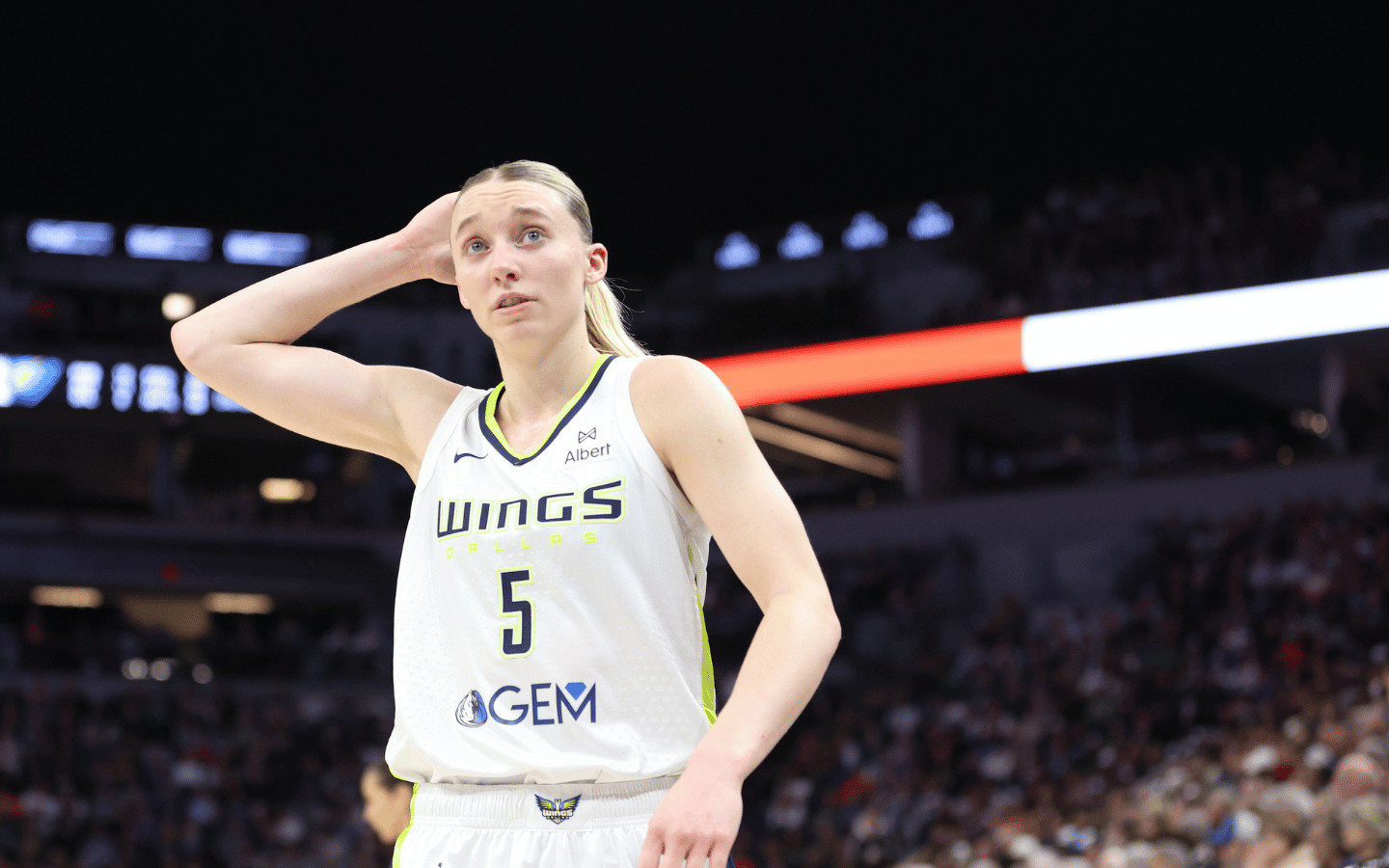
Just a day prior, nearly 2,000 miles away, another Pride Night was hosted by the WNBA’s Dallas Wings. Similar to the Giants, merchandise that rainbow-fied the team’s logo was sold around the arena. Before and after the game, the Wings honored the leaders and work of local LGBTQ+ community organizations.
While no Bible verses were written on the team’s gear that night, faith still played a prominent role in the celebration when, in a post-game interview, Wings star Paige Bueckers was asked what having a Pride Night meant to her:
“I think it’s really important. I feel like this world would be a lot better place if love and inclusivity were just put first, to live in love, to love somebody, regardless of who they like, who they love, and just love them for who they are…I want to live a Christ-like life, and to live in love, to live in accepting others.”
One faith. Two very different expressions.
Dividing Pride
After the Giants game, Vice President JD Vance posted on X, “Trump won we don’t have to do this,” framing Pride Night as something people are being forced into and something to push back against now that the cultural winds have shifted.
Vance is right. We don’t have to do this. In fact, the Giants players were not forced to do this.
Communication between the Giants franchise and its players regarding their involvement in Pride Night has been muffled. Yet the public assumption is that these players were forced to wear the Pride gear, which they were not.
Pitcher Sam Hentges didn’t wear the Pride cap at all and did not receive the same lackluster verbal warning. Roupp, Brubaker and Walker intentionally communicated their disapproval of the LGBTQ+ community in a way that would not only set them apart from their team but also cut deep where it would hurt most: by the use of their Christian faith.
Their agenda was to oppose. To divide. To set themselves aside on an apparently higher moral ground.
For what? To get a round of applause from political pundits? To be the front runner for the latest religious freedom lawsuit?
As someone who used to adhere to religious commitments similar to those of these players, I imagine they did so as an act of faithfulness to what they believed was being on the right side of history, being on “God’s side.” But even their version of a good-faith action was, whether they admit it or not, maliciously intended. They were very aware of the vast queer fanbase they’d amassed over the years and what it would do to them.
Uniting Pride
What we’ve learned over years of fighting for civil rights and equality for all is that opposition to a group of people is loud but not transformative. Rejecting people and forging a divide that inhibits any chance of relationship and dialogue only harms everyone involved.
That’s why the words of Paige Bueckers will always hold more weight than the actions of the Giants players. Declaring what we are for rather than what we are against, spreading our arms and inviting people to see how God’s love only grows wider and more loving, makes us active participants in building a community, rather than tearing it down. Even if a Wings fan disagrees with Paige’s expression of her faith, she wasn’t cutting them off from the possibility of relationship.
In the words of Rev. Pauli Murray, who faced racism and sexism in her day, “When my brothers try to draw a circle to exclude me, I shall draw a larger circle to include them.” Faith that draws wider circles is a faith that’s attractive, that’s healing, and will make far more impactful waves in the lives of others than headlines over a stunt.
Bueckers showed us what it looks like to live out a faith that doesn’t need an enemy to get its power, and refused to shrink to only serve a few.
May all of our actions lead to wider circles.
- About the Author
- Latest Posts

Associate Pastor at Glencoe Union Church and co-founder of Christian Athlete Circles.