

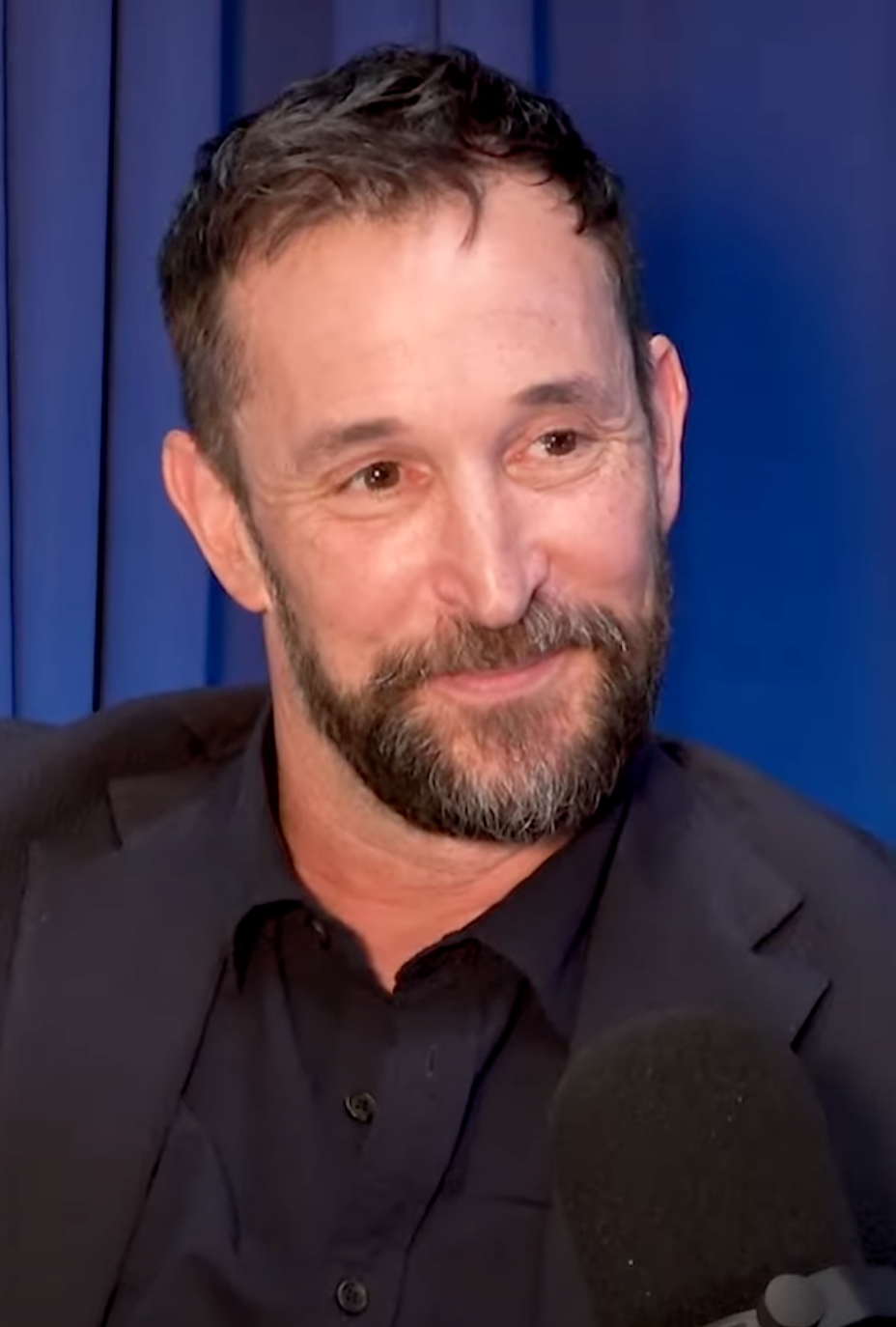
Noah Wyle
In terms of praise, there is very little that hasn’t been said or written about The Pitt. The HBO Max medical drama starring ER’s Noah Wyle and an ensemble cast of relative unknowns has been a popular and critical darling since its January 2025 premiere.
Now in its second season, it has already won numerous awards, including Emmy wins for Outstanding Drama Series and Outstanding Lead Actor and Outstanding Supporting Actress for Wyle and Katherine LaNasa, respectively. Wyle plays Dr. “Robby” Robinavitch, the senior attending physician facing PTSD from the COVID-19 pandemic. LaNasa plays Dana Evans, the weathered charge nurse.
Production
A lot of digital ink has been spilled about The Pitt’s realism, with many members of the emergency medical community naming it as the show that most accurately represents a day in their lives. Each season spans one shift in the ER at Pittsburgh Trauma Medical Center (PTMC), with episodes covering an hour of the shift. The writing room is crowded with doctors, and the set was created in consultation with a healthcare design firm, lending credibility to the show.
The medical cases that make their way into The Pitt are what anyone who has spent any amount of time in an emergency room would expect.
There are bowel obstructions, heat strokes and mental health crises. There are also dangerously crowded waiting rooms, patients faced with choosing between death and bankruptcy, and mass shootings—not because those themes are in the headlines, but because they are a part of our American story.
The Pitt is diverse. Its patients look like Pittsburgh and its medical staff reflects the U.S. medical community, complete with higher rates of South Asians than in the general population. It also demonstrates the consequences of the persistent underrepresentation of African Americans among physicians and senior hospital leadership, such as racial disparities in treatment.
One of the show’s most beloved characters, Dr. Mel King (played by Taylor Dearden), has been praised for her depiction of how neurodivergence can be both a challenge and a gift in the high-stakes field of emergency medicine.
I was a relatively late adopter of The Pitt, having discovered it through word of mouth in the months between seasons one and two. I had already heard most of these kudos for the show before I binged the first season, so I was prepared.
But there was something about watching The Pitt that no one told me about. I don’t know whether this was an incidental omission or if the experience is unique to me. Either way, I have found the weekly hour I have carved out to spend with the people at PTMC to be a calming experience and a spiritual balm for my soul.
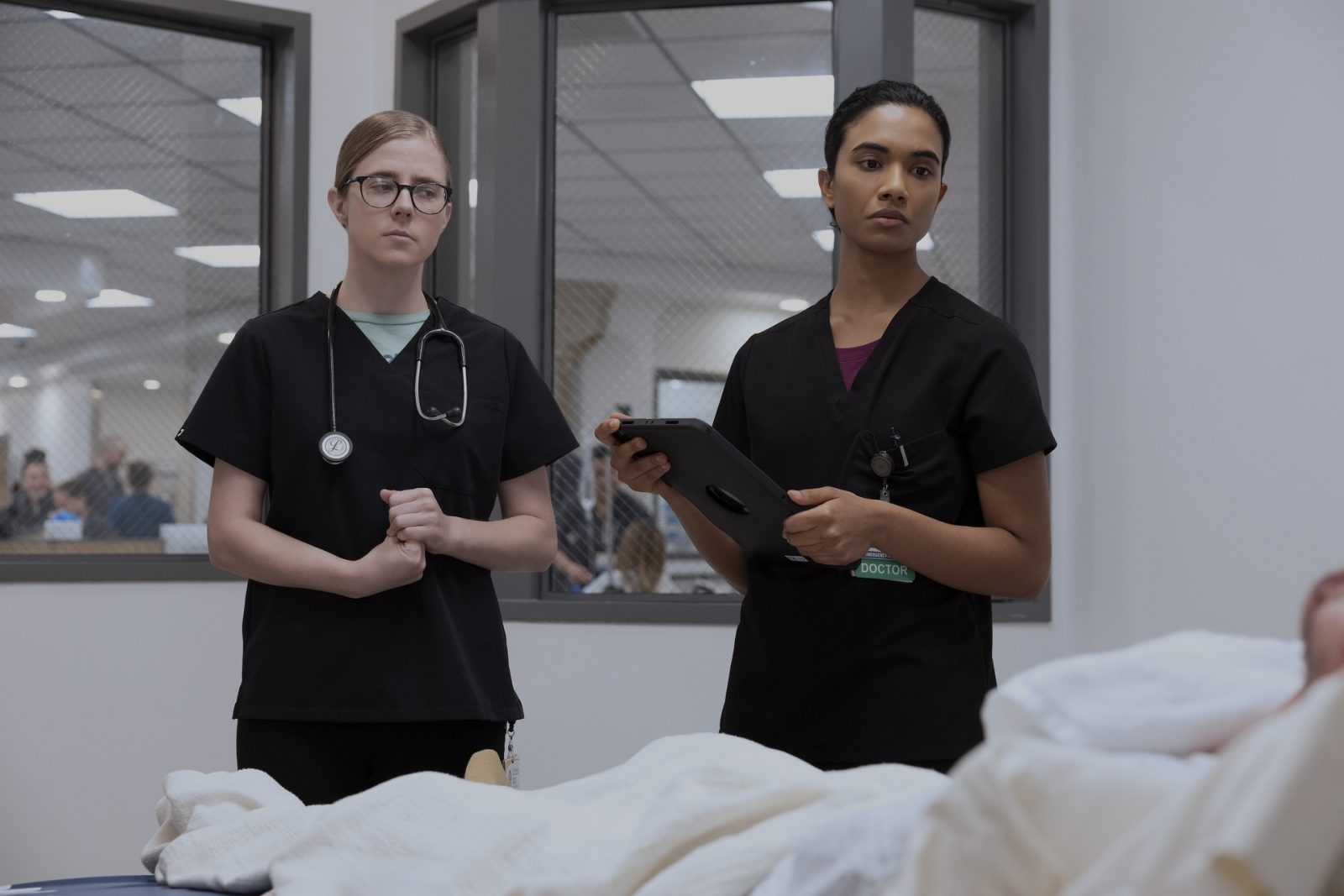
Taylor Dearden and Supriya Ganesh as Drs. Mel King and Samira Mohan (Photograph by Warrick Page/HBO Max)
Still Waters
“Calm” is not a word often associated with emergency rooms, especially on the two days depicted so far on The Pitt. In the “5:00 P.M.” episode of the first season, a mass shooting event at a Pittsburgh music festival dominates the rest of the season. Season two takes place on the Fourth of July, several months after the day depicted in the first season.
And yet, I am rarely tempted to glance at my phone and often find myself breathing easy during each episode. Why is this?
It could have something to do with The Pitt being the epitome of a new-ish category of entertainment that has been given a coarse name: Competency Porn.
To be sure, Dr. Robby’s medical staff makes mistakes, sometimes leading to death. But mostly, their patients leave the ER in better condition than they entered.
Also, PTMC has its fair share of narcissists, good guys, bad guys, opportunists and angels. But the show’s writing, acting and production cut through all of this and elevate professionalism over drama, which becomes its own soothing form of drama. It deftly does all this in a way that I didn’t even notice until several episodes in—without music to direct the viewer toward how they are “supposed” to feel.
In a moment when institutional competence feels fragile, watching skilled professionals act with clarity carries emotional weight beyond entertainment.
In an OpEd for The Washington Post, Jada Yuan noted how the season premiered just before Donald Trump’s 2025 inauguration, and its second season began almost exactly a year into his first term. According to Yuan, The Pitt “cannot be separated from the context in which we’re watching it.”
As our headlines are dominated by a thrice-married, bankrupt casino man whose character on a reality show thrust him into the most powerful position in the world, where he has surrounded himself with similarly inept lightweights, watching people do things well can be soothing.
Faith in Chaos

Noah Wyle as Dr. “Robby” Robinivich (Photograph by Warrick Page/Max)
One of the most understated, subtle ways The Pitt serves as a contemplative experience is through its depiction of various forms of faith and religious practice.
A scene in season one depicts Dr. Robby collapsed on the floor of a patient room painted for the youngest ER patients. The pediatric room had been converted into a makeshift morgue for the victims of the music festival shooting. Dr. Whitaker, a fourth-year medical student, walked in on him clutching a Star of David and praying the Shema in Hebrew: “Hear O Israel, The Lord our God, The Lord is One.”
“I don’t know if I actually believe in God, especially on days like today,” Dr. Robby told Whitaker, confessing he learned the prayer from his grandmother.
In an earlier episode, Dana Evans, Robby’s charge nurse, shares with a patient in a fleeting conversation that she believes in God. When this occurred, it was difficult to tell whether she was being genuine or recognizing the usefulness of invoking God in a consequential moment for someone who clearly believes in God.
The tell, however, is in the tape. Throughout the show, Evans serves as the moral center and primary mover of the ER. She is crass and irreverent, but the one people look to for guidance.
Despite Robby’s and Evans’ different levels of devotion, they both share a pastoral trait in common. Each of them, in their own way, embraces the sacredness of whatever person is in front of them in a given moment. And they treat, to the best of their ability, each individual moment as holy and worthy of attention.
The Pitt will not save the world. It is, however, the one hour a week when I am not tempted to check my phone to see what’s going on in it.
- About the Author
- Latest Posts

Senior Editor at Good Faith Media.