
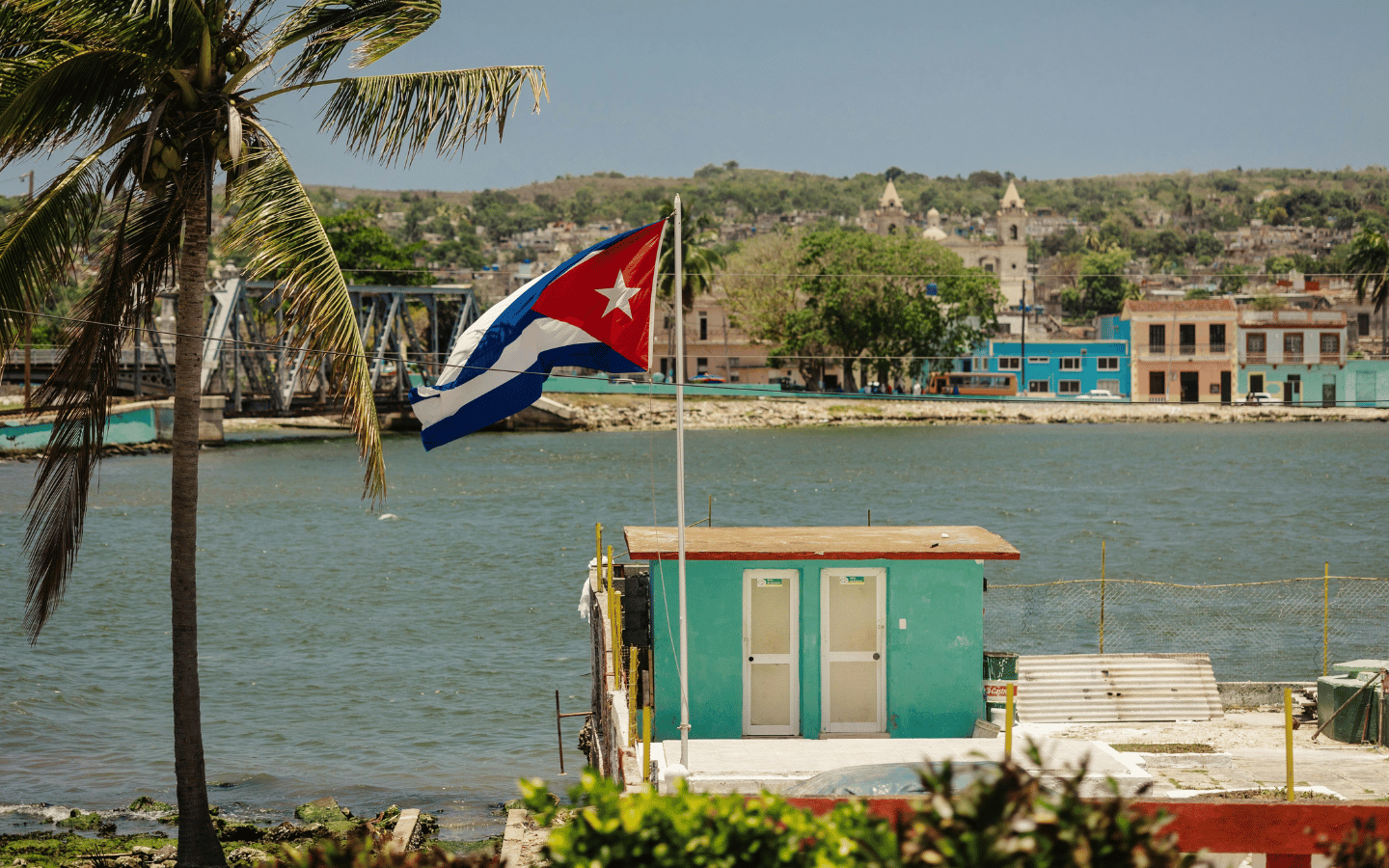
There is a sensation that I cannot shake from my body or my mind. It is that of being in a waiting room, where the uncertainty of what is about to happen completely overwhelms me.
If one were merely waiting to be called in for a doctor’s appointment or for a response regarding a potential job, then this anxiety might be manageable. But faced with the repeated announcement that your country, the place where you have lived your entire life, is about to be invaded by the U.S. military, who wouldn’t feel anxious?
This is no longer a matter of mere possibilities. It is a confirmation that the event now seems inevitable.
It is being stated not only on social media. The U.S. Secretary of State himself has affirmed it, and the Governor of Puerto Rico—with a smile on her lips—declared on May 24 that the military operation will take place next week.
Those who watched Foreign Minister Bruno Rodríguez’s presentation before the UN Security Council heard him warn that what would ensue is a genocide—a bloodbath. This stands in stark contrast to other analysts who speak of a “minimal-access operation”—one that simply requires decapitating the regime’s leadership, and voilà, the job is done.
For this latter scenario, they are banking on the effects of the deprivations currently being endured by the population. These deprivations are invariably attributed to the failure of the political system (rather than to the calculated plan of economic strangulation devised by the U.S. Secretary of State) or to betrayals within the Cuban military command. Yet, they fail to take into account the possibility that this “minimal-access operation” could easily spiral into a full-blown slaughter.
Be warned. The Pentagon’s calculations—however sophisticatedly derived via Artificial Intelligence—have a track record of being wrong.
They fail to take into consideration that this country has spent many decades preparing for precisely this contingency. They also don’t acknowledge that this is not an army lacking in combat experience. Recall, for instance, how it defeated the powerful military forces of Apartheid-era South Africa.
Ultimately, however, the best outcome would be for war to be averted entirely; that is what we, in this country, pray for. We feel, in advance, the anguish Cuban families would endure were they forced to bury their cherished youth, along with the innocent victims euphemistically labeled “collateral damage.”
And so I ask, “Has Cuba’s conduct on the global stage truly been such as to merit a punishment of this magnitude? Has the solidarity aid we have provided, in the wake of every earthquake or epidemic, been insignificant? What of the 250,000 doctors and nurses who have served across the globe, or our sustained medical collaboration in over 60 countries?
Does it matter to no one that one and a half million humble people in Latin America regained their sight thanks to Operation Miracle? And do the millions of people who learned to read and write with the guidance of Cuban experts using the “Yo sí puedo” method count for nothing?
Does no one remember that, even in European countries during the pandemic, Cuban medical aid arrived? Which country stepped in to assist the cruise ship carrying British tourists when no other nation dared to receive them, save for Cuba?
Were Cuban doctors not among the few who risked exposure to the Ebola virus in Africa, a fact acknowledged by the World Health Organization?
Have we truly done such harm to the world that we deserve to be punished? Is it not shameful to claim Cuba poses a threat to the United States?
- About the Author
- Latest Posts

Founder and coordinator, Evangelical Prison Chaplaincy, and pastor emeritus of Iglesia Primera Bautista in Matanzas, Cuba.