
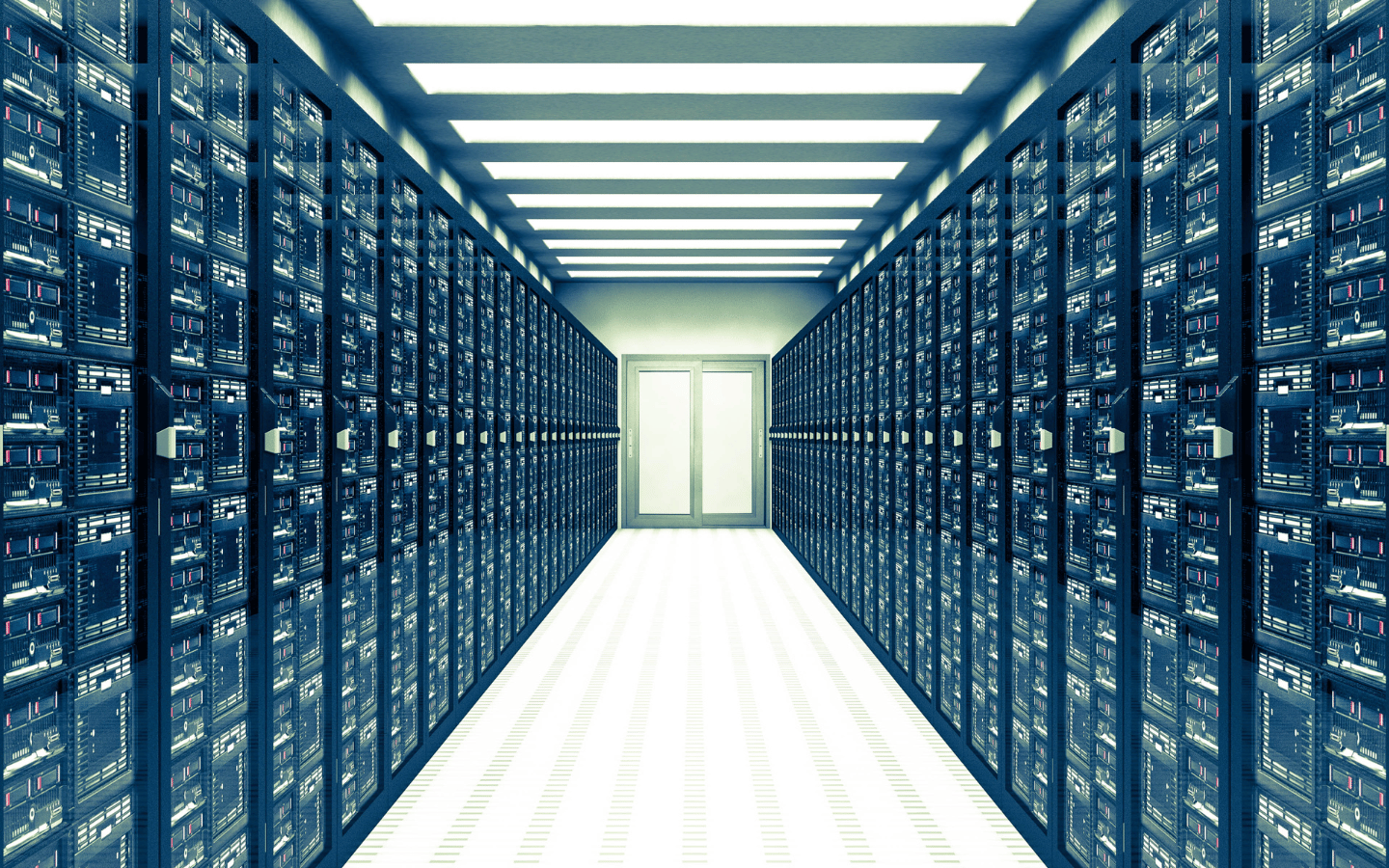
In the crowded and chaotic daily news cycle, with various stories competing for our attention, the subject of data centers has been humming in the background for some time. Though it only occasionally breaks into the national news during brief windows of time between bombs falling on Iran, ICE killing another human, or the latest revelation of corruption from 1600 Pennsylvania Avenue, it is among the top concerns for millions of Americans living in small towns and rural areas.
Last week, The Texas Tribune hosted an online conversation titled “Fast Development, Slow Policy: Texas communities and the data center boom.” The event featured experts in various fields affected by data centers, including water use, land development, and public policy. Additionally, the Baylor Line Foundation, an independent organization that serves as a resource for the Baylor University community, aired the event live and hosted a panel discussion with Baylor researchers and Waco, Texas, area policymakers.
Although the conversations were specific to Texas communities, they highlighted and clarified details of a dynamic topic that will dominate local decision-making for years to come. Although most data centers are currently in urban areas, new projects are predominantly being proposed in underdeveloped small towns and rural communities.
During a time when people are desperate for nonpartisan and non-ideological solutions to public challenges, data center development offers an opportunity for diverse communities to come together in creating solutions that benefit the common good.
The following is a guide to understanding some of the contours of the data center boom. They are drawn largely from the Texas Tribune and Baylor Line conversations, and conclude with some reflections on what all this means for people of faith. This guide is not exhaustive, and it doesn’t even mention the ethics of Artificial Intelligence. Good Faith Media is committed to furthering these conversations in the coming months in ways that are both informative and true to our faith commitments.
What are data centers and why are they needed?
Data centers are facilities that house the technology to hold large quantities of digital data. They are not new, with some of the earliest ones being built in the 1940s. The data they hold serves numerous purposes.
According to Margaret Cook, Vice President for Water & Community Resilience at the Houston Advanced Research Center (HARC), technology such as video conferencing and television streaming services are only possible because of data centers. “When you’re storing anything in ‘the cloud,’ it’s not actually in a cloud,” she said. “It’s being stored in data centers.”
Artificial Intelligence (AI), however, is behind the massive expansion of data centers. AI technology, including training AI models and processing AI search queries, requires more physical space to operate than other computer storage needs.
Tech companies that build data centers are looking for large plots of inexpensive land that, ideally, come with sizable tax breaks. They also need cheap energy and readily available water supplies.
As is the case with many large-scale corporate initiatives, they are also looking for an environment with very few rules to follow. All this makes states like Texas, with easy access to natural resources and lenient regulatory structures, an attractive target.
Who benefits from the development of data centers, what are the costs, and what public interest do they serve?
According to Adrian Shelley, the Texas Director of the consumer advocacy organization Public Citizen, data centers do provide some benefits to communities. “The most obvious is the increase to the tax base,” he said. In some cases, that could be in the hundreds of millions of dollars.
Additionally, Shelley said that hundreds of jobs are created in the building of data centers. However, once the facilities are completed, only a handful of those jobs remain in communities.
The real-world cost for these benefits, however, is sizable. They include water, energy appetite, land use, and other complications. One significant challenge, according to Shelly, is whether communities are given a clear picture of these costs on the front end of a project being built.
“What marks a good [data center] project from a bad one is whether the company is transparent from the beginning,” Shelly said. “It is about whether it announces its intention in an open and transparent way, does not use non-disclosure agreements, shell corporations, or other tactics to hide its true nature, and is really invested in the community long term and making decisions that minimize their impact and benefit the community.”
Why do data centers need so much water, and where do they get it?
Most of the water needed to operate data centers is used to cool equipment, according to Cook. The amount of water is dependent on the type of cooling technology being used.
One of the most prominent cooling technologies is a closed-loop system, which circulates water throughout the data center, pulling heat from the equipment. That water, then, needs to be re-cooled before circulating back through the system. If the equipment used to pull the heat out of the water uses air-chilling technology, the total water use may be small. But if it uses water-chilling technology, water use could be massive.
Many data centers receive their water from municipal water supplies as part of their agreement with local communities, Cook said.
What has continually caused challenges, however, is that tech companies are often evasive about how much water will be needed to run their data centers. According to Texas State Representative Mary Gonzalez, most of these companies refuse to communicate basic information about their water and energy needs when proposing a new data center.
What about electricity and the environment?
“The projections [around electricity use] are scary,” according to Shelley. The number of large-load sources of energy demand, which include data centers, is projected to be five times what the current Texas energy grid can supply.
These demands include gas-powered energy supplies and backup generators for data centers, and some data center proposals include dozens of backup generators.
Energy needs also affect the environment.
Dr. Rebecca Sheesley, Professor of Environmental Science at Baylor, believes we also must consider the heat produced by these facilities. “All the power that goes into these data centers is transferred to heat,” she said. “We have to think not only about the noise and pollution associated with it, but also about the heat that radiates out. So on a Texas day that is 107 degrees outside, do we really want an extra heat source in the environment?”
Aside from tax revenue and potential job creation, is there an upside or a success story with regards to data centers moving into communities?
According to Cook, that depends on how you define success. If your definition includes opposition to data centers, then there are certainly examples of communities that have fought back and prevented them from being built. But there are also examples of data centers that have created community-benefits agreements that include elements such as harm mitigation efforts, rebuilding of aging infrastructure, and investments into city development. Cook is aware of a recent project where the tech company has helped a community invest in solar power.
Shelley believes positive outcomes can only occur if county officials are given more leverage against proposed projects, as these companies often target unincorporated communities without municipal governments. “No one in these areas is there to stop the bad actors from coming in,” he said. “And that is a problem.”
What does this mean for people of faith?
For people of faith who are passionate about justice and loving our neighbors, our world is full of incidents needing our immediate attention. Immigrants are being treated with violence and indignity. The few resources and protections available to historically marginalized people are being stripped away. The price of goods necessary for survival is increasingly out of reach for all but the wealthiest among us. The list goes on and on.
This leaves issues around basic human flourishing without an advocate, making space for the exploitation of vulnerable communities and, ultimately, for the destruction of creation. Data center development is one of those issues.
The complicated nature and dueling public tradeoffs of data center development make it an enticing issue to put on the back burner of our discourse. But perhaps this also makes it a concern that people of faith are especially suited to address, as faith is rarely a simple proposition.
- About the Author
- Latest Posts

Senior Editor at Good Faith Media.