
It was late November of 2024 when I found it.
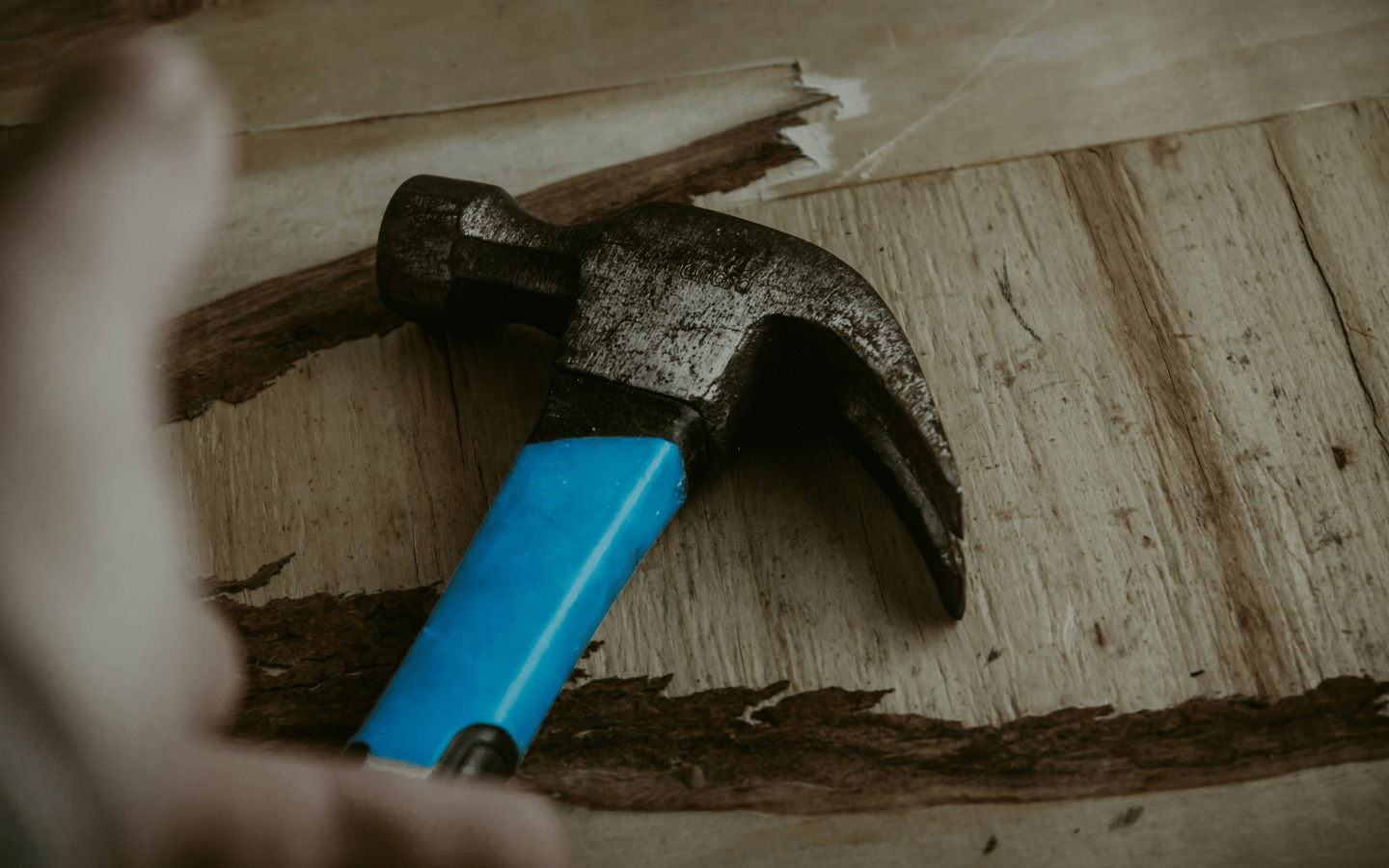
While decorating the United Church of Lincoln for the Advent and Christmas season, I reached down into the pulpit, a place where thousands of sermons had been preached over many years. I found a hammer at rest on a shelf—a simple, rusted, utilitarian hammer.
Nothing fancy. Just the sort of tool you grab, use, set down, and forget.
It’s not that churches don’t use hammers. We do. There are constantly things being hung, repaired, and adjusted.
Churches are holy places, yes, but they are also, most often, old buildings. Old buildings need maintenance. Hammers come with the territory.
I’m not sure who put the hammer there or why, but I couldn’t help but laugh at the irony of a hammer in the pulpit—the very place reserved for scripture, proclamation, and carefully chosen words. Perhaps that carries a special message for these days.
While growing up, I always thought of preaching as soft—a kindly (most often) older gentleman gets up and talks in long, whimsical sentences about some abstract being we’re all still trying to comprehend. The message may resonate, but I had a sense that the pulpit was not meant for shouting.
Oh, how naive I was.
A journey into my grandfather’s native Alabama and a visit to a local African American Baptist church celebrating its first Sunday in a new building, taught this naive young Vermonter that, in many spaces, the pulpit is for shouting. We need some fire from the pulpit.
That fire matters because shouting is not always about volume. It is about urgency. It is about refusing to whisper when the house is already burning down.
I don’t know if you realize this, but the house is burning down.
A hammer, after all, does not exist to be admired. It exists to do work.
It is not ornamental. It does not care about its polish. A hammer, by its very nature, is a declaration that something must be driven in, held together, or pulled out—right now. And perhaps that is what we need from the pulpit these days.
We are living in a moment that does not afford us the luxury of abstract sermons that contain vague calls to action. The world does not need carefully padded words that circle around injustice without ever calling it out.
The gospel does not ask us to speak delicately when people are being crushed under the weight of systems that perpetuate injustice. This is not theoretical.
The gospel does not teach us to avoid naming the injustice of the killing of an innocent Minneapolis mother attempting to get herself out of a bad situation. The gospel does not teach us to turn a blind eye when masked ICE agents roam our streets for the express purpose of inciting fear.
A hammer is not cruel, but it is blunt.
From behind the pulpit, in my opinion, we are not called merely to soothe scared people. We are called to build—to drive nails into foundations of justice, mercy, humility, and truth.
But sometimes, before building, we are called to tear down—to pry loose the rotten boards of exclusion, racism, nationalism, fearmongering, and the incitement of fear for fear’s sake. This work is loud. It needs a hammer from the pulpit.
The irony of the hammer in the pulpit is that it reminds us of a truth that seems to have been forgotten: preaching was never meant to be passive. The prophets did not whisper their prophecies.
Jesus did not hedge his words to avoid discomfort. The disciples faced cruelty, hatred, and even imprisonment for what they said.
What we need from the pulpit now is not softness for softness’ sake nor do we need shouting for spectacle. What we need is a hammer—conviction, precision, and the willingness to strike where it’s needed most.
- About the Author
- Latest Posts

A 12th-grade student in Addison County, Vermont. Wyatt has a passion for writing and attempting to discern the message of God.