
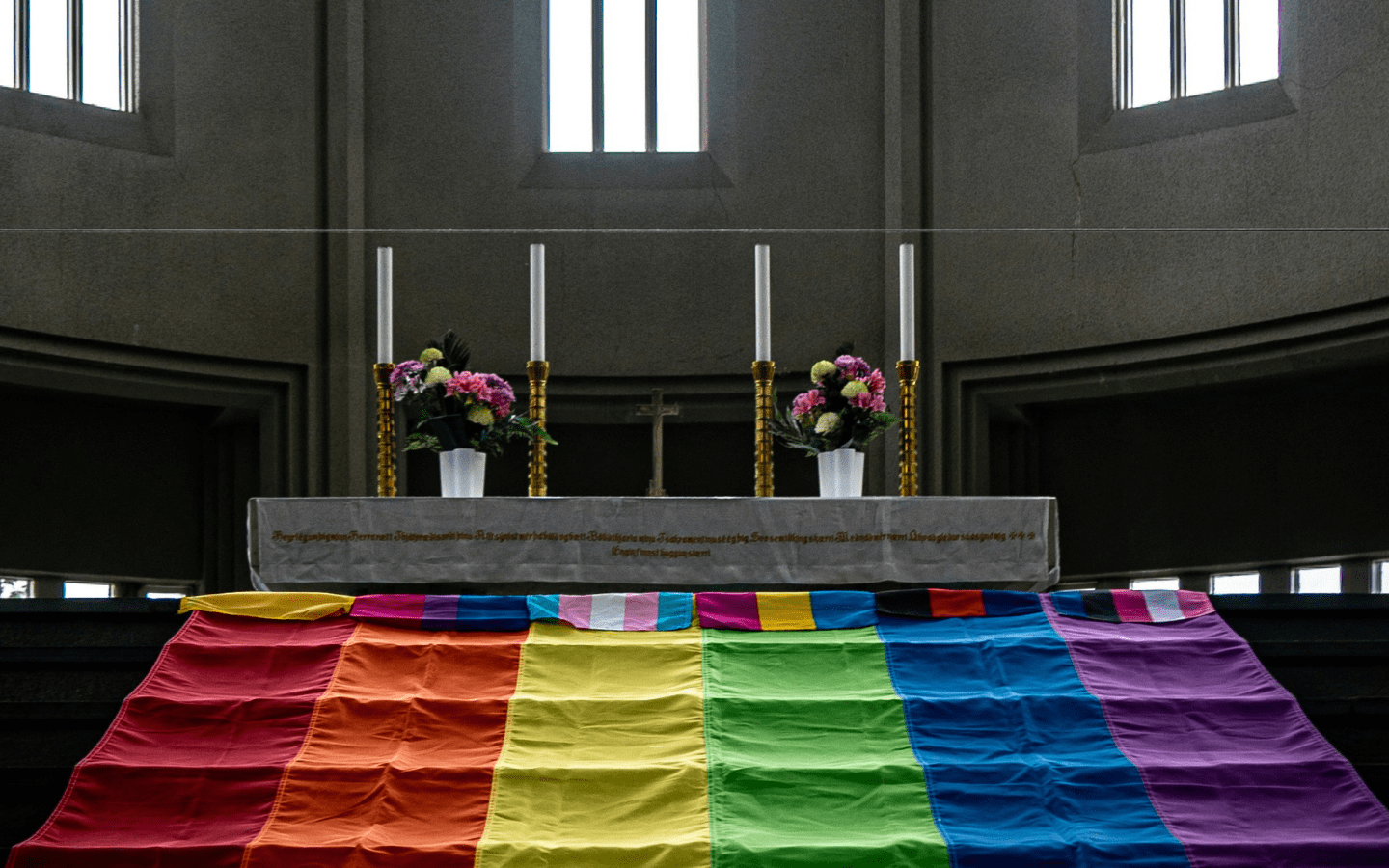
In April, Baptist Women in Ministry (BWIM) hosted a virtual luncheon titled “Imago D.E.I.” The workshop focused on the importance of pastors and churches working to offer additional care to the LGBTQ+ community, especially as legislation continues to negatively impact the queer community.
The Imago D.E.I. Luncheons were created with several marginalized groups in mind, and someone from one of those groups would share and engage in conversation with BWIM leadership at each session. Conversations centered on how to compassionately and ethically care for marginalized groups and individuals.
During April’s meeting, the Rev. Kali Cawthon-Freels explored how churches can ethically and compassionately support the LGBTQ+ community. Cawthon-Freels serves on the pastoral staff at Williamsburg Baptist Church. She also leads Good Faith Media’s Faithful Pride Initiative, which is designed to help churches that are changing their policies and care for LGBTQ+ inclusion and LGBTQ+ ministers.
Rev. Cawthon-Freels asked us to consider what it means to offer care to the LGBTQ+ community in our current political climate. When asked why it is essential for churches to offer care to the LGBTQ+ community, she shared that seeing the Imago Dei in all people calls us to honor the image of God within all people by treating them with the highest dignity and worth.
She shared headlines about the dangers the LGBTQ+ community is currently facing. They included “Idaho Governor signs bill to criminalize trans people using bathrooms that align with their identity,” “Supreme Court Rules 8-1 Against Colorado’s Conversion Therapy Ban,” and “Tennessee House passes de facto transgender registry bill.”
Threats to the LGBTQ+ community are rising. While the church should not focus all its efforts on one single marginalized group, intentional care for the most vulnerable is an essential part of honoring the Imago Dei in all.
The following are three practical takeaways for churches I gleaned from Rev. Cawthon-Freels’ presentation.
Use intentional language.
This can occur in a couple of ways. The first way is to ask people for their pronouns when meeting them. This can feel tricky to bring up in a conversation, especially if it is not something you are used to doing. In the session, we learned that a starting point might be to introduce yourself and share your pronouns first.
Rev. Cawthon-Freels also mentioned that if you are ever guest preaching, you can share your pronouns in your bio provided to the church and include them when introducing yourself (or as you are introduced) before preaching.
Another practical way to do this is to include your pronouns in your email signature and in your name descriptions on video conferencing platforms. This may seem “small” and “obscure,” but words matter, and honoring the image of God in all people first begins with honoring who God made them to be.
Don’t promise something you cannot deliver.
Rev. Cawthon-Freels mentioned that, rather than using the term “safe space,” she uses “brave space.” She makes this intentional choice because she recognizes that safety for LGBTQ+ people cannot be guaranteed at all times. That is not to say that working towards safety is unimportant. Rather, it is about communicating honestly about your space.
An example of this may be: “You matter to us, and we want to have a space where you feel loved and accepted. We can’t promise this space will always be as safe as we’d like it to be, but we do commit to fostering a ‘brave space,’ where we encourage everyone to bring the fullness of themselves.”
Rev. Cawthon-Freels also acknowledged the importance of creating both a private and corporate brave spaces. Private brave spaces allow for one-on-one conversations, where people can meet with the pastoral staff to ask questions, discuss matters of gender and sexuality, and know there will be no expectations or judgment placed on them. Corporate brave spaces are spaces where the church corporately welcomes all people into Sunday School classes or small groups, encourages the full expression of everyone, and works to provide safety for all.
Be clear regarding your church’s stance on LGBTQ+ inclusion.
In the words of Brené Brown, “clear is kind,” and the kindest thing the Church can do is communicate its stance with clarity. Even if that matter has not been officially declared, it is worth communicating where the church is in the process so people can assess their own comfort and perceived safety before entering a church for the first time.
Now that Pride Month has come to a close, consider these reflection points as you prayerfully consider how your church can commit to the safety and inclusion of LGBTQIA+ members throughout the year.
Prioritize care for members of the LGBTQIA+ community year-round, not merely during June. Encourage authenticity and faithfully cultivate spaces where people can bring the fullness of themselves into connection with the body of Christ. And be serious about honoring the “Imago Dei,” refusing to exclude people from this honor based on sexuality or gender.
The doctrine of Imago Dei means we see God’s image in all people, and God’s image is marked in us all. This is the source of our dignity and infinite worth.
- About the Author
- Latest Posts

Student at the Diana R. Garland School of Social Work and George W. Truett Theological Seminary, where she is pursuing her Master of Divinity and her Master of Social Work. Ryan is joyfully a member of Seventh and James Baptist Church in Waco, TX.