
The Spark
It was the first time a network that was purposefully built to mobilize religious-conservative outrage at scale demonstrated that it could actually do so.

John Lennon (Wiki Commons)
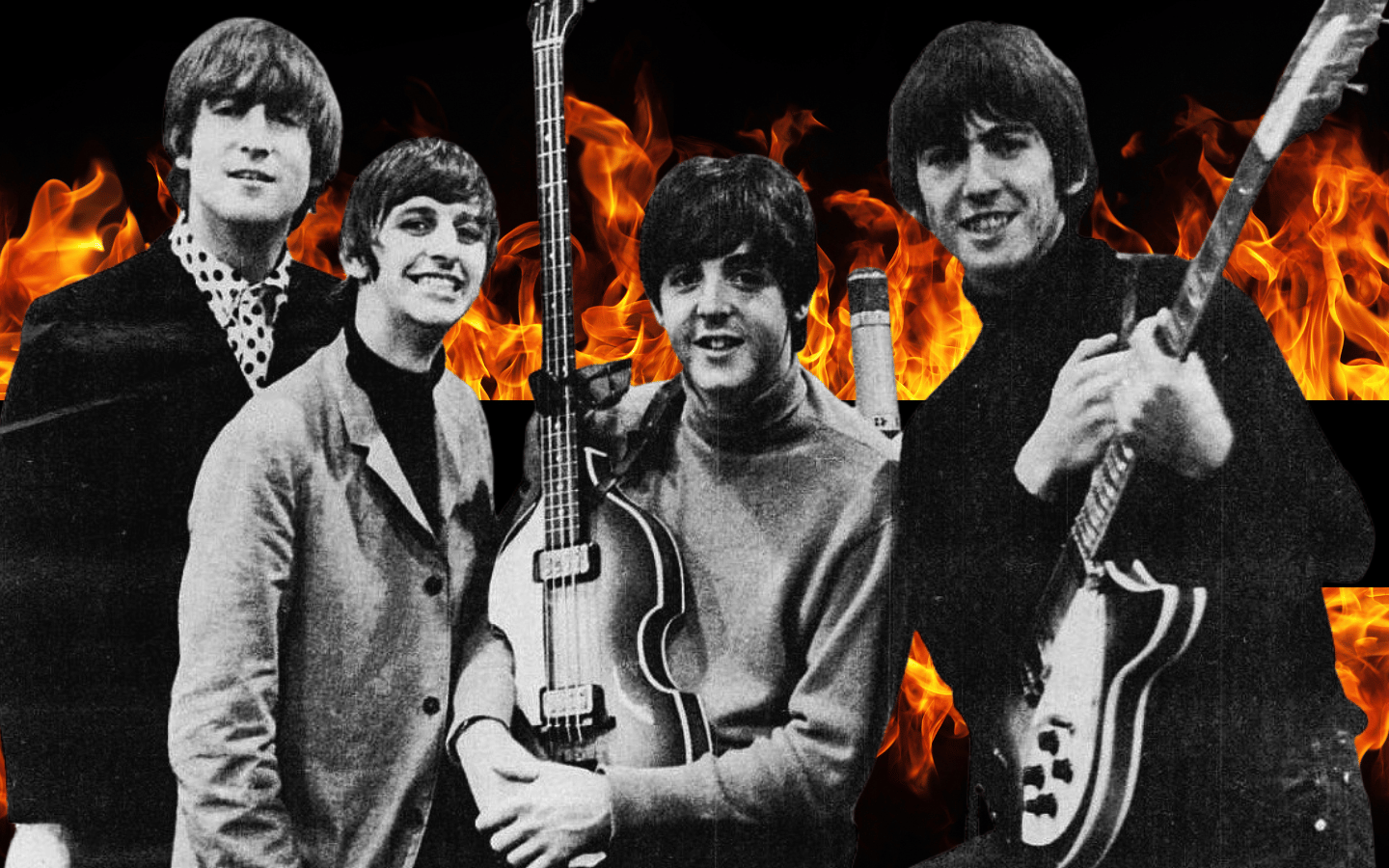
Some words from Beatle John Lennon were behind the storm. Lennon had told a London reporter five months earlier in 1966 that the Beatles were “more popular than Jesus now.” The remark caused almost no reaction in Britain and was unnoticed for months in America.
Then, an American teen magazine reprinted the interview in late July 1966, and two morning DJs in Birmingham announced as a ratings stunt that they would no longer play the band.
Within seventy-two hours, the wire services had picked up the story. Within a week, six Alabama stations had banned the Beatles. Within three weeks, more than three dozen stations in fifteen states had joined them.
The New York Times ran the story on the front page. The Memphis City Council voted that the Beatles were not welcome in the city. A South Carolina Klan Grand Dragon nailed Beatles records to a flaming cross. A radio station in Birmingham announced plans to pulverize records in a municipal tree-grinder.
Across much of the country, people gathered to burn Beatles records. Radio stations organized the bonfires. The Ku Klux Klan picketed Beatles concerts. Six Klansmen in full robes stood outside the Mid-South Coliseum in Memphis on the night of August 19, while inside someone threw a cherry bomb onto the stage during George Harrison’s performance of “If I Needed Someone.”
All four Beatles looked at each other to see who had been shot. Ten days later, at Candlestick Park in San Francisco, the most popular musicians on earth played their last concert. They never toured America again.
The Network
Billy James Hargis (YouTube Screenshot)
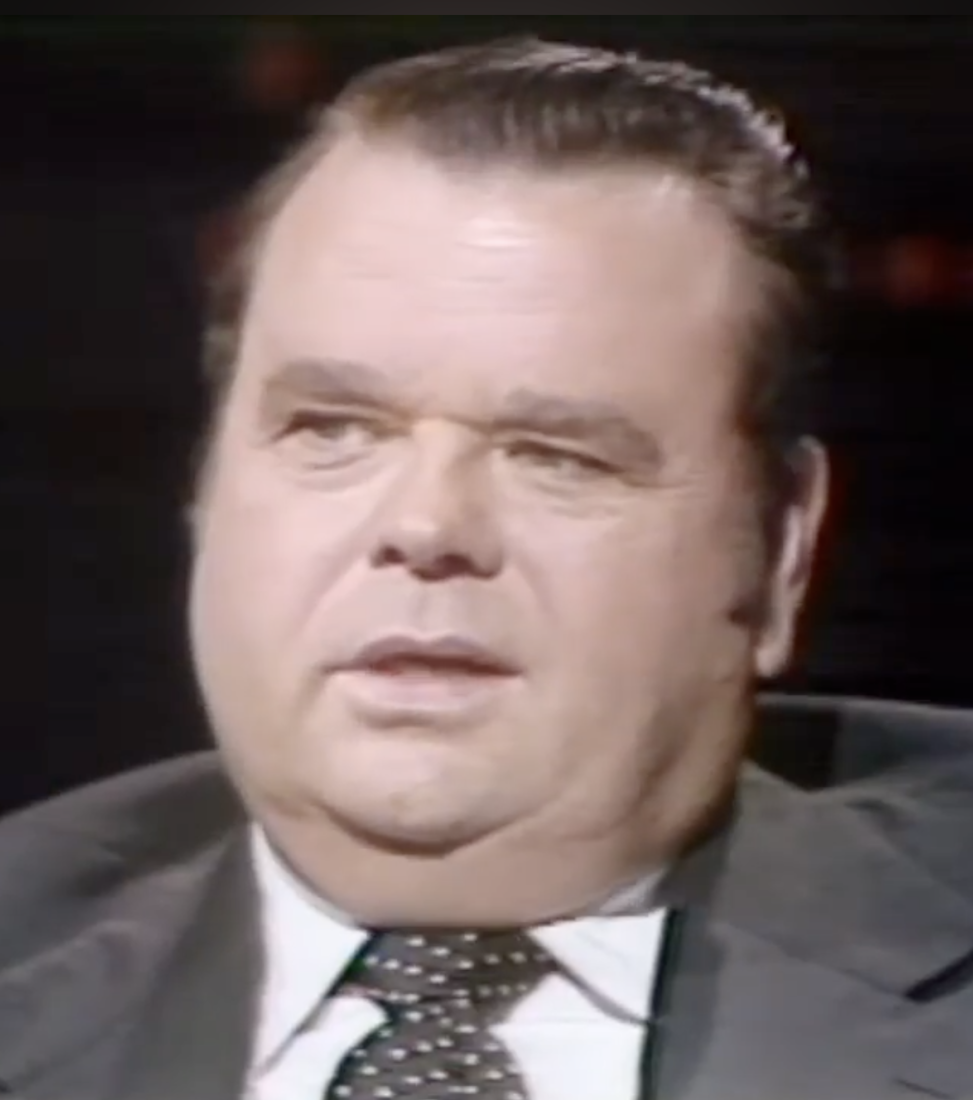
The network that caused the firestorm was largely the work of a Tulsa fundamentalist preacher named Billy James Hargis. His Christian Crusade reached more than 500 radio stations and 250 television stations at its peak. Hargis ran a 55,000-circulation newspaper and a million-dollar direct-mail operation funded by a quarter-million small donors. He was a member of the John Birch Society, a pro-segregation ally of George Wallace, and a board associate of Bob Jones Jr.
Hargis’ lieutenant, David Noebel, had published a Christian Crusade pamphlet titled Communism, Hypnotism and the Beatles in 1965, a full year before the bonfires. Noebel argued that the band was a calculated communist plot to brainwash American youth.
The energy behind the network sprang from the network’s pro-segregation ideology, but in the moment, its target was the Beatles. Once the network was activated, what looked like a religious panic was the first national demonstration of what would become one of the most powerful forces in American politics.
I call it an aggrievement network. You know it today as a movement alliance among Christian Nationalists and other forces gone power mad from greed, resentment, racism or plain old malice for everything that is not them and not theirs.
Lennon and the Beatles were accused of blasphemy, but that was a cover for what the aggrievement network actually opposed. Hargis and his network had been organizing against civil rights for fifteen years and losing. The Voting Rights Act (VRA) had become law the previous summer.
The Beatles’ pro-civil rights beliefs were well known. Less than two weeks after the signing of the VRA, Ringo Starr told the performers traveling with the band that segregation was “a lot of rubbish. As far as we’re concerned, people are people, no different from each other.” The Beatles had refused to play to segregated audiences at the Gator Bowl in Jacksonville in 1964.
The most revealing statement of the entire 1966 episode came not from a radio DJ but from Robert Shelton, Imperial Wizard of the United Klans of America, the country’s largest Klan organization. Interviewed on British television, Shelton condemned the Beatles not for blasphemy or Lennon’s Jesus comments but as communists for supporting civil rights.
The Klan said the quiet part out loud.
Perfecting the Form
American history had its moral panics before 1966: the Salem witch trials, the anti-Catholic riots of the 1840s, the Scopes trial, the Legion of Decency boycotts, the Hollywood blacklist, and the moral campaign against Elvis Presley a decade earlier. Each had elements of what the aggrievement network would later perfect. None had the full form.
The Hollywood blacklist required state participation: congressional subpoenas, FBI files, loyalty oaths. The Elvis panic was similar, but on a far smaller scale, distributed across pulpits and PTAs without coordinated national propagation.
The earlier panics unfolded over months or years. The aggrievement network’s innovation was to produce equivalent damage through purely civil-society channels—radio, pulpit, advertiser pressure, Klan picket—without requiring state participation.
The lesson was well learned, and leaders of the nascent network that took on the Beatles later played key roles in the powerful Christian Nationalist-Authoritarian movement today.
I can remember older folks telling my generation that the Beatles’ popularity and music would not last. They were wrong.
As were those who failed to see the potential in the aggrievement network. It looked like a fringe religious group at the time, but from the beginning, it had designs on the takeover of government and culture. For that reason, it’s worth examining the evolution of the network. There are, of course, other influences and influencers. But here’s a major thread.
The Game Plan Initiated
Understanding the Times by David Noebel
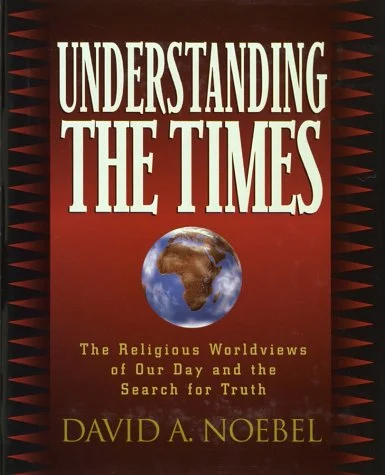
The pamphlet that primed evangelicals against the Beatles was written by David Noebel, an Associate Evangelist of Hargis’ Christian Crusade. After the bonfires validated his thesis that popular music was a communist plot, Noebel expanded the argument into book after book, including Understanding the Times in 1991, the textbook that became the core curriculum of Summit Ministries.
Noebel had founded Summit in 1962. He ran it for nearly fifty years, training tens of thousands of young evangelicals in the framework that made the 1966 event successful.
The targets rotated from the Beatles to feminism to homosexuality to secular humanism to the New Age movement to Islam. But the structure was identical: inflame the audience, mark an enemy, produce a reaction event, repeat. Summit’s alumni went on to senior roles in the institutions that became the contemporary apparatus.
In 2000, Noebel co-authored Mind Siege: The Battle for Truth in the New Millennium. The other author was Tim LaHaye, the Left Behind novelist whose apocalyptic fiction sold more than sixty-five million copies and trained a generation of evangelicals to read the contemporary world through the lens of imminent eschatological war.
LaHaye was no minor figure. In 1979, he co-founded the Moral Majority with Jerry Falwell. In 1981, he was a founding member of the Council for National Policy. This secretive networking organization has served, ever since, as the strategic hub where the apparatus’s institutional leadership coordinates its work across domains.
Noebel joined the Council in 1984. So did Phyllis Schlafly. So did Richard Viguerie, the direct-mail strategist who built the donor-list architecture that made the apparatus’s fundraising possible.
The Council brought together, in the same room and the same regular meetings, the architects of the broadcasting infrastructure, the apocalyptic publishing apparatus, the political mobilization operations, the donor networks, and the institutional capture projects that would, across the next four decades, remake American political and religious life.
One of those institutional takeover projects must be named directly.
In 1979, the same year LaHaye helped Falwell launch the Moral Majority, Paul Pressler, a Houston state appellate judge who would become a longtime Council for National Policy member, joined with the young theologian Paige Patterson to launch the fundamentalist takeover of the Southern Baptist Convention. The Pressler-Patterson plan was a multi-decade strategy to capture the SBC’s institutional machinery by winning the denominational presidency annually for ten consecutive years and using the presidency’s appointment power to systematically reshape the seminaries, agencies, and missions boards.
The plan worked. The tactics used are precisely those they would use in their subsequent advance on the U.S. government, which was their vision from the beginning.
The Consolidation
The aggrievement network of 2026 is the one Hargis built, the one Noebel armed, the one LaHaye scaled, the one Viguerie funded, the one Pressler and Patterson institutionalized. The Beatles were one of its earliest targets. The infrastructure that came after them has been consolidating ever since.
An aggrievement network is a self-sustaining political organization built around a strictly enforced boundary between an in-group and a targeted enemy. Its members experience themselves as defending what they love. They see the people the system targets as threats to that love.
None of this is dishonest in any individual case. The structural problem is not at the level of individual sincerity. It is at the level of the system in which the sincerity participates.
The system has recognizable features. It indoctrinates its members through repeated exposure to a particular emotional vocabulary, until they recognize a particular kind of cultural event as enemy action without having to be told. It mobilizes them through reaction events, periodic public denunciations of selected targets, conducted through whatever the dominant media of the moment are.
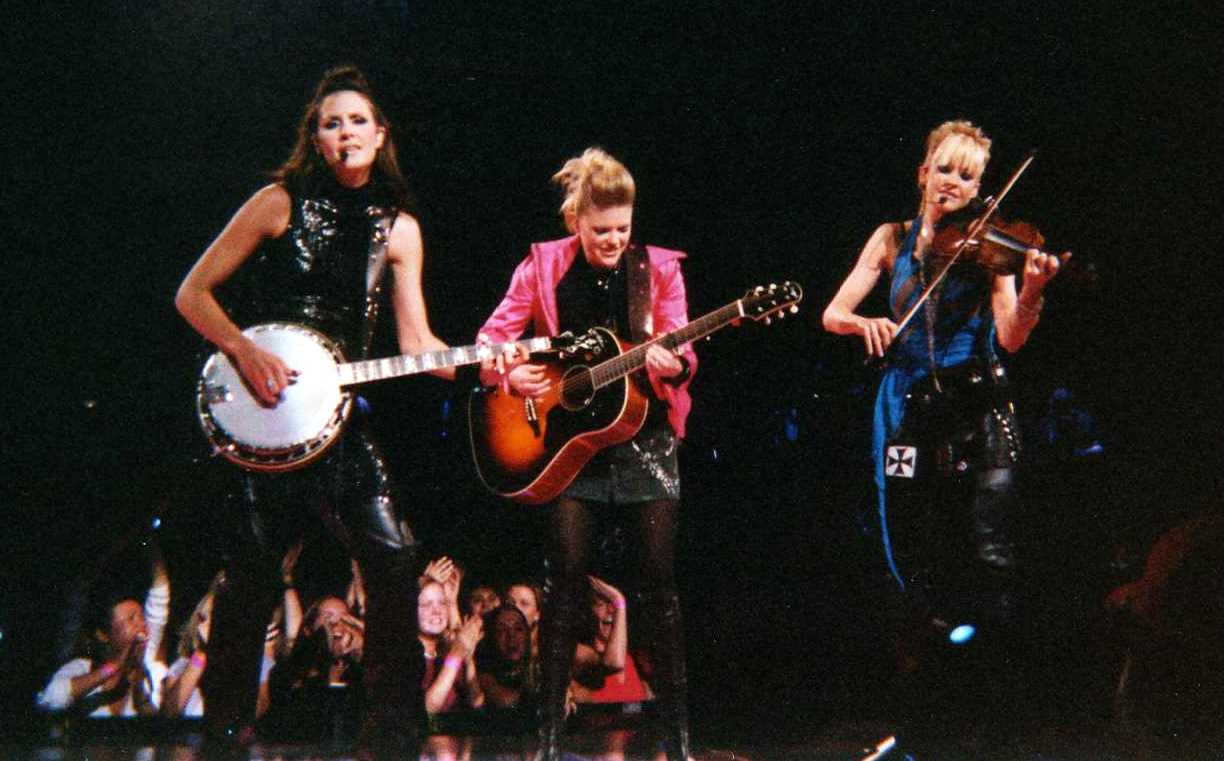
The system has no internal stopping point. New targets must continually be found because the boundary-maintenance work is what the system does: The Chicks (then known as The Dixie Chicks) in 2003. Janet Jackson at the Super Bowl in 2004. Sandra Fluke. Colin Kaepernick. Bud Light. The Haitian community of Springfield, Ohio. Each is the same structural event with rotating targets, running on whatever the dominant platform of the moment is.
The Chicks (formerly The Dixie Chicks) in 2003
The Mirror
And here is the part that matters most for understanding why the apparatus has grown stronger over the past 60 years. One way an aggrievement network sustains itself is by producing its mirror. In other words, it provokes angry and aggressive responses that mirror its own zealotry.
Those responses then convince the aggrievement network’s members that they were justified in considering the targeted out-group a dangerous enemy in the first place. It becomes mandatory to deprive the enemy of political standing and cultural influence.
This means that those of us in the network’s opposition should drop the mirror and meet the aggrievement network with its opposite.
That is damned hard to do. I’ve been in politics for some time now with at least a limited understanding of this dynamic, but often I’m so triggered that I find myself proudly holding the mirror.
I should listen to the Beatles instead. All you need is love.
Editor’s Note: This first appeared on Glen Smith’s Substack, A Billion Words. Smith consults with Good Faith Media on a variety of issues related to faith and democracy.
- About the Author
- Latest Posts

An author and longtime political activist, Glen Smith consults with Good Faith Media on issues related to faith and democracy.