

With friends and family who are survivors of domestic violence, I know it is not easy for victims and their children to recover. It leaves deep trauma, emotional pain and long-term mental and physical scars.
Domestic violence is not a thing of the past, but is tragically very present among us. It persists in homes, communities and among church members. We cannot ignore or avoid this painful truth.
According to the National Domestic Violence Hotline, nearly three in ten women (29%) and one in 10 men (10%) in the U.S. have experienced rape, physical violence and/or stalking by a partner. Experts believe the real numbers are higher, as many cases go unreported due to shame, fear or lack of trust in the systems designed to protect victims.
The Centers for Disease Control and Prevention (CDC) defines domestic violence as “physical violence, sexual violence, stalking, and psychological aggression (including coercive acts) by a current or former intimate partner.” These forms of abuse, when repeated, can be devastating, leading to broken bodies, fractured spirits, and even death.
Domestic violence affects people of every social class, race and economic background, though it disproportionately impacts women. It can be manifested in various ways, such as physical, mental, verbal, emotional or sexual violence. It can include harassment for dowry, coercive control or even the threat of violence against the victim or their loved ones.
In some cultures, sexual violence within marriage is not recognized as abuse, because sexual acts are wrongly assumed to be a “right” of the husband. This misunderstanding and the silence surrounding sexual abuse make it even harder for victims to seek help or break the silence of domestic violence.
Domestic violence has far-reaching effects beyond the immediate victim. Children who witness abuse often experience anxiety, ongoing fear and developmental challenges that can last a lifetime. Communities that fail to address violence become complicit in the suffering of their members.
The Church’s Silence and the Theology that Harms
As a theologian and a person of faith, I grieve how often the church has been silent or complicit in the perpetuation of domestic violence. Many survivors have told me they were advised to pray harder, submit more, forgive and forget, and just move on. These responses are not only harmful; they are theologically unsound.
In our book Surviving God (co-authored with Susan Shaw), we explore how survivors of sexual abuse and violence in the church often experience deep spiritual trauma. The God they were taught to love becomes associated with pain, punishment and silence.
We must reject harmful theologies that portray God as an angry, controlling and masculine authority figure who justifies dominance. Instead, we must reclaim biblical images of God as loving, nurturing, compassionate and just.
Scripture reveals a God who sides with the oppressed, hears the cries of those who suffer and calls for justice and liberation.
Too often, patriarchy within the church protects abusers and silences victims. The same patriarchal systems that silence women in the pulpit also mute them in the pews when they cry for help. We must confront this sin.
As individuals, communities and people of faith, we can take tangible steps to make a difference. We must educate ourselves about the signs of abuse, which are unexplained injuries, social isolation, low self-esteem, anxiety or depression. We must believe survivors, as many victims remain silent because they fear not being believed or worry they will face greater violence if they speak up.
We can become allies and offer nonjudgmental support, connect survivors to resources, and advocate for their safety, protection and dignity. We should examine and challenge harmful theology that perpetuates violence.
We must teach and preach a vision of God that empowers rather than oppresses, and develops relationships rooted in mutuality and respect rather than domination. We must hold institutions accountable, and the church must be a place of refuge and safety, not of denial and reticence.
Faith communities have an essential role to play in ending domestic violence. Scripture calls us to protect the vulnerable and to speak out against injustice. “The Lord is a refuge for the oppressed, a stronghold in times of trouble” (Psalm 9:9).
Jesus modeled compassion and solidarity with those who suffered. To follow Christ means standing with those who are harmed, challenging systems of abuse, and working toward healing and justice.
October and the Call to Awareness
Every October, we observe Domestic Violence Awareness Month (DVAM), which is a time to remember victims, support survivors and commit to ending all forms of violence. DVAM began in 1981 as the National Day of Unity, created by the National Coalition Against Domestic Violence (NCADV) to connect advocates working to end violence against women and children.
The observance expanded into a week, then a whole month, with the first official DVAM observed in 1987. In 1989, Congress formally designated October as Domestic Violence Awareness Month.
The history of DVAM reminds us that this is not simply a social issue; it is a moral and spiritual one. Silence helps no one, but awareness and education can save lives.
As we mark Domestic Violence Awareness Month, may we open our eyes to the reality of abuse in our midst. May we refuse to tolerate violence in our homes, churches and communities. And may we build spaces of love, refuge and hope, where every person can live free from fear and harm.
It is time to break the silence and to believe and support survivors. It is time to stand together for justice, healing and peace.
- About the Author
- Latest Posts
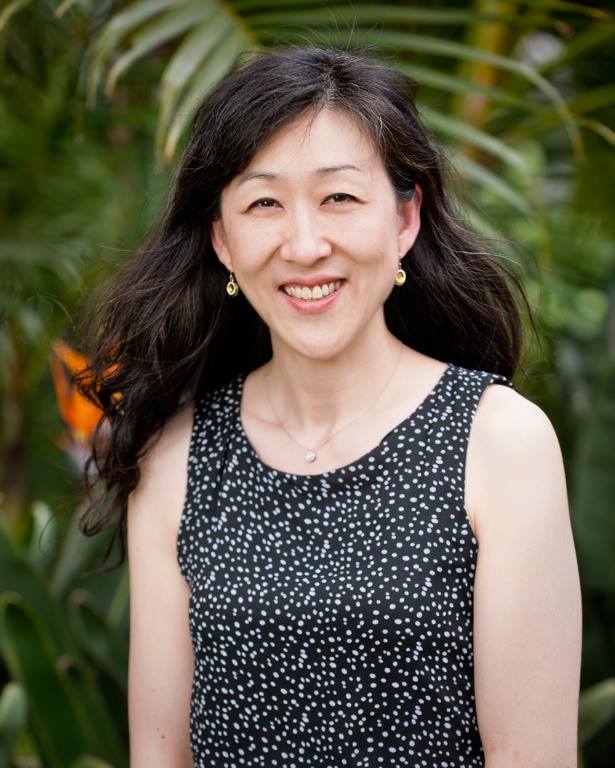
Grace Ji-Sun Kim (Ph.D. University of St. Michael’s College) was born in Korea, educated in Canada and now teaches in the USA as Professor of Theology at Earlham School of Religion, Richmond, Indiana. She is the author or editor of 26 books, most recently, Earthbound: God at the Intersection of Climate and Justice.
Kim is the host of Madang podcast which is sponsored by the Christian Century. She blogs on her substack: Loving Life: Loving Life and has written for Huffington Post, The Nation, Sojourners, Baptist News Global, Faith and Leadership and TIME. Kim has appeared on MSNBC, PBS and C-Span. She has been a guest on BBC Radio, Soul Search Radio, WBEZ Radio, and Keep Hope Alive Radio. She is an ordained PC(USA) minister and enjoys being a guest preacher on most Sundays.