

Coming at the end of the school academic year, when many schools are winding down, Asian American and Pacific Islander (AAPI) Heritage Month is often overlooked. For Christians, it also coincides with the spring celebration of Pentecost, sometimes leading to it being pushed aside.
Even though AAPI month is often ignored, it is deeply important to many, as it is a time to remember the long and complex history of Asian Americans and Pacific Islanders in the United States and to recognize the many contributions that AAPI communities have made and continue to make to this country. The presence of Asians in what is now the United States stretches back centuries.
Filipinos arrived on October 18, 1687, long before many of the dominant narratives of American history began. And yet, alongside this long history of presence is a history of oppression and racism. One of the most glaring examples is the Chinese Exclusion Act of 1882.
Originally intended to last only ten years, it was repeatedly extended until 1943. During this time, Chinese immigrants, and by extension, other East Asians who were perceived as Chinese, were denied basic rights. They were prohibited from voting, barred from testifying in court, prevented from owning property, and required to carry documentation at all times under threat of deportation.
This was not an isolated moment in history. It reflects a broader pattern of racism directed toward Asian communities in the United States, even today.
The rise in anti-Asian hate during the COVID-19 pandemic was not unprecedented. Asian Americans have long been scapegoated and blamed for disease, economic instability and social anxieties throughout American history.
This goes hand in hand with how Asian Americans and Pacific Islanders have often been rendered invisible. Their struggles are minimized, their voices dismissed, and their experiences of racism are overlooked as racism in the United States is often spoken in white and black terms.
Theology of Visibility

‘Invisible’ by Grace Ji-Sun Kim
I reflect on this dynamic in my book, Invisible, where I explore how invisibility functions as a form of marginalization and oppression that erases not only suffering, but also our contributions to society and culture.
Invisibility is not simply about being unseen; it is about being unheard, unacknowledged, and excluded from the narratives that shape our world. It is the narrative that suggests AAPIs don’t experience racism as they are not identified as Black.
I propose a Theology of Visibility, which is a way of doing theology that intentionally makes visible those who have been silenced or pushed to the margins. We know that many groups of people, because of their religion, race, gender or sexuality, are rendered invisible in society.
This is not limited to AAPI communities but extends to many who live at the intersections of multiple forms of oppression. A Theology of Visibility calls us to see, to name and to affirm the dignity and presence of all people.
At the heart of this theological framework are four Korean concepts that guide us toward greater visibility and communal flourishing: han, jeong, chi, and ou-ri.
Han names the reality of unjust suffering. It is the deep, piercing pain that results when systems such as racism, sexism, and patriarchy inflict harm on individuals and communities.
Han is not merely personal, as it can be collective and part of the historical reality of many communities. A Theology of Visibility compels us to acknowledge this unjust suffering and to work toward its healing and the release of han.
Jeong speaks to the deep bonds of love, connection and belonging that tie people together in strong, ongoing relationships. It reflects an enduring relationality between people and a sense that we are bound to one another through care and shared life.
Jeong reminds us that healing from han does not happen in isolation, but in community.
Chi refers to the life force or spirit present in all living things. It is breath, energy, and the movement of life itself, the Spirit of God moving through creation.
Recognizing Chi in one another calls us to honor the sacredness of every person and to live in ways that nurture life, compassion, and mutual respect. Chi gives us life, and we are to share that Chi with others.
Finally, ou-ri means “our-ness.” In Korean culture, the communal takes precedence over the individual. Rather than saying “my,” we say “our.”
Ou-ri reflects a worldview in which we belong to one another and the community is important. It reminds us that we are part of a larger human family and, theologically, part of the family of God. This ou-ri will draw us closer together and make us recognize that everyone is important as we all belong to one human family.
Together, these four concepts offer a powerful framework for reimagining how we live and relate to one another. They move us from invisibility to visibility, from isolation to connection, from suffering to healing, and from individualism to community.
A Theology of Visibility is especially meaningful during AAPI Heritage Month. This month invites us to remember the histories of AAPI communities, to honor their contributions, and to confront how they have been marginalized or ignored. It also calls us forward to build a society where all people are seen, valued, loved and embraced. In making others visible, we participate in the work of justice, love and liberation.
Celebrate Diversity
AAPI Heritage Month reminds us of AAPI’s history, our contributions, and the need to celebrate. AAPI communities have contributed richly to every aspect of society, including science, medicine, the arts, sports, literature, and religion. From groundbreaking innovations to cultural creativity, from public service to spiritual leadership, these contributions continue to shape the fabric of this nation.
To celebrate AAPI Heritage Month is to do more than acknowledge a group; it is to affirm the importance of diversity itself and the numerous contributions that AAPIs have made to society.
When we celebrate diversity, we celebrate one another. We recognize the value of different perspectives and gifts. We affirm that our differences are not barriers, but real strengths.
Diversity is not something to tolerate, but to embrace and cherish. It reflects the richness of our shared humanity and reminds us that we need one another to build a more just and vibrant society.
We are to reject all forms of discrimination, and May is a month to celebrate diversity. God created this world to be diverse and distinct.
So, let us not overlook AAPI Heritage Month. Let us remember the histories of Asian Americans and Pacific Islanders that have been ignored, honor the contributions that have been made, and commit ourselves to a future where all people are seen, valued and celebrated. Together, in our diversity, we can create a more just, compassionate and flourishing world.
- About the Author
- Latest Posts
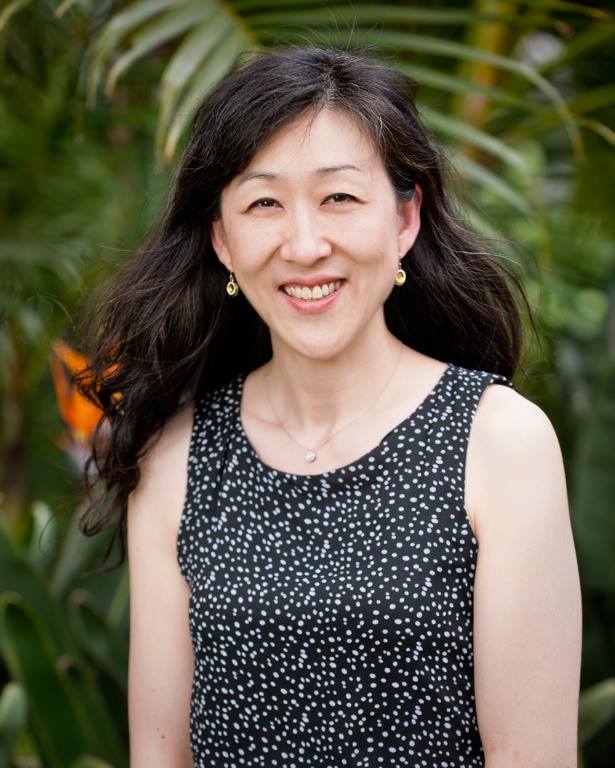
Grace Ji-Sun Kim (Ph.D. University of St. Michael’s College) was born in Korea, educated in Canada and now teaches in the USA as Professor of Theology at Earlham School of Religion, Richmond, Indiana. She is the author or editor of 26 books, most recently, Earthbound: God at the Intersection of Climate and Justice.
Kim is the host of Madang podcast which is sponsored by the Christian Century. She blogs on her substack: Loving Life: Loving Life and has written for Huffington Post, The Nation, Sojourners, Baptist News Global, Faith and Leadership and TIME. Kim has appeared on MSNBC, PBS and C-Span. She has been a guest on BBC Radio, Soul Search Radio, WBEZ Radio, and Keep Hope Alive Radio. She is an ordained PC(USA) minister and enjoys being a guest preacher on most Sundays.