
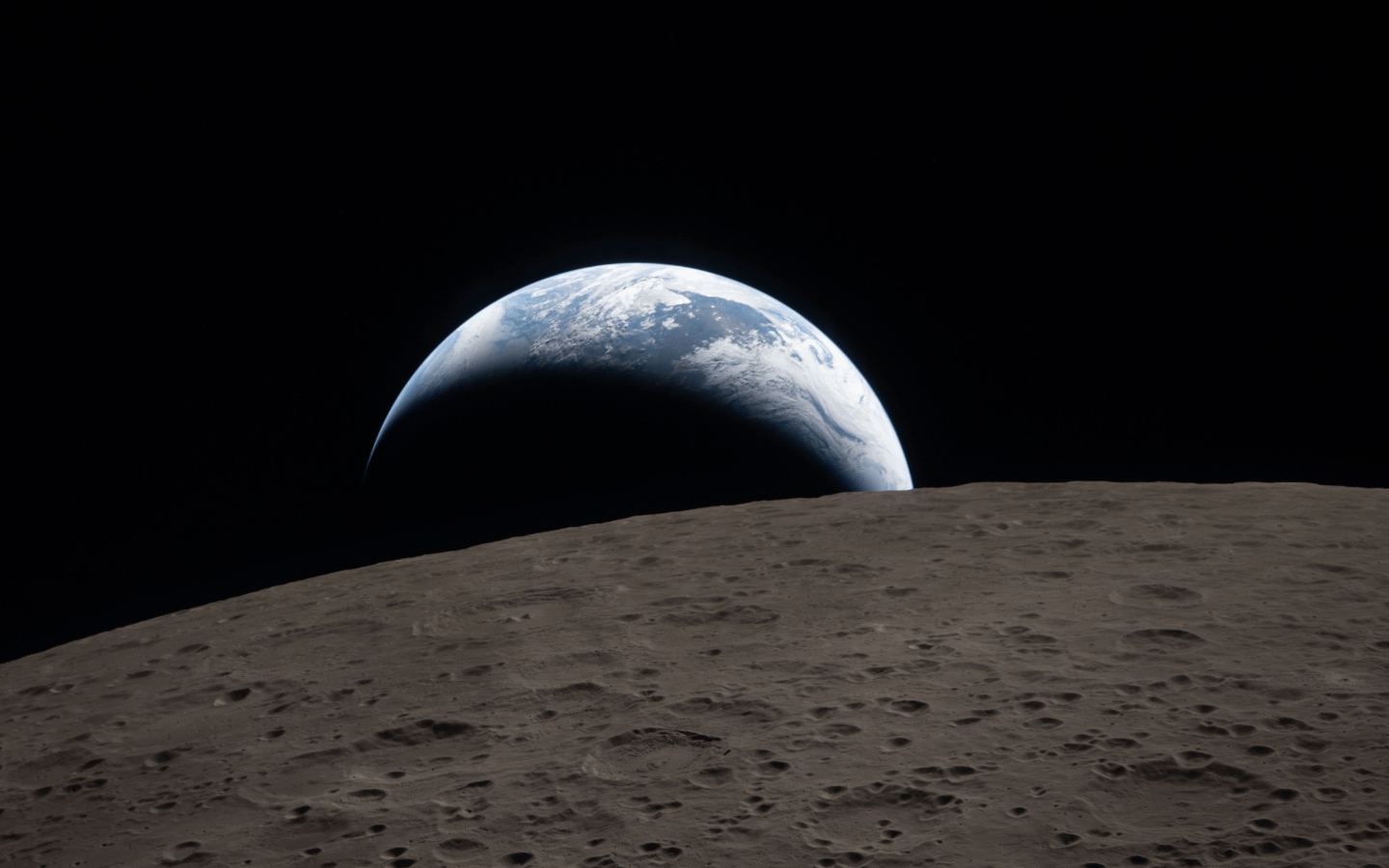
As Artemis II journeyed through space and around the moon, the images of Earth its crew sent back to us evoked awe and reverence for our planet. From that faraway distance, Earth appears as a radiant blue sphere, fragile and beautiful, held within the vastness of God’s picturesque creation.
The images spurred a sense of wonder that the blue planet is home to so many living creatures. Everything necessary for life is found on the planet. Earth is our home and the only place where life as we know it can flourish.
To behold Earth in this way is to glimpse the sacred, the Creator, and the one we call God.
As we view our planet with admiration and awe, we recognize it is not simply a resource to be used, exploited for profit and abused by our greed and overconsumption. Earth is God’s creation—good, life-giving, and imbued with divine presence. As Scripture reminds us, “The earth is the Lord’s and all that is in it” (Psalm 24:1).
Creation is not separate from God but alive with the Spirit, sustained moment by moment by divine love. Creation shows how God cares for us as we inhabit the Earth that God has created.
As we approach Earth Day (April 22), we are called not just to appreciation but also to repentance, transformation, and action toward climate justice. Earth Day is a day to highlight and demonstrate support for environmental protection and sustainability.
The day of commemoration was created by U.S. Senator Gaylord Nelson and first held on April 22, 1970, to protest how we were polluting the planet. Earth Day was inspired by the 1960s student anti-war movements, and it mobilized 20 million Americans in its first year. It was effective, leading to the creation of the Environmental Protection Agency (EPA) and other major environmental legislation, including the Clean Air Act and the Clean Water Act.
Earth Day now includes a wide range of events coordinated globally through earthday.org, engaging 1 billion people in more than 193 countries. It is now a global day, as people around the world participate and take this time to understand the harm we have caused to the Earth and to create pathways to live sustainably, as this is God’s world.
We recognize that we have not cared for the Earth as we should. Through overconsumption, exploitation, greed, and indifference, we have actively participated in systems that harm creation.
The fossil fuel industry and the structures that support it reveal how deeply embedded our patterns of domination, extraction, and pollution have become. This is not just an environmental crisis but also a theological crisis, as Christians are not taking our unsustainable ways of living seriously.
We are misinterpreting Scripture and misunderstanding our roles as God’s creatures. Earth Day reflects how we have misconstrued our relationship with God and creation.
When we imagine God as distant or dominating, we begin to mirror that domination in how we act and treat the Earth. But if we reimagine God as present within creation, as Spirit moving through all living things and in all things, then our relationship to the Earth must also change.
We are not masters or domineers of creation; we are participants in it.
As people of faith, we must change our ways. Otherwise, we are on a road of destruction and against the ways of the Creator.
Creation care is not optional for people of faith. It is a sacred calling. To care for the Earth is to honor and love God.
The commandment to love our neighbors includes animals, trees, plants, water, and air. To protect life is to participate in God’s ongoing work of love, creation, redemption, and renewal.
Elevated carbon emissions, intensifying storms, and the suffering of ecosystems are all signs of a creation that groans and longs for restoration and healing. As the Apostle Paul writes, all creation waits with eager longing for restoration (Romans 8:19-23).
Will we respond?
As we think about the future generations who will inherit this planet, we are called to act with urgency and hope. We do not want to pass on a world that is broken, suffering, and depleted, but one that reflects the goodness and abundance of God’s creation.
This requires transformation of our habits, our systems, and our theology. We must lower our carbon emissions now and challenge systems of exploitation.
We must cultivate a spirituality that recognizes the sacredness of all life. In doing so, we become co-creators with God and participants in the healing and renewal of the Earth.
Earth Day is not just a day of climate change awareness that lasts only one day. Rather, it is a call to faithful action, change, and daily habits.
We need to see the Earth as God sees it—as beloved, sacred, and worthy of care. As a result, we should live in ways that reflect that truth, for the sake of all creation and for generations to come.
- About the Author
- Latest Posts

Grace Ji-Sun Kim (Ph.D. University of St. Michael’s College) was born in Korea, educated in Canada and now teaches in the USA as Professor of Theology at Earlham School of Religion, Richmond, Indiana. She is the author or editor of 26 books, most recently, Earthbound: God at the Intersection of Climate and Justice.
Kim is the host of Madang podcast which is sponsored by the Christian Century. She blogs on her substack: Loving Life: Loving Life and has written for Huffington Post, The Nation, Sojourners, Baptist News Global, Faith and Leadership and TIME. Kim has appeared on MSNBC, PBS and C-Span. She has been a guest on BBC Radio, Soul Search Radio, WBEZ Radio, and Keep Hope Alive Radio. She is an ordained PC(USA) minister and enjoys being a guest preacher on most Sundays.