
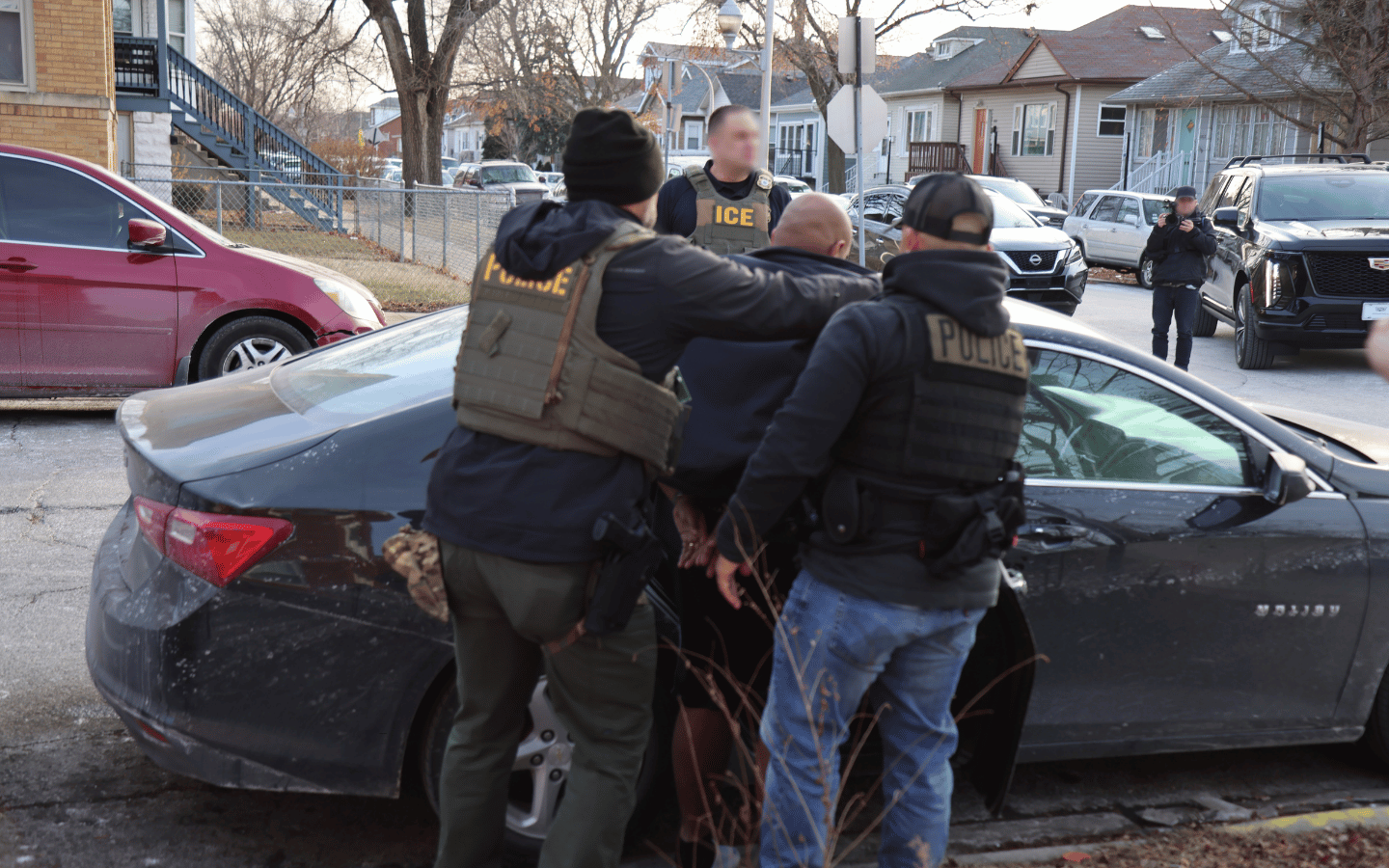
Bullies with bullets and badges (BBBs) walking the streets, stopping or arresting people without cause, don’t make me feel safer, even in our own house of worship.
Currently, our congregation rents space from a Hispanic congregation that owns the building. Two weeks ago, I noticed a sign posted as I walked in for our afternoon service.
It was short and to the point: “Notice: This is private property.” It also stated that any law enforcement action required a judge-issued warrant. I was elated for the church taking such a stand but deeply saddened by what this sign implied for our nation.
Although a misbehaving few in law enforcement are bad actors appropriately labeled as BBBs, most officers are our neighbors who truly serve and protect. Unfortunately, Williamson County carries a legacy of racism it is still trying to overcome. The reality is that law enforcement in the South remains shackled to a history that dates back to chattel slavery.
Our frequent phrase, “I remember when,” carries a very different weight for families descended from those who were enslaved. For them, it is a lived, inherited trauma.
I try to understand the contrast between what I feel when law enforcement sirens flash in my rearview mirror and what a person of color or an immigrant feels under those same circumstances. Feeling unsafe around BBBs reflects our troubling times.
I am not naive. Four American citizens have died at the hands of these poorly trained, trigger-happy thugs. Even more have died in detention centers, which have become a distressing and shameful fixture here in Texas and across the nation.
Martin Niemöller’s poem, “First They Came,” has resonated in my head and heart ever since I first encountered it in my youth. “First they came for the communists, and I did not speak out—because I was not a communist…” It was a confession born of his own early inaction and later personal danger.
The threat of BBBs always begins small. Sadly, as it grows, some people look on, some support it, and others actively assist in targeting vulnerable groups.
What most of us fail to understand is that rounding up and detaining our neighbors represents a profound departure from the best parts of our history. When this has happened in the past, historians recognize that those actions were motivated by unfounded fear of specific groups within our nation.
The issue today is a rabid, fear-based response to a serious problem created by this administration—a fear that drives much of our current culture. Those who generate these fears try to stigmatize others, galvanizing support by making us afraid of the very neighbors we work and live with.
The “alternative facts” thriving in our society are acts of disinformation that can be easily disproved by reliable, credible news sources. Right-wing media has built a wall, telling its viewers a distorted narrative not just about what is happening, but about who is driving these events and why.
While I am afraid of BBBs, I am not afraid of the truth. My parents, teachers, professors, and scholars planted a love for the truth deep within me, building their entire foundation on knowledge and fact. I would include certain religious leaders, preachers, and pastors in that group as well—though tragically, I cannot include them all.
Niemöller’s enduring confession serves as a warning for us all.
First, it reminds us that we are ultimately not bystanders, but participants in what happens to others. That is a powerful realization; a crowd that gathers, whether large or small, signals approval through its inaction.
The second warning is that any authoritarian regime has one primary mission: pursuing power in all its forms. Authoritarianism by its very nature is never about the “greater good.” Show me anywhere in history where such a movement was driven by benevolence rather than hate, greed, or power.
Third, each trespass does not end with a single action. Because authoritarianism is about consolidating power and wealth, it is an endless cycle of amassing and hoarding.
Just because this movement started with undocumented people does not mean this destructive appetite will ever be satisfied. Lies inevitably expand to target others, just as Niemöller described.
It will not end with undocumented immigrants. Instead, once a regime believes it has rounded up and deported a group and problems remain, it must find new scapegoats. The net always catches both the intended target and innocent bystanders.
Immigrants, with few exceptions, have never been the problem. They take jobs others refuse, endure heat few would tolerate, and do the hard work of building houses, roads, and infrastructure.
They pay taxes and contribute to Social Security, which they will never benefit from. They are also excluded from social safety nets simply by virtue of being “undocumented.”
The stated reasons for these crackdowns were never the real motives. Instead, this is a war against who we are as a people and, even more disturbing, against what remains of our shared humanity.
- About the Author
- Latest Posts

A private practice counselor working with veterans and survivors of trauma. Previously, Chancellor served four churches in Texas for 33 years, then ran a Mental Health Department of Alan B. Polunsky Maximum Security prison which houses death row.