
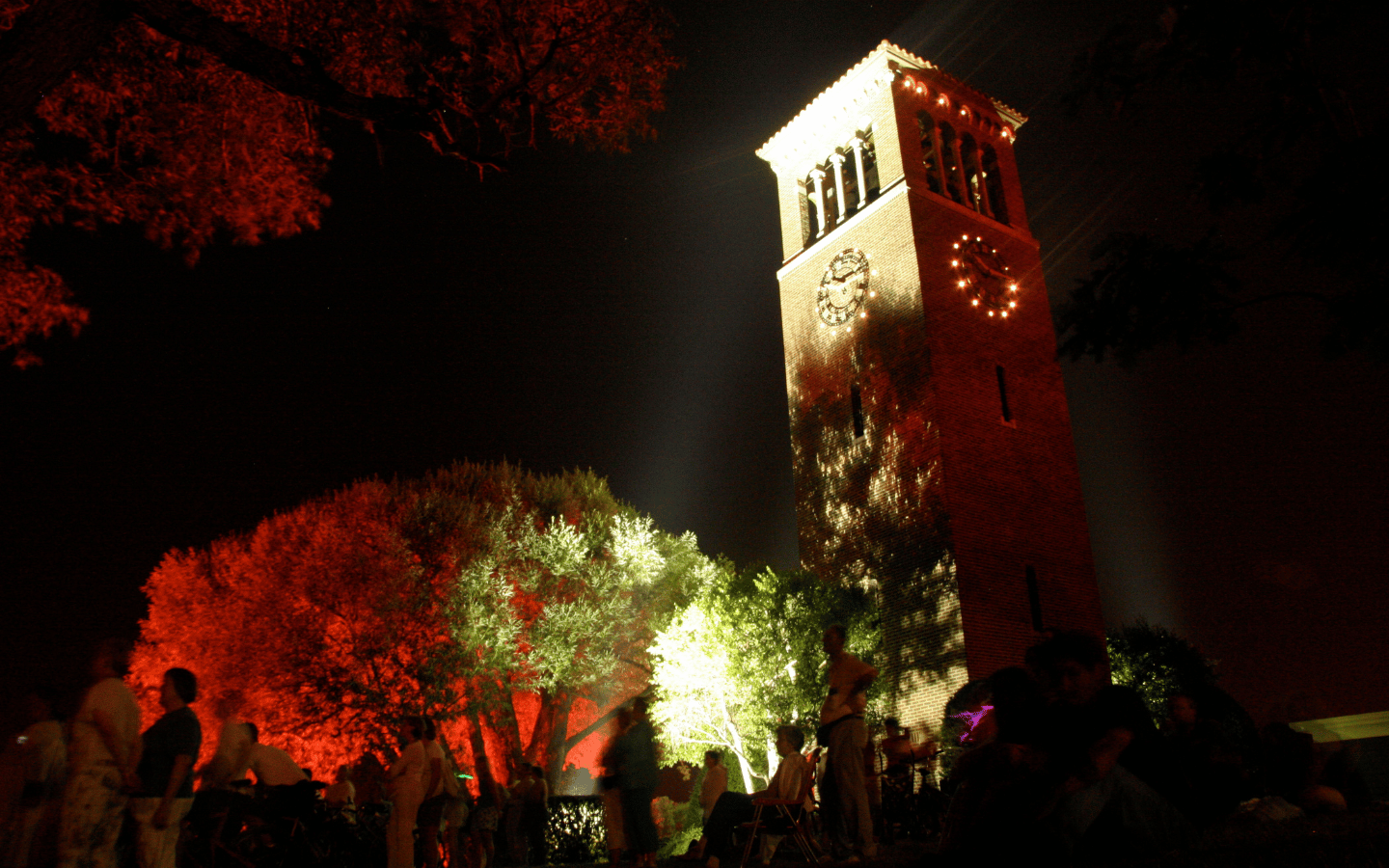
In 1874, Lewis Miller and John Heyl Vincent, both Methodists, inaugurated the Chautauqua Lake Sunday School Association on the shores of Lake Chautauqua in western New York. The idea was to provide instruction for Sunday school teachers and out-of-school vacation learning.
The location, not far from Lake Erie, was the site of a former Methodist camp meeting, Fair Point. However, Vincent, a Methodist bishop, was wary of the “extreme emotionalism” that attended many camp meetings. He sought to ensure the new enterprise was more dignified and scholarly.
Chautauqua Lake is seventeen miles long and two miles at its greatest width. It provided recreational opportunities, but it was also located in a region that was known as the “burned-over district” due to the religious ferment that took place there earlier in the century.
This area of upstate New York, opened for settlement by the completion of the Erie Canal in 1825, became a spiritual hothouse, with religious revivals sweeping through the area. One of the most notable was the Rochester revival of 1831, under the preaching of Charles Grandison Finney.
A number of religious movements trace their roots there. They include Mormonism, Spiritualism, the Society of True Inspiration (now the Amana Colonies of eastern Iowa) and the Oneida Community, site of John Humphrey Noyes’s experiment in human breeding, which he called Stirpiculture.
Chautauqua was tame by comparison, in part because in addition to religion, the programming expanded to include music, arts and academic subjects.
The Chautauqua Literary and Scientific Circle (CLSC), a pioneer in what is now called distance learning, was formed in 1878. This four-year correspondence course was designed to give people who couldn’t afford college a structured path to a broad liberal arts education. It was especially popular with women, teachers and people in remote rural areas. It also spawned local CLSC reading circles nationwide.
Incidentally, one of the CLSC adherents was Julia Coleman, Jimmy Carter’s teacher in Plains, Georgia. Following “Miss Coleman’s” annual pilgrimage to Chautauqua, she would recommend books to her students, and the future president was so inspired that he pledged to read War and Peace.
In addition to summer gatherings at the original Chautauqua site, a whole network of “daughter Chautauquas” emerged across the nation in places as diverse as Siloam Springs, Arkansas; Pacific Palisades, California; Dayton, Washington; Kearney, Nebraska; and Juneau, Alaska, providing lectures and arts and cultural enrichment. Even today, if you visit small towns or even larger cities like Des Moines, Iowa, you’ll find a Chautauqua Park.
Chautauqua Beauty
All this comes to mind because I was invited to give a lecture at Chautauqua this summer. In 1998, I had delivered a week of lectures (sponsored by the Carnahan-Jackson Fund) in the Hall of Philosophy, Chautauqua’s outdoor theater. The following year, I gave what is known as a “Platform Lecture” in the main auditorium.
It took me a nanosecond to accept the most recent invitation from Robert Wilson-Black, the new head of Chautauqua’s Department of Religion (an inspired appointment, by the way).
Because of my teaching responsibilities this summer, we were able to spend less than 24 hours on site. Still, the trip was well worth it, even though we were unable to sample the many cultural opportunities on offer: performances by the Chautauqua Symphony Orchestra and various chamber groups, the Chautauqua Opera Company, or the Chautauqua Theater Company.
Over a hundred lectures are offered every season, but the real beauty of Chautauqua may be physical.
It’s not just the riot of flowers growing everywhere, but the severe restrictions on automobiles and the proliferation of porches, many glorious porches. This is due in part, of course, to the Victorian-era architecture that dominates the central portion of the property. Still, many newer structures include porches as well.
One of the tragedies of domestic American life in the past century is that suburban, postwar architecture traded the convivial front porch for the enclosed back yard. Not at Chautauqua.
The streets, most of which are walking paths, are narrow and the lots are small. Especially in the evenings and early mornings, people gather on porches to share a drink—fortunately, the Methodist temperance ethic was dropped a few years back—and conversation. They may be discussing the afternoon’s lecture or an evening performance or simply renewing old friendships or getting to know new friends.
Imagine a place where people actually talk with one another rather than boring into electronic devices. That’s Chautauqua.
The Chautauqua Institution, as it is now known, may be a throwback, but it’s not a bad model in an era desperate for comity and civility.
- About the Author
- Latest Posts

An Episcopal priest, Balmer is John Phillips Professor in Religion at Dartmouth College and the author of more than a dozen books, with commentaries appearing in newspapers across the country. He is a contributing correspondent at Good Faith Media.