
When I was writing Mine Eyes Have Seen the Glory, I visited Standing Rock Indian Reservation, which straddles the border between North and South Dakota. There I met a remarkable man, Innocent Good House, a Sioux Indian and rector of St. Luke’s Episcopal Church in Fort Yates, South Dakota.
Over several days, Father Good House, a taciturn man in his late sixties, talked about the parallels between Christianity and Native traditions. Both religions have sacraments, he told me, and both are monotheistic. The Indian naming ceremony, when a Native child of about twelve years receives an ancestral name, resembles christening, confirmation, or the Jewish bar or bat mitzvah.
The rite of purification resembles baptism, he added, and the vision quest, when an Indian climbs a hill for four days of prayer, seeking spiritual guidance, is an exercise not unlike Jesus’ wanderings in the wilderness for forty days.
Just as the early Christians of the New Testament held goods in common and provided for one another’s well-being, Indians for centuries have practiced a kind of welfare system that, informally and by common consent, provides for the sick, infirm and elderly. Christianity looks to elders for spiritual guidance; Indians venerate their elders because they are closer to death and therefore closer to God, and because they have amassed wisdom over a lifetime.
The affinities between Christianity and Native religions, however, have not always been apparent to Christians working among Native Americans. “When the missionaries came onto the reservation,” Father Good House said, “they made me a Christian, but they also destroyed my language and my culture.”
That destruction was part of a deliberate strategy, the extremes of which took the form of Indian boarding schools modeled after the Carlisle Indian Industrial School, founded in 1879 by Richard Henry Pratt, a U.S. Army officer. Indian children, especially the Sioux, were sent to Carlisle, where they were forced to cut their hair and wear European-style clothing. They suffered corporal punishment if they spoke their Native languages.
Pratt’s motto was “Kill the Indian and save the man.”
Indian boarding schools proliferated in the United States (more than 400) and Canada (130-140). Some schools were government-sponsored. Others were run by churches. Unsurprisingly, abuse was rampant, some of it only recently coming to light.
In the wake of such cultural genocide, Native Americans and First Nations people in Canada have in recent decades sought to claw back their identity. They have embraced their traditions and tried to reclaim their Native languages.
But not everyone is happy about that—and certainly not Sarah Lucas, pastor of Foundations for the Nations Church in Arapaho, Wyoming. In July, Lucas, who is not Native, condemned the Arapaho sundance ceremony as “idol worship.”
“Jesus is the chain breaker,” she declared. “He is the only God we should be praying to.”
Although Lucas’ church sits on land owned by Lucas herself, it is part of the Wind River Indian Reservation. She founded the church nine years ago. The congregation has met with some success, but it is now the focus of weekly picketing.
Even in the face of protests, Lucas continues to urge her congregants to renounce sundances, sweat lodges and burning cedar during prayer. She equates those practices with idolatry.
“The Bible makes it very clear to only worship one God,” Lucas told Savannah Peters of the Associated Press.
I understand the importance of theological rigor and identity. As an Episcopalian, for example, I take a dim view of those who relegate the Lord’s Supper to mere memorialism. Still, I have to wonder whether Sarah Lucas worships a God too small to acknowledge the integrity of Native traditions observed for centuries, if not millennia—especially if, as Father Good House contended, there are so many parallels between Christianity and Native spirituality.
Didn’t Jesus say that in his Father’s house were many mansions?
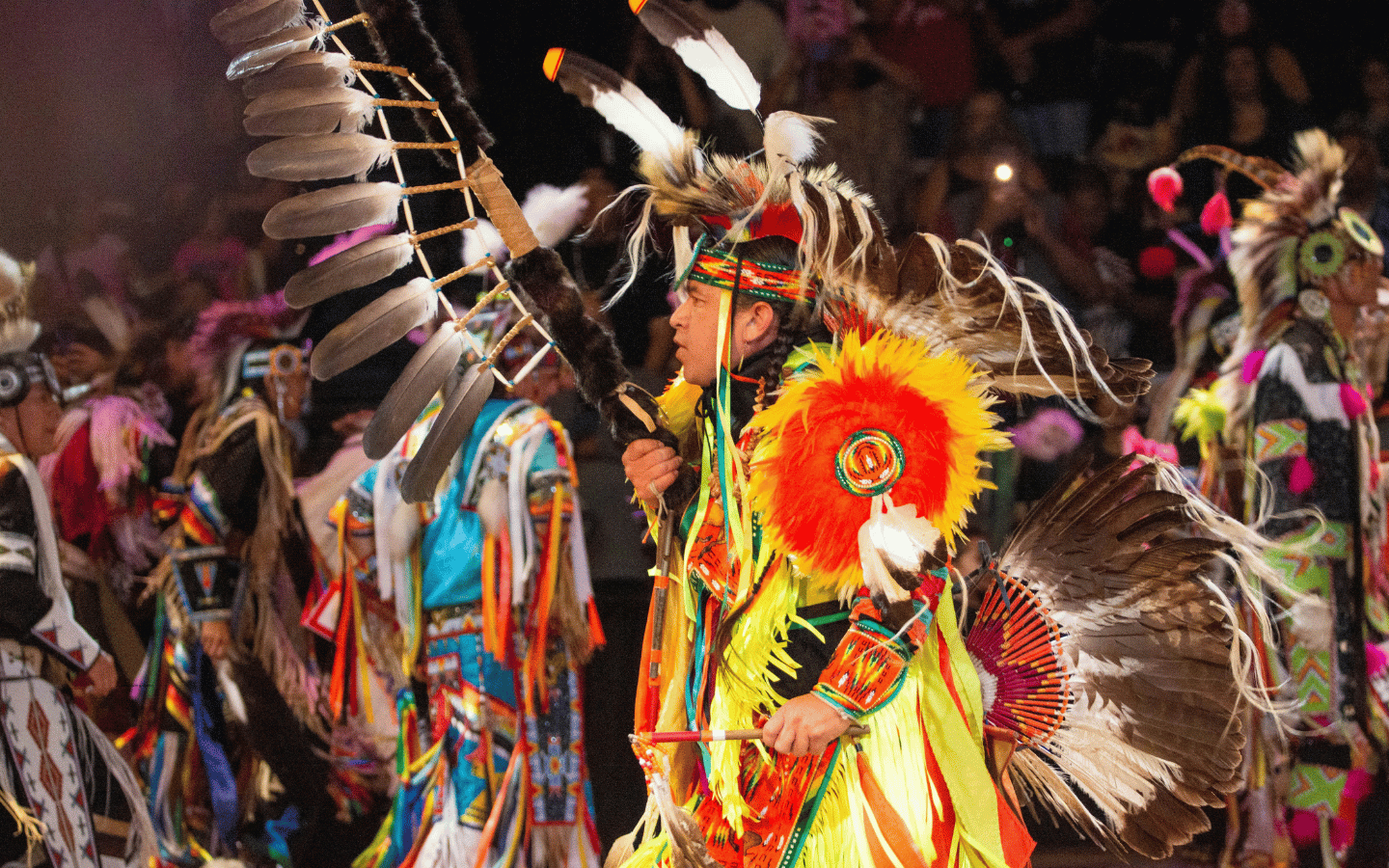
A powwow was taking place when I visited Standing Rock all those years ago. Across town, I encountered John Bush, pastor of Little Eagle Holiness Church. Like Sarah Lucas, he rejected Native spirituality as incompatible with Christian faith.
“You can’t mix Indian religion and Christianity,” he told me. “A long time ago Indian religions were all right—before Christianity; after that, there was a new way, through Christ. Now there’s a better life, a better way.”
Sadly, amid poverty, joblessness, alcoholism and drug abuse, many Native Americans are still searching for a better way. Some have found it in Christianity and others in the reclamation of Indian traditions from decades of forced assimilation.
Still others, like Father Good House, found it in embracing both.
- About the Author
- Latest Posts

An Episcopal priest, Balmer is John Phillips Professor in Religion at Dartmouth College and the author of more than a dozen books, with commentaries appearing in newspapers across the country. He is a contributing correspondent at Good Faith Media.