

In an 1889 letter to a friend, my intellectual mentor José Martí wrote: “[we] need to know what the position of this avaricious neighbor is, who confesses its desire for us before launching what seems an inevitable war, and could be futile because of the quiet determination of the neighbor to again oppose it as a means of leaving the island in a state which enables it to lay hands upon it later . . . And once the United States are in Cuba, who will drive them out?”
Antonio Maceo was one of the greatest military minds of the nineteenth century. Over three wars seeking Cuba’s independence, he won every battle in which he engaged, sustaining seventeen gunshot wounds and four bayonet stabs at the hands of the Spaniards.
In 1890, he was asked his thoughts about the possible annexation of Cuba by the U.S. He responded: “Young man, I believe, although it seems impossible to me that this can be the only outcome, that in such a case I would be on the side of the Spaniards.”
An Old Story
Cuban patriots have always been leery of U.S. imperialist avarice. After fighting for liberation from our colonial overlords for over thirty years, the rebels were finally on the verge of victory. But the U.S., after failing to buy the island, entered the conflict and snatched independence from patriots’ hands.
On July 17, 1898, the colonial Spanish flag was literally replaced with the imperialist U.S. flag, making Cuba a vassal. Any Cuban who fought for independence was banned from attending the historic lowering of their colonizer’s flag in Santiago.
Our war for independence was renamed the Spanish-American War, leaving us out of the title. And for the next six years, the U.S. military presence captured the island’s natural wealth.
The U.S. quest for land until then was known as Manifest Destiny: Take the land and genocide the Indigenous population.
But with the dawn of the twentieth century, Manifest Destiny morphed into Gunboat Diplomacy—a quest for economies, not land. If you absorb land occupied by what was considered inferior people, you dilute the purity of whiteness. But if economies are acquired instead, wealth can be obtained.
To maintain its dominance within the Cuban economy, the U.S. forced the Platt Amendment onto the Constitution of Cuba. Whenever Cuba dared to seek its own sovereignty, the U.S. intervened, to the tune of four military interventions and at least two covert CIA operations during the twentieth century.
Cuba was not the only country the U.S. sought to control. Throughout the last century, the U.S. engaged in regime change among Caribbean basin countries with 21 military interventions and at least 26 covert CIA operations. That’s a regime change every other year!
When one nation builds roads into another nation to steal their raw material and cheap labor, why be dismayed when those same folks take those same roads, following everything stolen from them? I am an immigrant in this country because I followed my stolen sugar, tobacco and rum (the three necessities of life).
An Old Story Revived
Now, this country in which I found refuge is threatening to once again take over Cuba. Trump says he’s “taking Cuba. Whether I free it, take it, I can do anything I want with it, if you want to know the truth.”
Let me be clear: I stand against authoritarian regimes, whether they are regimes of the right or regimes of the left. I oppose Latin American caudillos and North American wannabe petty dictators with equal intensity.
I believe in the sovereignty of the people to determine their own political destiny. Whether I agree with their choice is immaterial.
No doubt my Cuban siblings on the island are suffering due to a failed political system and a corrupt government. Exacerbating the situation is the almost 65 years of an illegal and immoral embargo the U.S. has placed on the island. I have personally witnessed the consequences of both.
The people want change. With them, I stand shouting, “¡Patria y Vida!”
But the kind of change chosen is for the people on the island to decide, to fight for. Change cannot come from the hands of vendepatrias like Marco Rubio.
Change cannot be forged by the Miami congressional delegation—Maria Elvira Salazar, Carlos Giménez and Mario Díaz-Balart—who place their power, privilege and profits over and against the hope for the island’s sovereignty.
I stand against Rubio, Salazar, Giménez and Díaz-Balart, who are willing to sell their heritage for a pot of pottage.
And to my Cuban siblings in Miami who cheer the coming invasion of the land that witnessed their birth or their parents’ birth, I express my sincere pity for their ignorance of Cuban history.
Martí said it best in an 1889 newspaper editorial: “It is probable that no self-respecting Cuban would like to see his country annexed to a nation where the leaders of opinion share towards him the prejudices excusable only to vulgar jingoism or rampant ignorance.”
Authoritarianism in All Its Forms
The Mexicans have a saying often attributed to President Porfirio Díaz, supposedly uttered at the dawn of the twentieth century, which I believe is apropos to Cuba: “Poor [Cuba]—so far from God, so close to the United States.”
I stand against neo-Gunboat Diplomacy, which bombs fishing boats as a prelude to the invasion of Venezuela. This isn’t because I stand with the authoritarian and brutal dictator Maduro, but because I stand against neo-Gunboat Diplomacy.
I stand against the indictment of Raúl Castro as a prelude to the possible invasion of Cuba. This isn’t because I stand with the authoritarian and brutal dictatorship of the Castro brothers, but because I stand against neo-Gunboat Diplomacy.
As a United Statian citizen, I have no choice but to exercise my constitutional right to free speech and fervently express my opposition to the rekindling of U.S. jingoism.
As a Cuban patriot, I have no choice but to, along with Martí and Maceo, take my stand against Trump’s intentions to do anything he wants with Cuba.
- About the Author
- Latest Posts
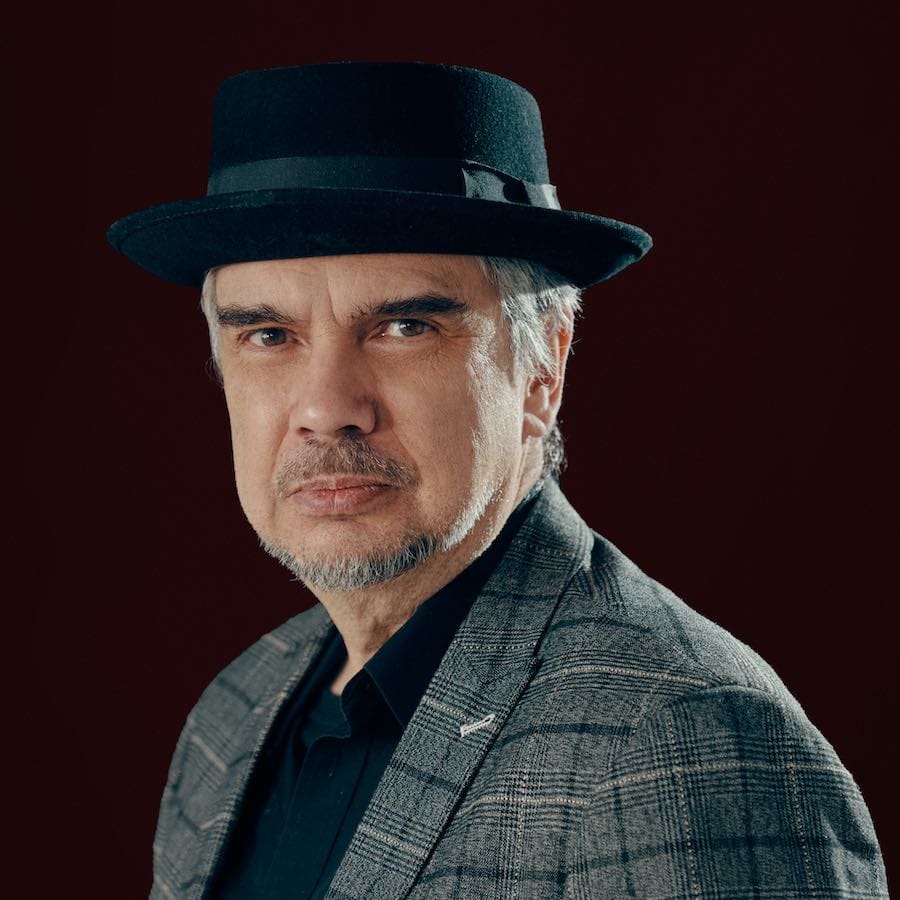
Professor of Social Ethics and Latinx Studies at Iliff School of Theology in Denver, Colorado, and a contributing correspondent at Good Faith Media.