

A conversation with musician Kyle Caudle over coffee and livermush explores the ties of home, creativity, and why diners may offer lessons the church has forgotten.
“Places like this make me feel a little uncomfortable.”
We were inside the sanctuary of a rural church in Vermont. It was mid-morning, and the sun broke through the large window panes with the ferocity of a Nile crocodile.
She’d heard about me from a neighbor. Her friend said I was easy to talk to. No judgment passed. A little irreverent. Not your typical expectation of a Baptist minister. This was enough for her to pick up the phone and schedule a meeting.
“Hell, they make me uncomfortable most of the time, too,” I said back.
Over the years, I’ve talked with a fair number of people who feel the same way. That’s why a lot of my meetings take place elsewhere. Far removed from the shadows of the steeple, stripped of pretense, and chock-full of vulnerability, this is where I swap stories with people.
Most of the time, we parlay while breaking bread or sipping on something. We talk at altar tables that need a coaster to balance their uneven legs. Some occasions require us to settle into a well-worn booth. We pour out our thoughts while a waitress pours us coffee.
This is why I have an affinity for Waffle Houses or mom-and-pop establishments. Diners are sacred ground.
I meet people there whenever I get the chance. People like Kyle Caudle.
Caudle is a musician, a minister, and a fellow soul reared in the shadows of Appalachia. Two of these three qualities we share. For those who’ve heard me strum a guitar, you’ll easily guess which.
I don’t remember how our paths crossed. This is a common theme in my life—good people entering it without me knowing how exactly they got there, but thankful they did.
Digging, I found several pieces of correspondence we shared while I was living in New England. In those messages, we promised to meet up if we ever had the chance. When I moved back to North Carolina last year, we made good on our word. We made plans to grab a bite to eat at Arthur’s Cafe in Winston-Salem, North Carolina.
I came wanting to know more about him and why he sings the songs he does. He came, I believe, to see why I write about people like him. We did this not so much by answering questions as by telling stories over plates stacked with toast, livermush, and corned beef and hash.
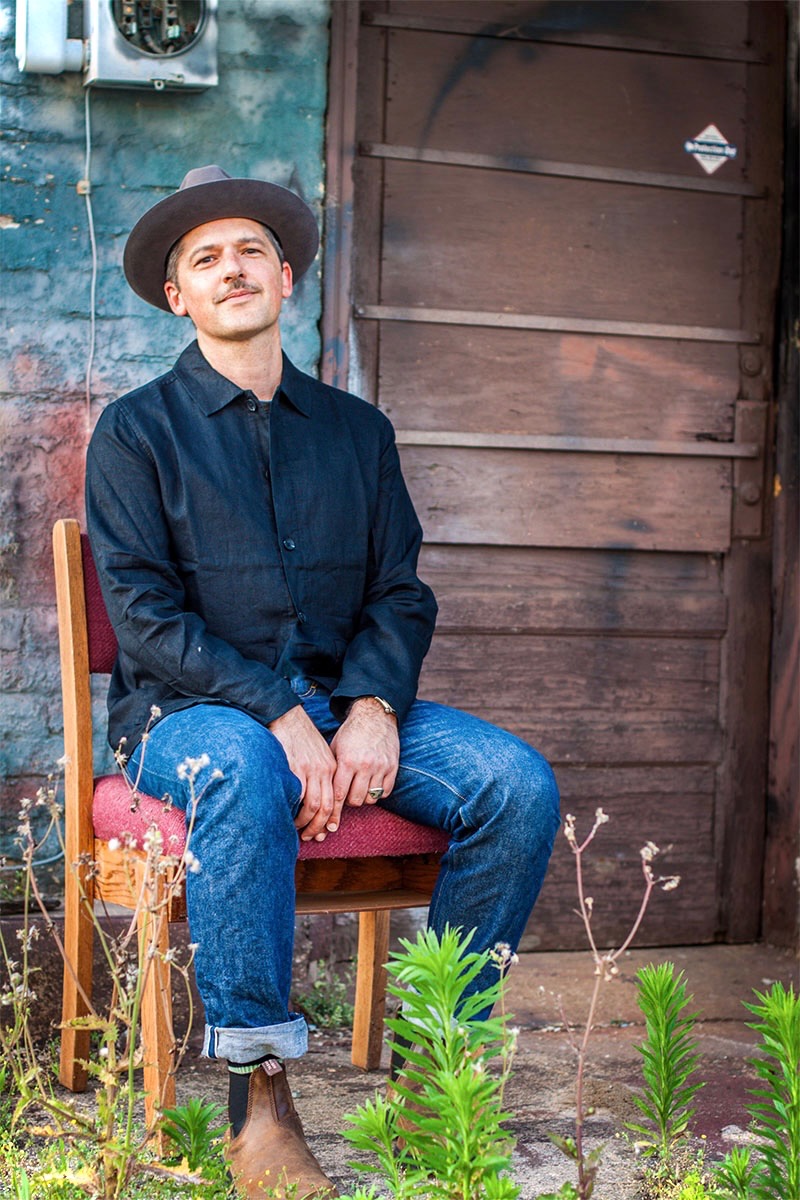
Kyle Caudle
Justin Cox: What’s it like being from here? Tell me how it’s made you into you.
Kyle Caudle: I think there are different Piedmont areas, and it’s kind of funny, because you got Winston, and it’s become even more cosmopolitan in my lifetime, but there’s still some very rural areas around here, too. There’s history everywhere.
JC: Talk about some changes for me just in your lifetime. I’ll lead you with this one. I’ll stove pipe you a little bit here. I remember growing up, and downtown Winston Salem’s Trade Street was sketchy, and now it’s like an art district, right, yeah? Have you noticed the same?
KC: I moved back to this area, right around 2000, playing in bands, stuff like that. There was a club on Trade Street called 533 Uprisings. Before that, it was called Pablo’s.
JC: Rest in peace.
KC: Yeah, Rest in Peace. And all kinds of people who were in the emo and the hardcore punk scene were playing there. I got to play there once, which I thought was the best thing ever because I had seen other bands I really respected there. One of the walls had just a big carpet hanging up. And on the other side of that wall was just junk. But, yeah, that’s kind of sketchy, but that made it only more of a must-see. But seeing it now, it’s been fitted up. It became like a nice coffee shop.
JC: Where’s the danger in that?
KC: We’ve lost it. I don’t know where that is anymore. We spend so much of our lives on screens. Now you miss out on a lot of that danger. You can experience it second-hand by watching it, but not by living.
JC: I can think of places that I know that kind of embody that spirit of those venues, like I think what Monstercade is doing. That’s funky, that’s different, but it’s still a pretty safe area to be in.
KC: It’s kind of like when people talk about New York City in the 70s and 80s. They’re like, it was terrible and dangerous, but it was also fun. It was vibrant. And now it’s like a big Disney World. You know, playground of the rich kind of thing. So yeah, I don’t know what the balance is? It’s tricky.
JC: Tell me something that folks get wrong about this area.
KC: So, there’s one thing that people don’t necessarily get wrong, and there’s another thing that people don’t actually see. It’s hard to say someone’s wrong because they don’t actually see something.
So, for example, Highway 52 completely splits the town in half, making it roughly white and black. And then if you go south, Hispanic. So there are a lot of those lines around town. Also, if you go up to kind of go farther north, the town gets kind of gritty, kind of working-class. So it’s way more diverse than I think people realize on the surface.
So I think a lot of people kind of get that wrong. They don’t realize the true diversity of the city.
JC: Yeah, you know it’s weird, and I didn’t really get it till I got older, but you think of Winston, and you think of it as a midsize city, which it is, but it’s also Appalachia. That’s wild.
KC: I call it the edge of Appalachia cause its, like, the last county in.
JC: You feel more of that culture in the farther western part of the state.
KC: Yeah, you see many of the plants and animals you might find in Appalachia. I think, culturally, you hear it in the way people speak. I will say, you can look at this across the United States, there’s been a smoothing of accents. There used to be these weird ways Americans spoke, and we’ve lost a lot of that. (Bob) Dylan based a lot of his catalog around that.
JC: Alright, you bring up Dylan, and that gets us to music. I’ve been thinking about yours. So when people say to me, “Oh, you’re a writer. I’m like, well, not really. I don’t really see myself as a writer. Does the musician label fit you? Or do you find that that is too, too boxy?
KC: I probably see myself as a songwriter, but I am a musician too. There’s probably a time when accepting the totality of yourself is hard. Like, sometimes I meet with people, and I’m a pastor. Other times I’m a writer or a musician.
I remember this one time, and it was just a small passing, but like, there was a music festival in town called Phuzz Phest. And I was in attendance, and I remember this journalist who was writing a story about it. He personally referred to me as a musician. That was so validating.
JC: Being a musician, you kind of fall into that broader category of being an artist. I find that in my writing, I’m either trying to chase something or run from something. So, in your music, what are you chasing, and what are you running from?
KC: Oh, I love that. So I think early on, what I was chasing, other than recognition, was expression. I wanted to express this emotion or this thing I’m feeling. It wasn’t about the craft at that point. You know? It’s a way to get your emotions out.
As a guy, I have this socially acceptable way I’m supposed to express myself. Men are really coached on how not to express emotion from a very early age. I think the easy thing is just to try to guard ourselves.
But yeah, I think early on, it was, like, more about expression. And then it gets into the kind of craft or the art aspect of it, and I think that’s where the gold is. I’ve written songs, and I’m like, this isn’t me. But it is me.
JC: Do you think you have an authentic voice?
KC: I would say I’ve gotten a lot more confident. I think I know pretty quickly when I write something, and it just comes. I heard somebody say that you always need to do something that surprises yourself, push a little beyond what you think you’re comfortable with, which is scary, because it’s like, will anybody hear this, or what if nobody hears it?
That’s where the truth is, a little bit beyond what you’re comfortable with. Trying to lean into that is the harder part of authenticity.
JC: You wear a lot of different hats. I think what I want to ask is, does your music fuel your faith experience, or do you find it working the opposite, like your faith is fueled by what you’re doing in music?
KC: I think it’s part of the whole. You know how it is with pastoral ministry, there are things you have to do, there are things you want to do, and they’re things you love to do, and you have to negotiate that all the time.
You have to attend a boring meeting. But through that, sometimes good things can happen. It’s not all just the preaching event, you know? It’s the same way with songwriting.
JC: Okay, let me say it this way. What inspires your music?
KC: Everything, everything you see, everything you notice, all your past experience, where you’re at, all those kinds of things. I see them as informing one another. It’s kind of a clunky term, but like, I like the idea of a theo-poet.
JC: Alright, gotta ask. Do you think the church has done a good job of fostering artists?
KC: Oh, I do not think so. I think one of the basic ways churches can support artists is to pay them. I mean, not like we’re gonna pay you a $100 to play your violin for us at worship. But a way of saying we value the creative process that you bring in the artistry, because we think this kind of reflects God’s vision for creation.
JC: Where are you most happy?
KC: So, whether I’m singing or talking or something, I love the connection between audience, not observer, and that kind of interaction that’s really fun.
It doesn’t always happen. Half the stuff I do at church is always in the background, but I love that kind of interaction, the interplay, not so much just about me, but I just have a really fun time riffing.
JC: So, who’s your audience?
KC: I have no problem saying it’s me. I think early on, I wanted to write in generalities in hopes of relating to as many people as possible. So I’d ask myself what the broadest thing I could do so that maybe people can latch on. At times, I still try to do that.
JC: What song right now most defines you?
KC: I think my song, “Florence Bonfire,” that we just released, kind of sums me up. I kind of learned this lesson from a Bruce Springsteen interview, where he talks about always finding, like, one thing you can latch onto. In that song, you see it. My wife really likes the Smashing Pumpkins, so there is that line in there about a Pumpkins song, and so that was the latch. The whole thing’s true because of that one lyric.
JC: So is it still true that that’s what it takes to make a good song? The truth and three chords?
KC: I think so. Though I think some need more movement, so it really depends on the song. I mean, I guess you can write a good two chords, it depends on what fuel you’re going for.
JC: When we were first having this conversation, I told you I think I wanted us to do this in a diner. And you said, “Cool,” that it’s your kind of place. So why do you like places like Arthur’s?
KC: Let me ask you a question, when’s the last time you’ve been here?
JC: Oh, man, it’s been a minute. Maybe 2018?
KC: But doesn’t it feel, though, like you come here every week?
JC: Sure. I mean, even people that I’ve never seen before look familiar, and the servers treat me like they know me.
KC: Right, like how many times do you think we were asked about refills? I could have drunk 10 pots of coffee by now.
JC: I think I drank 10 pots. The jitters are coming this afternoon for sure.
KC: But that’s it. It’s the company, the food, everybody’s talking. It’s like, there are so many worlds happening around us right now.
JC: Let’s close with this. What can the church learn about diner culture that would benefit them?
KC: More spontaneous conversation. Moments where you don’t know where it’s going, but you just let that conversation be.
I think Kyle is right.
We sit at the table for a few more minutes. Plates we pushed away get one more farewell bite. Finally, the waitress who calls me darling stops asking if I want more coffee.
The check comes, and we settle up. Goodbyes are said before we head our separate ways out into a North Carolina morning. I drive away thinking it was just another diner conversation filled with stories about Appalachia, songwriting, churches, audiences, and what makes a man come alive. My grandfather would have said, “Y’all chased a lot of rabbits.”
That’s what diners allow folks to do. Talk and listen. And usually, nobody is in a hurry to get to the point.
The world could use more of that.
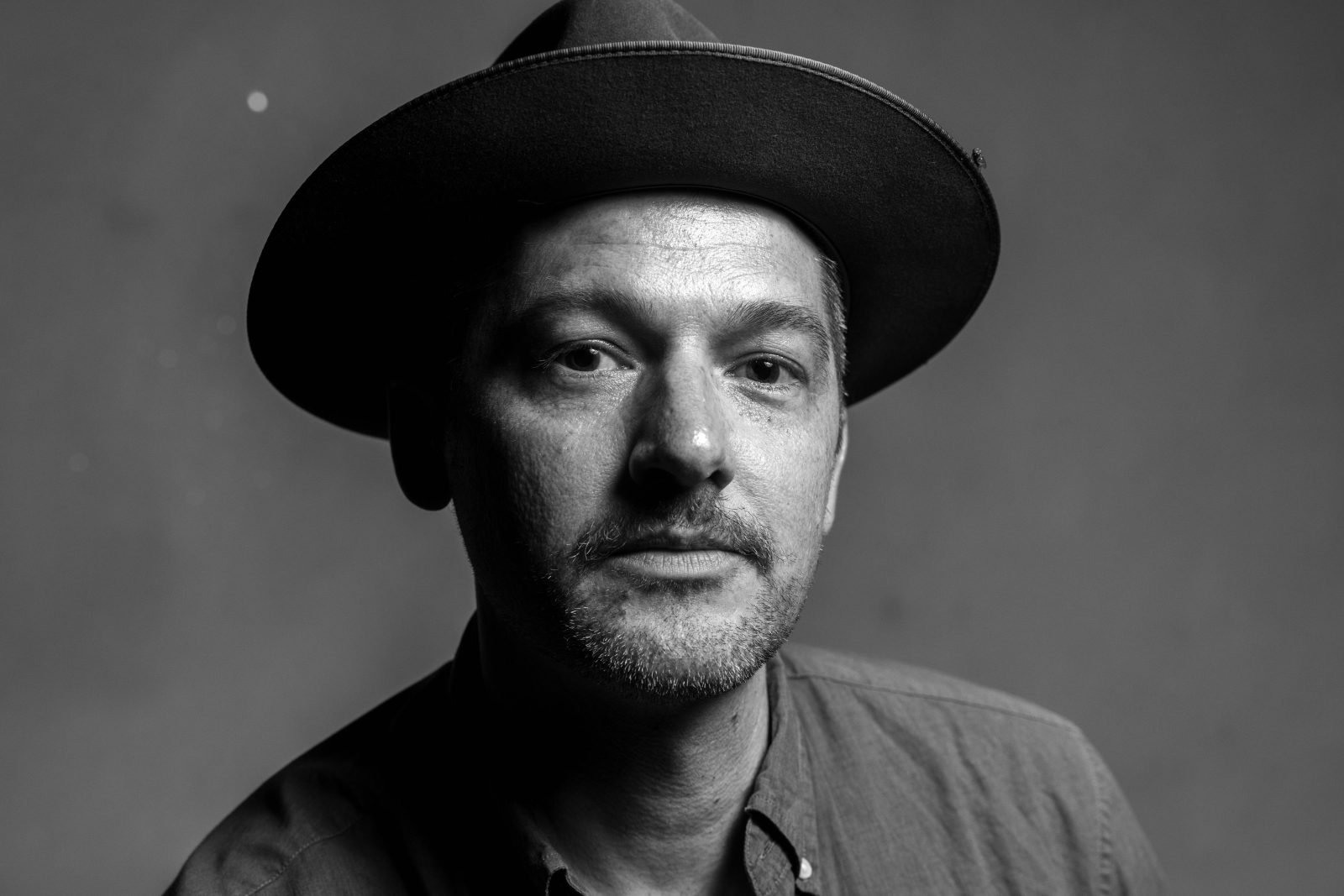
Kyle Caudle
- About the Author
- Latest Posts

Justin Cox received his theological education from Campbell University, Wake Forest University School of Divinity, and McAfee School of Theology where he earned his Doctor of Ministry. He is an ordained minister holding standing in the Cooperative Baptist Fellowship and American Baptist Churches USA. When not spending time with his spouse and daughters, he can be found writing and baking late into the night. His thoughts and reflections are his own.