
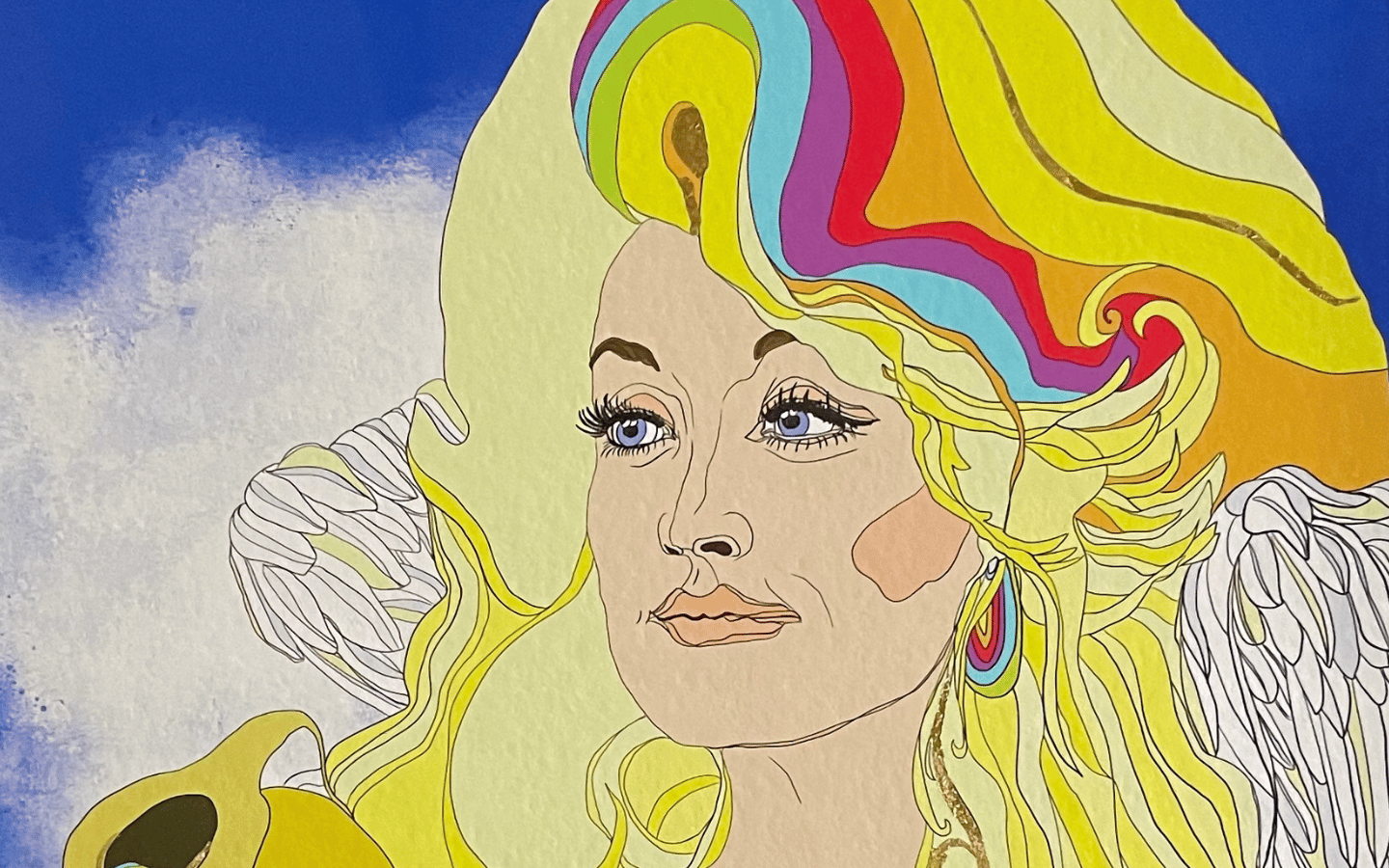
I doubt it surprised anyone when Dolly Parton’s death was met with a wave of universal grief from people who otherwise don’t agree and rarely get along. We’ve always known she was a unifying figure; perhaps the last one we had.
What has taken me aback, however, is how well-behaved we have all been toward each other. I know we are still in the early hours of loss, but for the most part we’ve given each other space to express grief in ways that feel most natural.
If anyone doubts the Holy Spirit’s unifying power flowing through the life-force that was Dolly, consider that you-know-who managed to make it almost 24 hours before he centered himself in the story of her death. And when he did, it was only in passing. Given his history, this may qualify as Dolly’s first recorded miracle on her journey toward sainthood.
Conservative actor Ricky Schroeder did use his tribute to remind everyone of his anti-vax and anti-trans stances, and Ivanka Trump got dragged a bit for sharing a quote from Dolly. But aside from that, this is the closest thing we’ve had to a cultural detente since Trump descended the elevator.
I don’t think this is an accident. Rather, it is the result of a particular kind of third-way living Dolly modeled. This is an ethos that many religious communities seek to live into, but few are willing to make the sacrifices necessary for it to work.
Embrace
Stories about Dolly’s commitment to justice have been legion since Tuesday’s announcement of her death. Many of them, like her childhood literacy efforts, are well documented. Others, like her quietly funding music programs in predominantly Black schools, only began to trickle out recently.
She didn’t always get it right, but she firmly believed in the maxim that “when you know better, you do better.” Influenced by what she learned from the 2017 white supremacist riots in Charlottesville, she changed the name of her popular Dollywood show from “Dixie Stampede” to “Dolly Parton’s Stampede,” without much fanfare. There was no audience testing or back-and-forth among top executives, just a name change.
“As soon as you realize something is a problem, you should fix it,” she said in a 2020 interview about the change. “Don’t be a dumbass. That’s where my heart is.”
And then there was her well-known support for the LGBTQ+ community that adored her.
In 2003, she performed alongside Melissa Etheridge on CMT’s Crossroads, an innovative concert series that featured artists from different genres singing each other’s songs. In interviews on Tuesday about her friendship with Dolly, Etheridge, who is gay, shared that Dolly could have chosen anyone to appear beside her, but chose her at a time when country music fans were not open to LGBTQ+ artists.
Dolly took it a step further, Etheridge said, using the opportunity to come out in support of gay marriage more than a decade before it was legal in the United States. “Of course I think gays should get married,” Dolly joked. “I think they should be as miserable as the rest of us.”
“In her own way, she was reaching out to our community, which she has never let down,” Etheridge said in an interview with CNN.
The Only Viable ‘Third Way’
So, given all her vocal support for the communities and causes that many in her fanbase are actively opposed to, how was she able to hold together such a big tent of people from across the spectrum of politics and religion? What can churches and communities seeking a “third way” on LGBTQ+ affirmation or racial justice or immigrant advocacy learn from Dolly?
Dolly’s way is really pretty simple: Everyone is welcome, but the starting point for true unity can only be inclusion and affirmation of those who have historically been rejected. Justice is the default setting for “getting along”, not an optional add-on.
Those who wanted smaller, more exclusive tables were welcome to Dolly’s party and treated with dignity and love. But until they expanded their vision of who belongs, they were going to be very uncomfortable with many of her other guests who weren’t just welcome, but also given places of honor. If they couldn’t get past that discomfort, they were welcome to leave. If they could, their hearts began to change.
That’s the Gospel according to Dolly.
- About the Author
- Latest Posts

Senior Editor at Good Faith Media.